

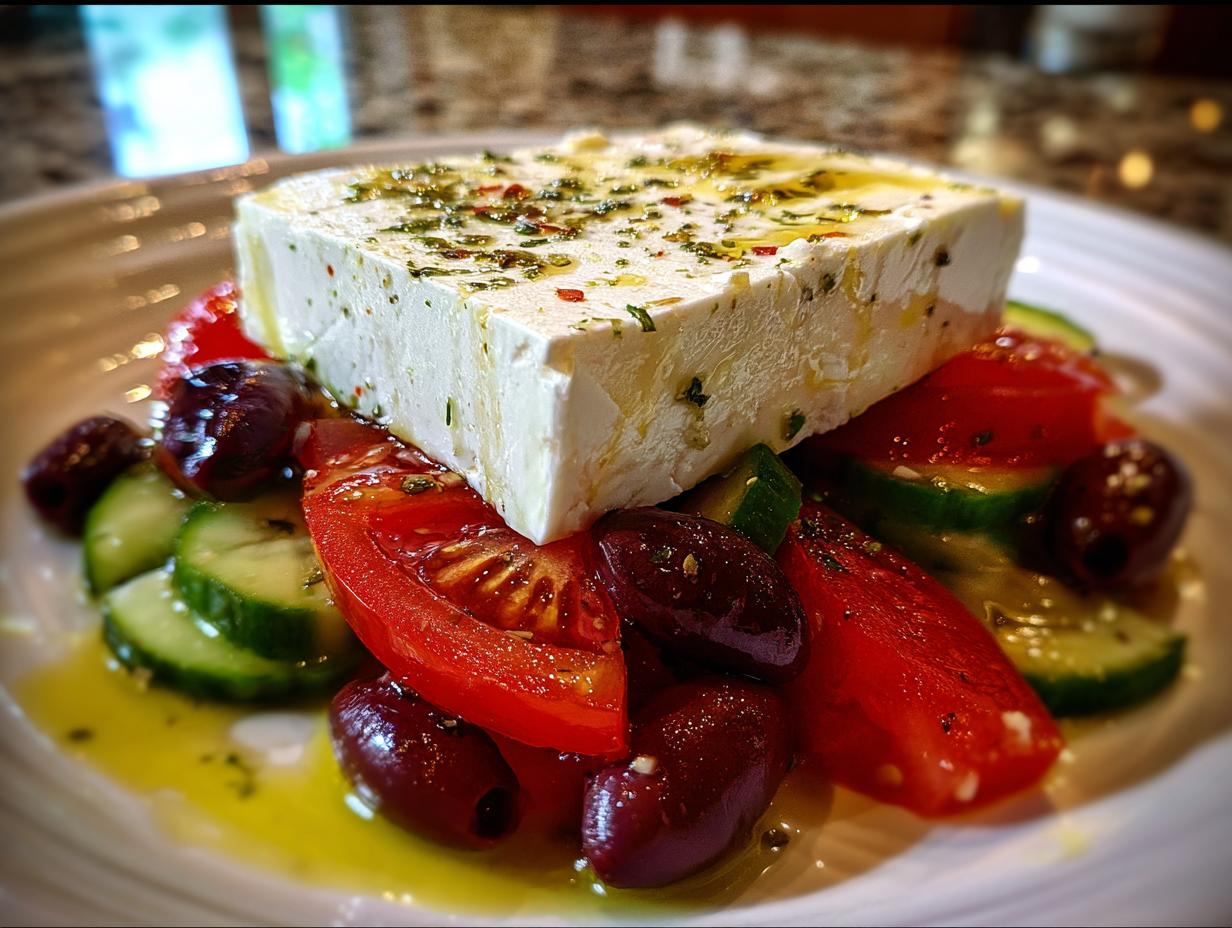
There’s nothing quite like the taste of the Mediterranean breaking through the everyday hustle, right? When I think about maximizing flavor without spending hours in the kitchen, this authentic greek salad—the real deal, which is Horiatiki—is always number one on my list. Forget any sad, watery salads you’ve had; this recipe steps away from the lettuce entirely. It’s all about juicy tomatoes, crisp cucumbers, salty feta, and that incredible punch of oregano. After testing countless versions in my own kitchen, I promise you, this preparation is engineered for maximum flavor harmony and simplicity. It’s honestly the perfect addition when you need a quick weeknight meal solution, and it fits perfectly into my collection of reliable weeknight dinner recipes or just a vibrant, refreshing side dish that impresses every single time.
- Why This Authentic Greek Salad Recipe Is Your New Favorite
- Gathering Ingredients for the Perfect Greek Salad
- Mastering the Flavorful Homemade Dressing for this Greek Salad
- Step-by-Step Instructions for an Authentic Horiatiki Salad
- Expert Tips for the Ultimate Greek Salad Success
- Making Variations of the Greek Salad: Adding Protein or Pasta
- Storage and Make Ahead Salad Tips for Your Greek Salad
- Frequently Asked Questions About This Simple Vegetable Salad
- Serving Suggestions for Your Refreshing Side Dish
- Nutritional Snapshot of This Mediterranean Salad
- Share Your Vibrant Salad Bowl Experience
Why This Authentic Greek Salad Recipe Is Your New Favorite
You’re going to fall in love with this recipe because it cuts right to the chase. We’re skipping the filler and focusing purely on bright, robust flavor. It’s quick enough for Tuesday, but special enough for company!
- It’s genuinely an Authentic Greek Salad Recipe because we skip the lettuce entirely—it’s pure Horiatiki!
- This is a super Healthy Summer Salad packed with whole, fresh goodness.
- You seriously cannot beat the speed. It’s ready before the oven even preheats for most other things.
Quick Weeknight Salad Ready in 15 Minutes
Seriously, the total time here is just 15 minutes. And guess what? The cook time is zero minutes! It’s the total package for a busy evening when you want something satisfying but don’t want to stand over the stove. Just chop, dress, and eat.
A Truly Healthy Summer Salad Option
Because this simple vegetable salad is just fresh produce, good quality olive oil, and cheese, it fits right into that clean Mediterranean diet perfectly. It’s naturally vegetarian, too, which makes it an instant win for serving a variety of guests.
Gathering Ingredients for the Perfect Greek Salad
When you’re making an authentic dish, the quality of your ingredients really shines through. Since there’s almost no cooking involved, these items are the stars of the show. We’re keeping the ingredient list short and sweet, just like they do in Greece. I always say if you’re going to splurge on one thing for this recipe, make it the olive oil and the feta cheese!
If you’re looking for another super fresh Mediterranean dip to go alongside this, you should check out my tzatziki sauce recipe. It’s phenomenal!
Vegetables and Accents for Your Salad with Feta and Olives
These are the crunchy and juicy elements that give the salad its body. It’s important that you don’t chop these too small; we want texture you can really bite into!
- Two large, ripe tomatoes—don’t skimp here! Cut these bad boys into nice, messy wedges.
- One large English cucumber—I peel mine, just because, and then slice them into thick half-moons.
- Half of a red onion—slice this paper-thin so you get that nice bite without overwhelming everything else.
- Kalamata olives—grab a cup of these. Whether you pit them or not is totally up to you, but I usually leave them whole for an extra burst of flavor when you bite down.
- A full 7-ounce block of good quality feta cheese. I mean it: a block, not the crumbles in a bag!
The Best Greek Salad Dressing Components
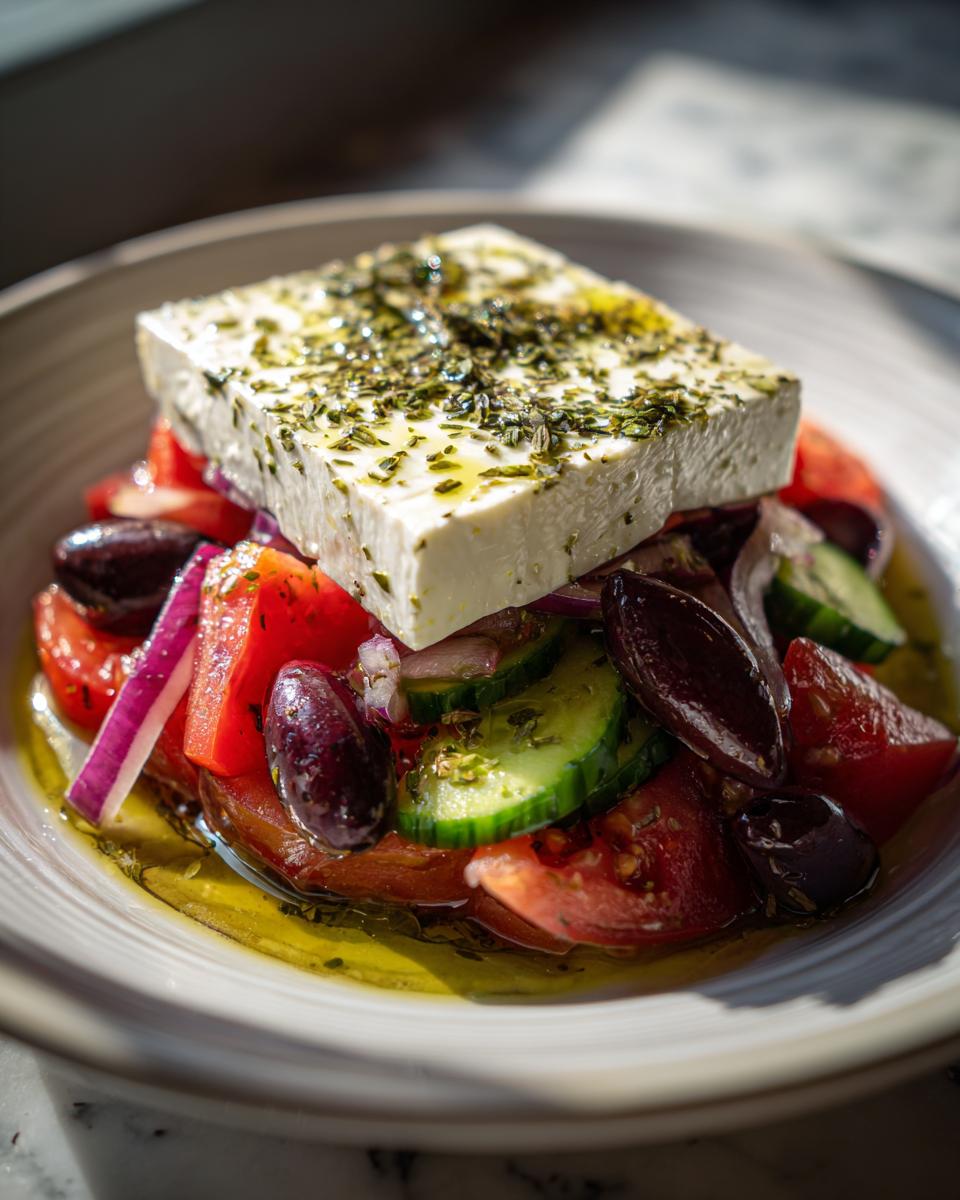
The dressing is so simple, but it’s where the brightness comes from. We’re using oregano here—the dried version—which really infuses that unmistakable Greek aroma into the oil.
- About 1/4 cup of truly excellent extra virgin olive oil. Please use the good stuff!
- One tablespoon of sharp red wine vinegar.
- One teaspoon of dried oregano—this is non-negotiable for that authentic taste.
- Freshly ground black pepper to taste.
Now, you’ll notice I haven’t listed any salt, and that’s intentional! Trust me, the feta and the salty Kalamata olives usually bring plenty of sodium to the party. We’ll taste it right before serving, just in case.
Mastering the Flavorful Homemade Dressing for this Greek Salad
Listen, the dressing is what takes a simple bowl of vegetables and turns it into the Best Greek Salad Dressing imaginable. It’s so easy, you’ll never buy a bottled version again, I promise! I always grab a little jar or a small bowl to work in because it helps me get a really good emulsification.
You need to whisk the extra virgin olive oil and the red wine vinegar together until they look like they are actually starting to combine—not perfectly smooth, but definitely married. Then, toss in that dried oregano and plenty of black pepper. Remember what I said about salt? Taste it *after* you’ve done this initial whisk. If you feel like your tomatoes are a little bland, that’s when you might add a tiny pinch of salt, but usually, the salty feta does all the heavy lifting for us. It’s all about balance, folks!
Step-by-Step Instructions for an Authentic Horiatiki Salad
Okay, now the fun part! This is where the magic happens really fast. Because we aren’t cooking anything, the technique is all about timing and presentation. This truly is the best assembly method for a simple vegetable salad that keeps everything beautiful until the moment you serve it. If you want a side dish that comes together lightning quick, this is it. For something heartier later, you might pair it with some flavor-packed Mediterranean lemon rice.
Preparing the Vegetables and Dressing
First things first, get all your chopping done. We want those tomatoes cut into wedges, the cucumber in thick half-moons, and your red onion sliced as thin as you can manage. Get all those prepped veggies and your Kalamata olives into a nice, large, shallow serving bowl. Don’t toss them yet!
Next, take a minute to whisk up that flavorful homemade dressing we talked about—olive oil, red wine vinegar, oregano, and pepper. Just combine them well in a small container. Remember, no salt until the end!
Assembling and Serving Your Greek Salad Immediately
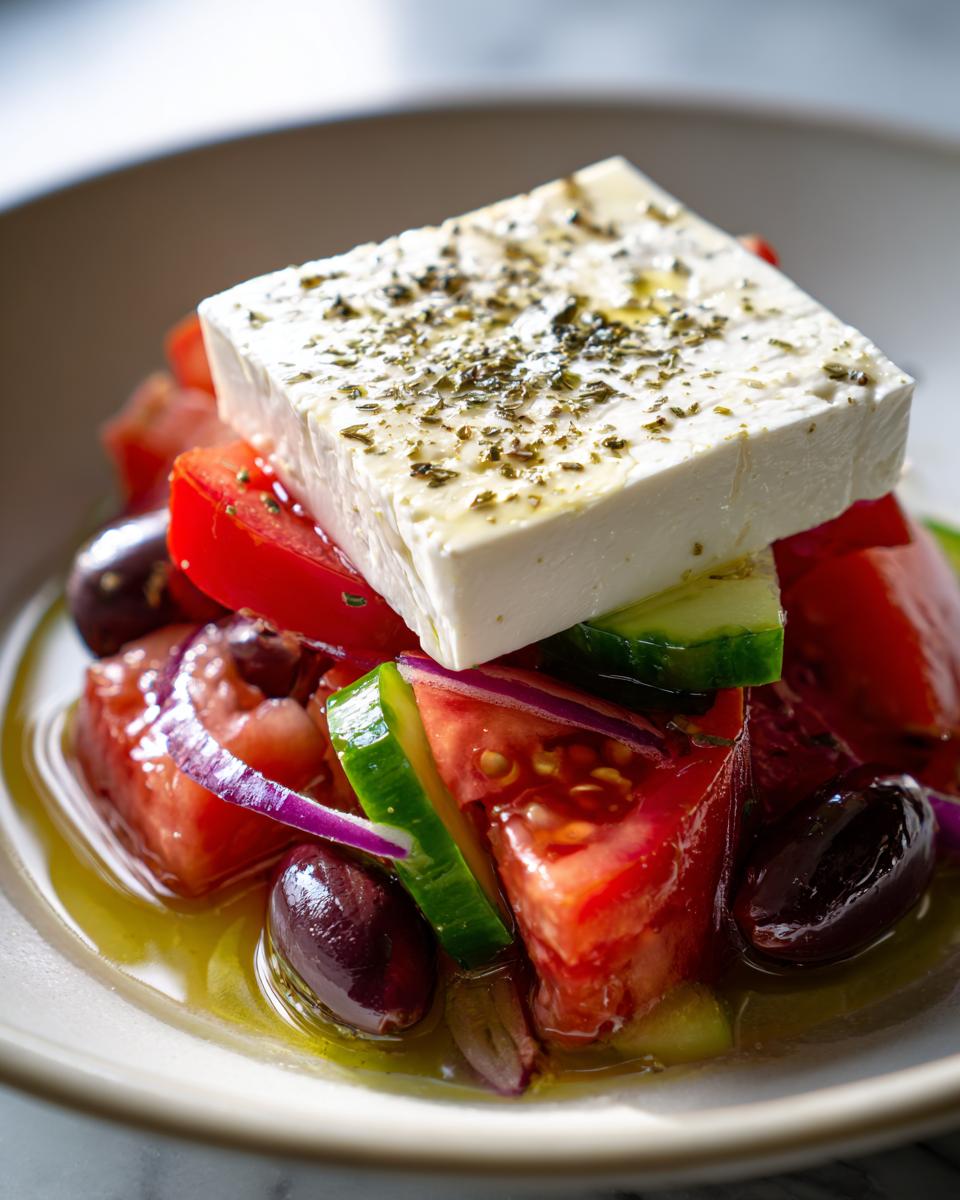
This next part is crucial for that authentic look we’re going for. Take that entire beautiful block of feta cheese and gently place it right in the center, sitting right on top of your vegetables. Don’t crumble it! People can break it up at the table.
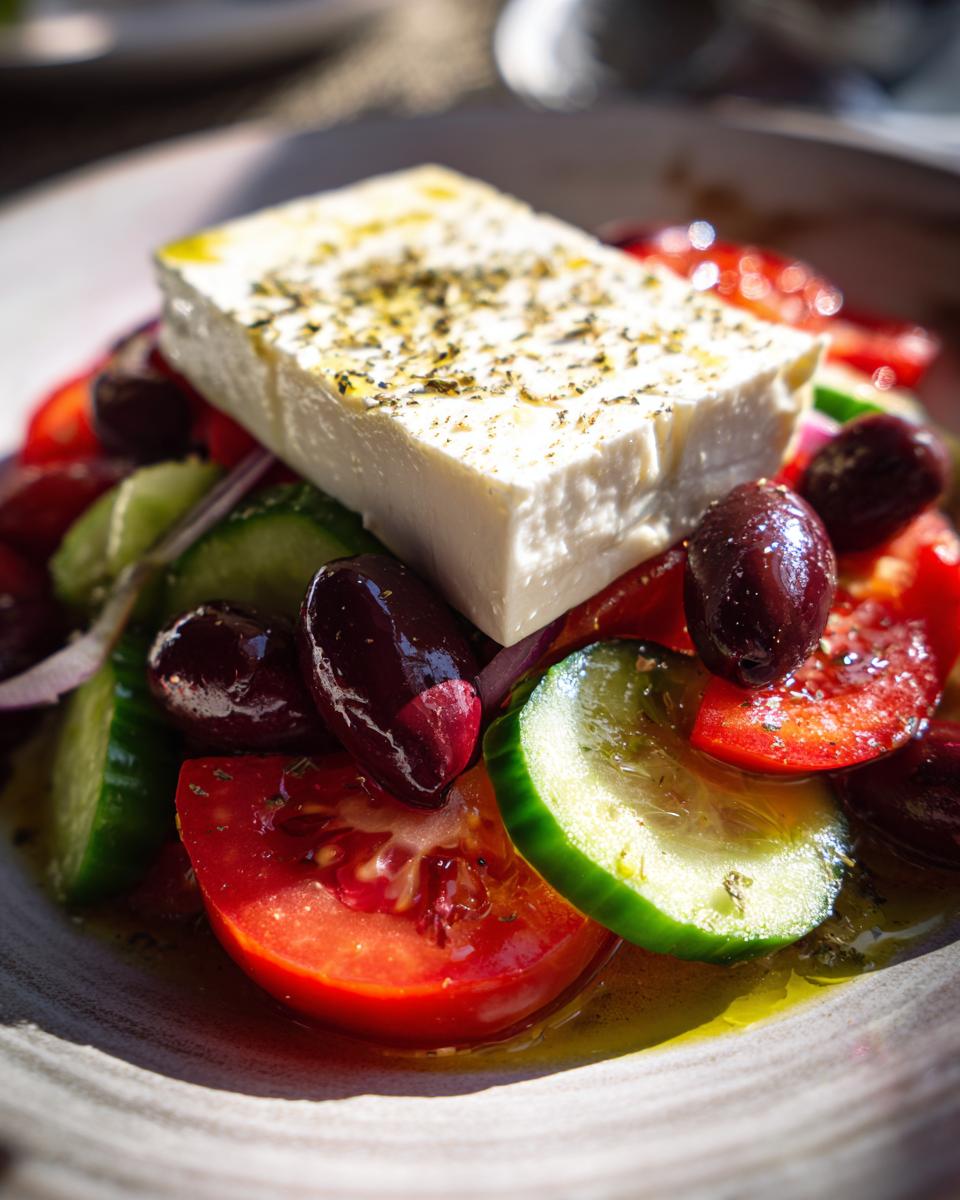
Now, pour that wonderful dressing mixture right over the vegetables and the feta block. Finish it off by sprinkling a final little pinch of extra dried oregano right over the cheese top—it looks so inviting! You really need to make sure you serve this Greek salad immediately after dressing because we want those vegetables crisp and refreshing, not sitting around getting soggy.
Expert Tips for the Ultimate Greek Salad Success
Even though this is a super simple recipe, doing a few things right makes a massive difference in your final result. These aren’t just suggestions; these are the things that separate a good salad from a truly stellar one. Seriously, take two extra minutes for these steps and thank me later!
For the most authentic taste explosion, you absolutely need to look for a block of feta cheese that has been stored in brine. That salty, liquid bath is essential for keeping it creamy and sharp. Don’t even look at the pre-crumbled stuff; it tastes dusty by comparison! I always drain it off right before I use it.
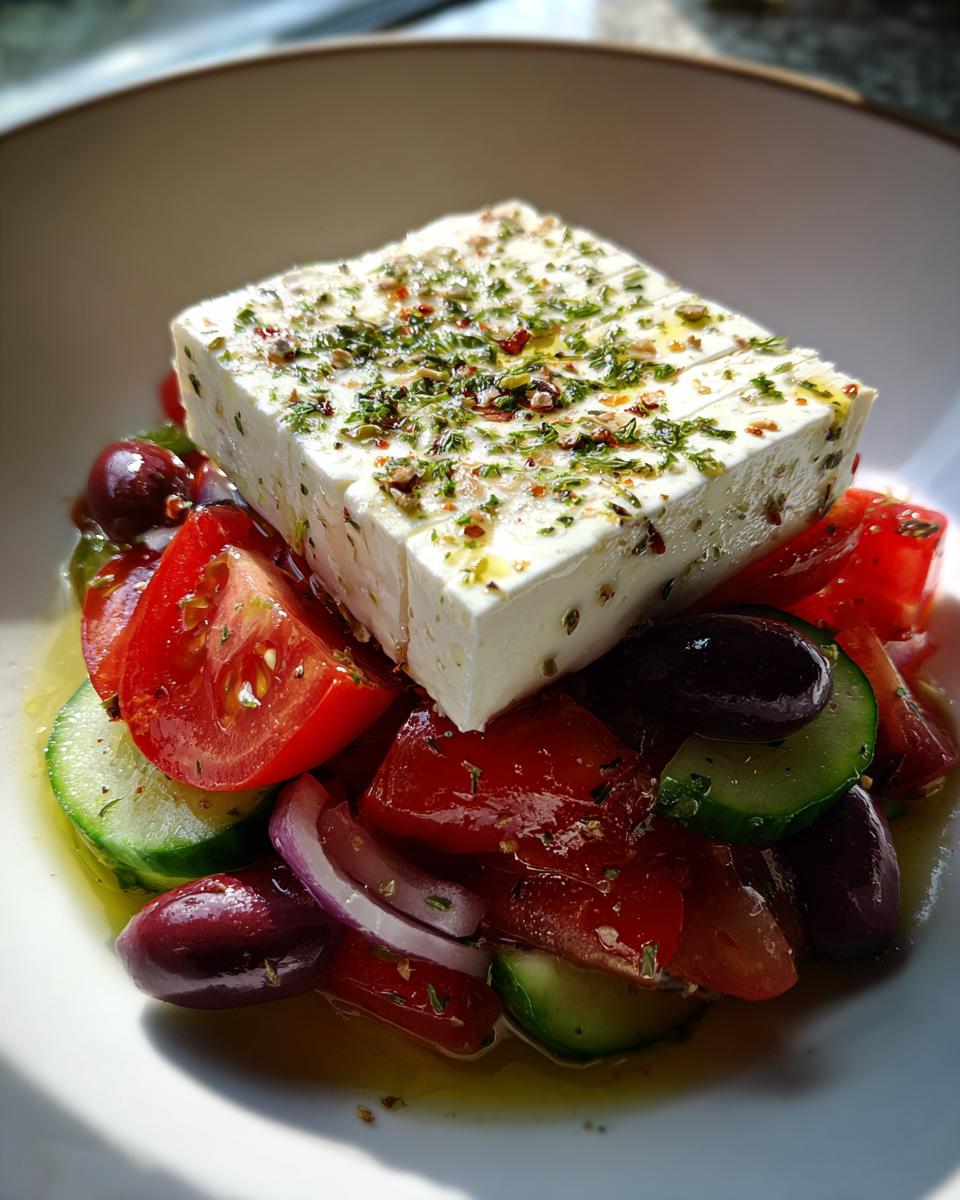
Also, red onions can sometimes bite back a little too hard, right? If you don’t like that intense sharpness, here’s a trick: slice your onion thin, toss it into a little bowl of cold water, and let it hang out for about 10 minutes before draining it really well. This mellows the flavor out perfectly without losing that beautiful purple color in your simple vegetable salad.
And remember my golden rule: eat it right away! This Horiatiki Salad doesn’t like to wait around once the dressing hits the vegetables.
Making Variations of the Greek Salad: Adding Protein or Pasta
The traditional Horiatiki is perfect as a side dish, but sometimes you need a big, satisfying Greek salad that stands alone as dinner, especially when you’re looking for a light lunch idea. Absolutely do *not* feel bound by tradition here; we are all about making food work for your busy life!
If I’m turning this into a main course, I usually turn to adding a little protein boost. This keeps the whole meal feeling fresh and clean, fitting right into that Mediterranean vibe we love. I actually have a recipe for garlic chicken and rice if you need a main dish idea to serve it alongside, but honestly, throwing the protein right into the bowl works best!
Quick Additions for a Satisfying Greek Salad with Chicken
The easiest way to beef up this salad is with some perfectly seasoned grilled chicken. If you’re feeling lazy like me on a Thursday, just grab some pre-cooked grilled chicken strips and chop them up! You want small, bite-sized pieces so they mix in evenly with the cucumber and tomato wedges. Make sure whatever protein you use is seasoned minimally since the dressing is already potent. If you want some great inspiration for that chicken, check out this easy Greek salad with chicken idea!
Alternatively, if you want to keep this vegetarian but still want it to feel hearty enough for a main meal, chickpeas are your best friend. Rinse a can of chickpeas really well—we don’t want any of that metallic can-flavor sticking around—and toss them right in with the olives. They add texture and a great source of fiber. You’ll find this version ends up being a fantastic, protein-packed quick weeknight salad that keeps well for lunches, too!
Storage and Make Ahead Salad Tips for Your Greek Salad
Okay, this is where I have to be real with you folks: the ultimate, authentic greek salad—the Horiatiki—really hates waiting around once you’ve poured that vibrant dressing over it. That’s the biggest downside to keeping things this fresh! If you try to make the whole thing ahead of time, you end up with sad, watery tomatoes, and trust me, nobody wants that sad situation.
But don’t worry! That doesn’t mean these aren’t great for prep. The secret to successful meal prep salads with this recipe is total separation. You get all the flavor components ready, but they stay solo until serving time. I love having everything ready to go so assembly takes literally 60 seconds when we get home from work.
Here is my game plan:
- Veggies First: Wash, chop, and prep all your tomatoes, cucumbers, and onions. Store them together in one airtight container in the fridge. They hold up wonderfully for about two days this way. Remember, we aren’t adding those olives or the feta yet!
- The Dressing Stays Separate: Whisk up your flavorful homemade dressing and keep it in a sealed jar. Olive oil can get a little cloudy in the fridge; just zap it on the counter for about 15 minutes before use if that happens, or give it a vigorous shake.
- Feta and Olives Last: Keep the block of feta and the Kalamata olives in separate small containers. They absorb moisture and can turn gummy if left sitting in the vegetable moisture for too long.
When you are ready to eat, just combine the veggies, olives, and feta in your serving bowl, drizzle with the dressing, and you’re eating the freshest salad possible, even if you prepped everything the night before!
Frequently Asked Questions About This Simple Vegetable Salad
I get flooded with questions whenever I post this recipe because people are so used to seeing lettuce in their salads! It’s natural to wonder about the details when you’re trying to achieve that true Mediterranean flavor. Here are the things folks ask me most often about making this perfect, easy dish.
What makes this recipe an Authentic Greek Salad Recipe (Horiatiki)?
The absolute number one thing that makes this an Authentic Greek Salad Recipe, or Horiatiki as they call it in Greece, is that there is zero lettuce involved—none! It’s strictly tomatoes, cucumber, onion, olives, and feta. Secondly, we don’t crumble that cheese! We keep it as a whole block sitting right on top. That way, every time you dig in, you get a big, salty chunk of feta instead of just tiny bits scattered around.
Can I use different olives in my Kalamata Olives Salad?
You certainly *can*, but for the best flavor in your Kalamata Olives Salad, stick to Kalamatas if you can find them! They have a specific fruity, deep flavor because they’re cured in red wine vinegar and salt. If you absolutely cannot find them, a good quality, brine-cured black olive will work in a pinch for this simple vegetable salad, but you’ll notice the flavor profile shifts slightly away from the traditional taste we are aiming for.
Is this a good choice for a Light Lunch Idea?
It is fantastic as a light lunch idea! Because the traditional recipe relies on vegetables and cheese, it feels fresh and not heavy, which is perfect for midday. If you feel like you need a little more staying power to get you through the afternoon slump, I highly recommend tossing in some chickpeas, like we talked about, or serving it with a thick slice of rustic bread. That lets you do some serious dipping into all that delicious, fresh olive oil left at the bottom of the bowl!
Serving Suggestions for Your Refreshing Side Dish
This vibrant greek salad is so versatile, but it absolutely sings next to rich, warm dishes because the bright acidity cuts right through them. Forget boring sides; this is a showstopper!
It pairs perfectly with Mediterranean mains. For instance, if you are making my favorite lemon chicken orzo one-pot dinner, this salad adds the necessary fresh crunch. Or, if you are grilling in the summer, just serve this alongside whatever comes off the Weber. You can find more great ideas over at Cooking Heavenly. Honestly, sometimes I just grab a huge hunk of crusty bread and call it a meal!
Nutritional Snapshot of This Mediterranean Salad
Because we are focusing on fresh vegetables, good fats from olive oil, and quality cheese, this Mediterranean salad is a powerhouse! It’s important to remember that since this recipe relies on a large portion of olive oil and feta (both high in healthy fats), the serving size looks different from, say, a lettuce-based salad.
Everything listed below is an *estimate* based on the ingredients provided in the recipe card above. Serving sizes and specific brands affect these numbers, but this gives you a good general idea of what you’re digging into!
- Serving Size: 1 serving
- Calories: 300
- Fat: 28g (mostly heart-healthy unsaturated fat!)
- Saturated Fat: 10g
- Carbohydrates: 10g
- Sugars: 6g (all naturally occurring from the veggies!)
- Fiber: 3g
- Protein: 10g
- Sodium: 650mg (Remember, this is mostly from the feta and olives, which is why we skip adding extra salt during preparation!)
Share Your Vibrant Salad Bowl Experience
Now it’s your turn to bring the taste of Greece home! I’ve shared all my methods for getting that perfect, authentic experience, and I really want to know how it turned out for you. Did you stick with the whole block of feta like I did? Was that sharp red onion okay, or did you soak it in water like I suggested in the tips?
Please don’t be shy! Head down to the comments section and tell me what you thought. A quick rating helps other cooks know this simple vegetable salad is a winner. I absolutely love seeing pictures of your final dishes, too! You can tag us on social media if you manage to capture a photo of that beautiful, vibrant salad right before everyone digs in and mixes everything up.
When you’re ready to learn more about the philosophy behind keeping things simple yet delicious, take a peek over at my About Page. Happy cooking, everyone—I hope this greek salad becomes a staple at your table!
PrintAuthentic Greek Salad (Horiatiki)
Make a traditional Greek salad, Horiatiki, featuring fresh tomatoes, cucumber, red onion, Kalamata olives, and a block of feta cheese, dressed simply with olive oil and oregano. This recipe contains no lettuce.
- Prep Time: 15 min
- Cook Time: 0 min
- Total Time: 15 min
- Yield: 4 servings 1x
- Category: Side Dish
- Method: No Cook
- Cuisine: Greek
- Diet: Vegetarian
Ingredients
- 2 large ripe tomatoes, cut into wedges
- 1 large English cucumber, peeled and sliced into thick half-moons
- 1/2 red onion, thinly sliced
- 1 cup Kalamata olives, pitted or unpitted
- 7 ounces block of good quality feta cheese
- 1/4 cup extra virgin olive oil
- 1 tablespoon red wine vinegar
- 1 teaspoon dried oregano
- Freshly ground black pepper to taste
Instructions
- Prepare the vegetables: Cut the tomatoes into wedges and slice the cucumber into thick half-moons. Thinly slice the red onion. Place all prepared vegetables and the Kalamata olives into a large, shallow serving bowl.
- Make the dressing: In a small bowl, whisk together the extra virgin olive oil, red wine vinegar, and dried oregano. Season with black pepper. Do not add salt yet, as the feta and olives are salty.
- Assemble the salad: Place the entire block of feta cheese directly on top of the vegetables in the center of the bowl.
- Dress the salad: Pour the olive oil and vinegar mixture evenly over the vegetables and the feta cheese.
- Serve immediately: Sprinkle a little extra dried oregano over the feta. Serve the salad immediately, allowing guests to break up the feta and mix the dressing as they eat.
Notes
- For the most authentic flavor, use a block of feta stored in brine and do not crumble it before serving.
- If you prefer a less sharp onion flavor, soak the sliced red onion in cold water for 10 minutes, then drain well before adding to the salad.
- This salad is best eaten right after dressing to keep the vegetables crisp.
Nutrition
- Serving Size: 1 serving
- Calories: 300
- Sugar: 6
- Sodium: 650
- Fat: 28
- Saturated Fat: 10
- Unsaturated Fat: 18
- Trans Fat: 0
- Carbohydrates: 10
- Fiber: 3
- Protein: 10
- Cholesterol: 40