

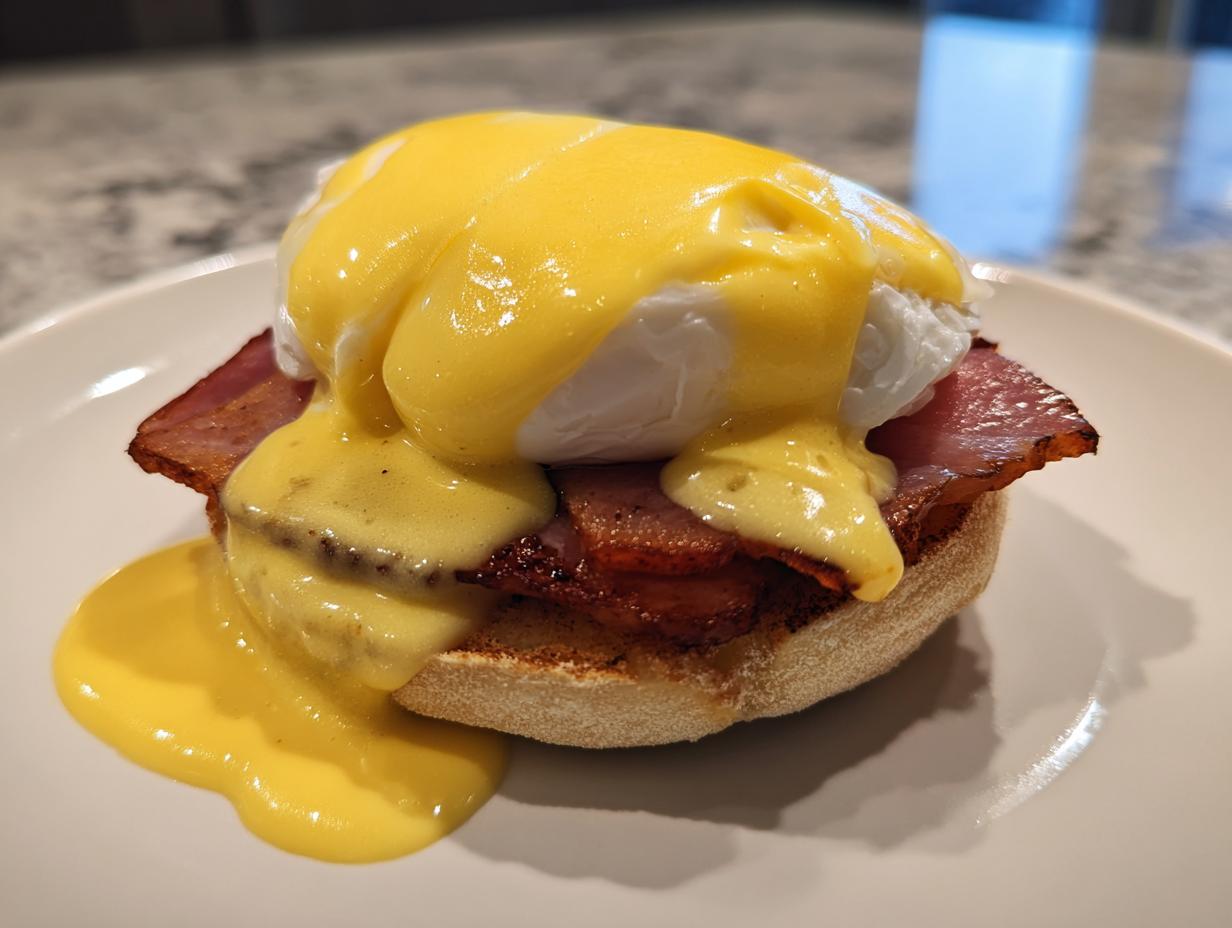
There is nothing quite as elegant on a weekend morning as a plate stacked high with beautiful Eggs Benedict. It just screams ‘special occasion,’ right? But let’s be honest, ordering it out avoids the two big hurdles: that perfect wobbly poached egg and the temperamental Hollandaise sauce. I’m Michael Carter, and here at Delish Symphony, my whole goal is to take those intimidating dishes and make them completely approachable. Trust me, we’re cracking the code on restaurant quality breakfast at home today, especially with a foolproof blender method for that buttery sauce!
- Why This Classic Eggs Benedict Recipe Delivers Restaurant Quality Breakfast at Home
- Ingredients for Your Classic Eggs Benedict Recipe
- Step-by-Step Instructions for Perfect Eggs Benedict
- Tips for Success When Making Eggs Benedict
- Make Ahead Brunch Ideas for Your Next Eggs Benedict Gathering
- Eggs Benedict Variations: Beyond the Classic Eggs Benedict Recipe
- Frequently Asked Questions About Making Eggs Benedict
- Estimated Nutritional Data for Classic Eggs Benedict
- Share Your Perfect Eggs Benedict Creation
Why This Classic Eggs Benedict Recipe Delivers Restaurant Quality Breakfast at Home
We’re achieving that decadent experience you usually only find on a fancy brunch menu. I’ve engineered this version to be the ultimate Easy Eggs Benedict at Home. You get all the rich flavor without the stress. Seriously, this is how you get Restaurant Quality Breakfast at Home without breaking a sweat.
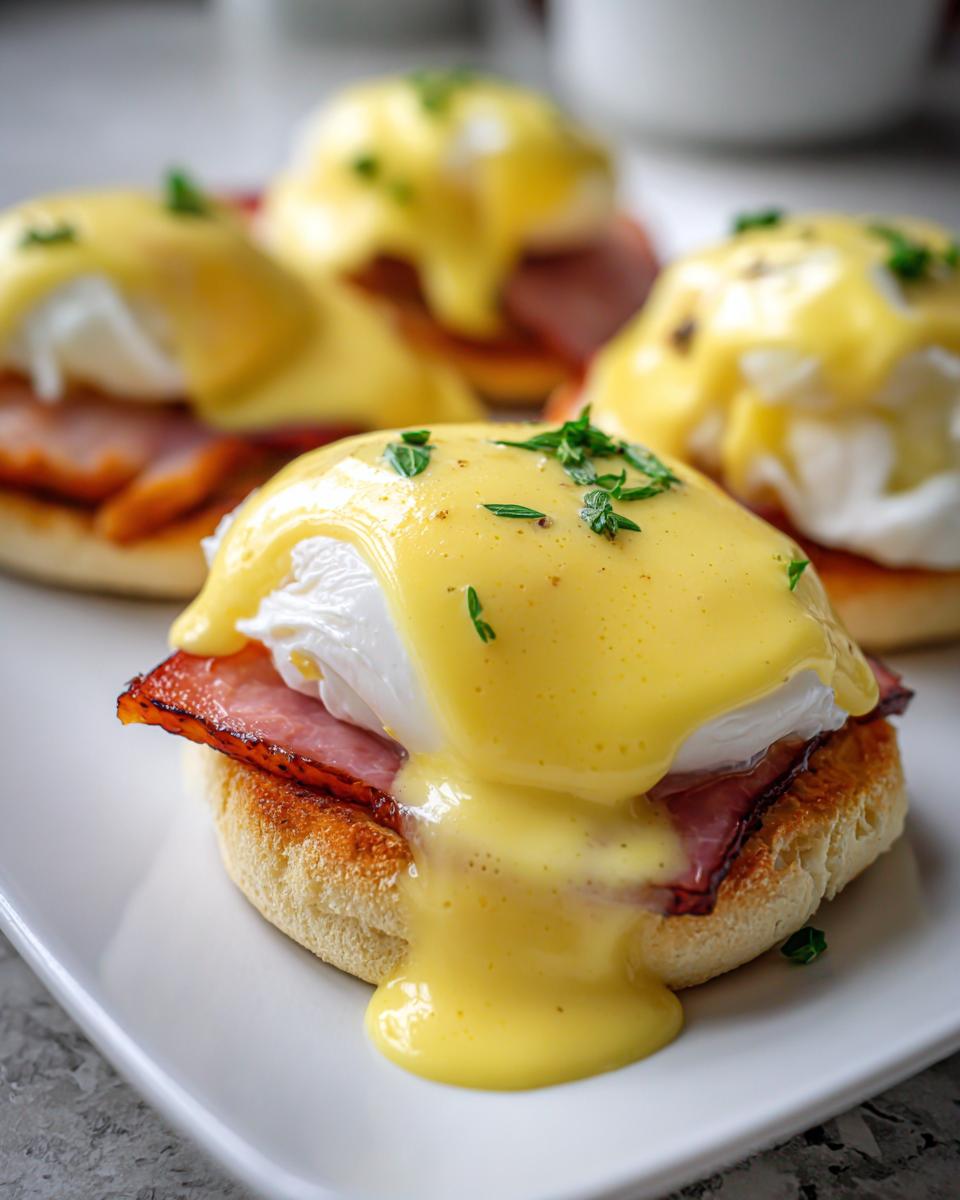
- Perfectly set, runny poached eggs every single time.
- Rich, creamy Hollandaise made in under two minutes.
- Classic, satisfying flavors using simple pantry staples.
The Secret to Foolproof Eggs Benedict
The two hurdles everyone trips over are the runny yolks and the tricky whisking of the sauce. We conquer the sauce instantly using my favorite kitchen workhorse: the blender! For the eggs, we focus purely on temperature control and movement in the water. This method strips away all the fuss, turning a complicated classic into an easy win.
Ingredients for Your Classic Eggs Benedict Recipe
Okay, let’s get organized. When you gather your ingredients, you’ll realize making this famous breakfast isn’t about a massive shopping list. It’s about getting these few key items ready. Having everything lined up—your mise en place—is half the battle won for any weekend breakfast ideas. Remember, we are sticking to the classic flavor profile here, so don’t substitute the bacon for something too fatty.
You’ll need the basics for assembly first:
- 4 large eggs, the freshest you can find for poaching
- 4 sturdy English muffin halves
- 4 slices Canadian bacon or quality thin ham
- 2 tablespoons butter for frying that bacon
- Water, plenty of it, standing by in a wide pan
- 1 teaspoon white vinegar (this is my little trick for the poaching water!)
For the Buttery Hollandaise Sauce Blender Method
This is where the magic happens! With only five core items, you get that incredibly rich Buttery Hollandaise Sauce that coats everything perfectly. This is so much simpler than the old whisking-over-hot-water method.
- 3 large egg yolks
- 1 cup unsalted butter, completely melted and kept warm—not scorching hot!
- 1 tablespoon fresh lemon juice (fresh makes such a difference here)
- 1/4 teaspoon salt, or taste it when we’re done
- A tiny pinch of cayenne pepper for just a little kick
Step-by-Step Instructions for Perfect Eggs Benedict
Alright, this is where we put everything together! I know the thought of poaching eggs can make people nervous, but stick with my simple water technique—you’ll be shocked at how easily you achieve that perfect, almost gooey center. My goal here is to give you the confidence to make amazing, restaurant-quality Eggs Benedict without the huge headache. Let’s start prepping those foundations first!
Preparing the Base: Muffins and Meat for Eggs Benedict
First things first, we need a stable base. Lightly toast your English muffin halves; you want them golden, not cracker-crispy. In a small skillet, melt just a touch of butter over medium heat. Toss in your Canadian bacon or ham slices and cook them until they’re beautifully warmed through and maybe have just the faintest whisper of crispness around the edges—about two minutes per side works great. Set those aside on a plate; they need to stay warm while we focus on the eggs!
Mastering the Perfect Poached Eggs Technique
Fill a wide, shallow pan with about three inches of water and bring it to a gentle simmer. I mean it—slow, small bubbles, not a rolling boil; a raging boil will tear your egg apart! Add in that teaspoon of white vinegar; it helps the whites set quickly. Crack each egg individually into a little bowl first. Now, use a spoon to stir the water quickly to create a gentle whirlpool right in the center. Carefully slide one egg right into that spinning water. Cook it for about 3 to 4 minutes for that perfect runny yolk. Scoop it out gently with a slotted spoon and let the excess water drip away on a paper towel. Repeat for the rest of your eggs.
Making Homemade Hollandaise Sauce Blender Method
This part is ridiculously fast, which is why I love it. Drop your three egg yolks, the lemon juice, salt, and cayenne into your blender jar. Blend on medium for about 30 seconds until it looks pale and fluffier. Now, this is crucial: turn the blender to low speed and start drizzling in that warm, melted butter—slowly, like a tiny stream! If you dump it too fast, it’ll break! Once all the butter is in, your sauce should be thick, pale yellow, and incredibly creamy—just like my garlic aioli, but richer! If it seems too stiff, just blend in a few drops of warm water to smooth it out.

Assembling Your Ideal Eggs Benedict
Time for the grand finale! Lay out your perfect toast, top each half with a slice of that warm Canadian bacon. Carefully place one freshly poached egg right on top of the meat. Then, grab your blender Hollandaise and spoon a generous amount—don’t be shy!—all over that beautiful yolk. Serve this immediately, while the eggs are warm and the sauce is luscious!
Tips for Success When Making Eggs Benedict
Even with recipes designed to be foolproof, a couple of little details can make the difference between good and absolutely spectacular eggs benedict. Seriously, I learned these the hard way so you don’t have to!
First, always use the freshest eggs you can get your hands on for poaching. Fresher eggs have tighter whites, which keeps them bundled perfectly around the yolk in the water. If your eggs are old, the white tends to spread out like a watery cloud, and you’ll end up with wispy bits instead of one nice little package.
Second, for the Hollandaise, temperature is everything when you’re melting that butter. It needs to be warm enough to emulsify, but if it’s too hot when you drizzle it into the blender, you’ll scramble those egg yolks instantly! Always keep your melted butter slightly warm to the touch—not hot enough to burn you.
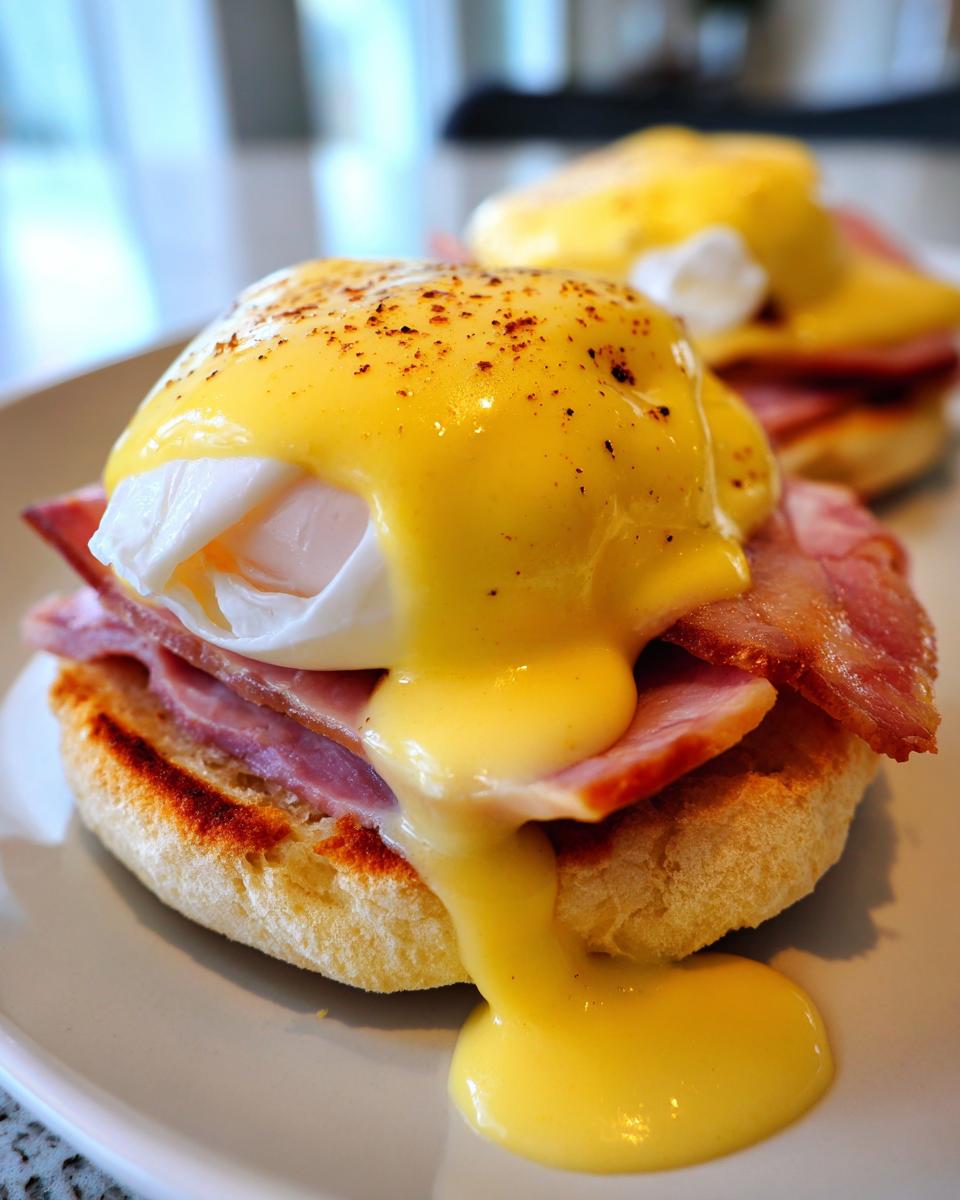
Finally, a little sprinkle of smoked paprika or extra cracked black pepper right over the finished sauce just before serving gives it a lovely professional touch. Enjoy those Easy Eggs Benedict at Home!
Make Ahead Brunch Ideas for Your Next Eggs Benedict Gathering
Now, I know brunch sounds fancy, but that doesn’t mean you need to be stuck by your stovetop while everyone else is relaxing and having coffee. The beauty of this particular recipe is that you can totally get ahead of the game! Prepping ahead is the secret weapon for any good host, and it makes serving up perfect Make Ahead Brunch Ideas so much less stressful. Honestly, no one wants to juggle searing bacon, perfectly poaching eggs, and pouring sauce all at the exact same second.
We can actually tackle the two trickiest parts—the eggs and the Hollandaise—days in advance. This makes that Sunday morning assembly feel like, well, assembly, rather than actual cooking! For all your make-ahead questions, remember that the original recipe author notes that components store really well, making your Eggs Benedict morning a breeze.
Here’s the game plan for preparing your next big brunch:
- Poached Eggs Storage: Make your poached eggs up to two days ahead! Once they’ve chilled down after poaching, very gently place them into an airtight container submerged in ice-cold water. Keep them covered in the fridge. When you’re ready to eat, just carefully lift them out and set them on paper towels to dry for a minute or two before serving. They reheat beautifully just sitting in warm water briefly.
- Hollandaise Sauce Storage: The sauce is your next best friend for making this ahead. Store the finished Buttery Hollandaise Sauce in a tightly sealed jar in the fridge for up to 48 hours. The one non-negotiable rule here is **reheating**. You cannot boil this sauce; it will definitely split! Gently warm it in a little saucepan over the lowest possible heat, stirring frequently, or use the microwave in 10-second bursts, stirring well between each blast, until it’s just smooth and warm, not hot.
Your bacon and English muffins should always be done right before serving, but having everything else ready means you can plate up gorgeous, restaurant-style eggs benedict for a crowd in under five minutes. It’s true kitchen magic!
Eggs Benedict Variations: Beyond the Classic Eggs Benedict Recipe
The beauty of mastering the classic Eggs Benedict is that you now have a fantastic platform to jump off from! Once you nail that perfect poached egg and that silky Hollandaise, you can start playing around with the foundations. It’s so fun, and it lets you cater to everyone’s tastes, especially if you have varied eaters coming over for brunch. I always like to make two versions when I have guests, so everyone gets a little something special.
We aren’t just talking about swapping bacon for ham here—we’re talking about completely different flavor profiles that still use our amazing sauce. You can easily adapt this recipe for what you have on hand or for what you’re craving. For instance, I recently tried making some easy pumpkin bars but then thought about how great a spiced version of this dish would be for fall!
Here are a few of my favorite ways to branch out from the traditional Canadian bacon:
- Florentine Eggs Benedict: This is probably the most popular switch you can make! Simply swap out the meat entirely for a bed of wilted, lightly seasoned spinach. You cook the spinach down first so it doesn’t add too much water to your stack. It’s fresher, lighter, and a wonderful vegetarian alternative while keeping that great green color contrast.
- Eggs Royale (The Smoked Salmon Twist): If you want to feel instantly sophisticated—and who doesn’t?—use smoked salmon instead of the bacon. The salty, smoky richness of the salmon with the tangy lemon in the Hollandaise is just heavenly. I usually lay a slice or two of salmon on the toasted muffin, then the egg, and then sauce it heavily. It just screams gourmet brunch!
- The Casserole Concept: Now, if you’re hosting a huge crowd and the idea of perfectly poaching 12 eggs sounds like a nightmare, there’s a fantastic cheat: the casserole! People love serving an Eggs Benedict Casserole because you bake the whole thing layered together. You assemble bread, meat, and cheese, bake it up, and then you just drizzle the sauce over the top when it comes out of the oven. It’s lazy elegance, and I highly recommend it for big holidays.
- A Little Kick: If you’re feeling adventurous, why not try a Mexican Eggs Benedict-Style? Instead of the English muffin, use softer tortillas or bolillos bread, use cooked chorizo instead of bacon, and finish it off with some fresh pico de gallo and maybe some sliced avocado instead of that butter sauce. It’s a whole different vibe, but it uses the same poaching technique!
The point is, once you trust your ability to make the eggs and the sauce, the rest is just fun experimentation!
Frequently Asked Questions About Making Eggs Benedict
Why did my Hollandaise sauce break or separate when I made it?
Oh, that’s the classic heartbreak of Hollandaise sauce! When the blender method breaks, it almost always comes down to temperature or speed. If you drizzle the warm butter in too fast, the blender can’t incorporate it evenly, and the fat separates from the egg yolks—that’s the break! Also, if your butter is way too hot, it literally cooks the yolks and splits the sauce instantly. If it breaks, don’t throw it out! Put the broken sauce into a very clean bowl, add one extra egg yolk or a teaspoon of warm water to it, and whisk (or blend!) slowly until it comes back together. It usually works!
Is using white vinegar necessary for poaching eggs for Eggs Benedict?
You absolutely can skip it, but I really recommend keeping it in there, especially if you are new to poaching! The vinegar is a marvel because it slightly changes the pH of the water, which makes the egg whites coagulate (set) much faster around the yolk. This means you get that lovely, tight little package instead of those wispy, feathery edges floating away in the pan. If you absolutely hate the smell of vinegar, use a splash of lemon juice instead, or just make sure your simmer is extra gentle.
Can I substitute the Canadian bacon in this Eggs Benedict recipe?
Yes, you totally can, but you are changing the classic profile a bit! Canadian bacon is lean, which is why it works so well—it warms up fast and doesn’t release a ton of grease into your muffin. If you swap it for regular slice bacon, you’ll need to drain off all that fat or your muffins will get soggy fast. My favorite substitution is actually smoked salmon, which turns this into an Eggs Royale. If you’re looking for a vegetarian option, a thick slice of grilled halloumi cheese is surprisingly sturdy and delicious!
How many minutes do I cook the eggs for a perfectly runny yolk in my classic Eggs Benedict?
This is where you need to trust your egg size and your thermometer (if you use one!). For large eggs cooked in water that is just gently simmering (around 180°F/82°C), 3 to 4 minutes is the sweet spot for a truly runny yolk that flows perfectly when cut. If you like it just barely set in the middle—more jammy—aim for 5 minutes. I always scoop one out and cut it open privately before seasoning the rest, just to check!
Estimated Nutritional Data for Classic Eggs Benedict
Now, I always tell folks that when you’re working with butter, egg yolks, and cured meats, we aren’t exactly sneaking in a salad here! But getting an idea of what you’re serving up is important, especially if you’re planning a big brunch for a crowd. These numbers are based strictly on the ingredients listed for two servings in our recipe—the ham, the muffins, the eggs, and that lovely, rich Hollandaise sauce.
Keep in mind, this is really just a good guideline. The exact brand of Canadian bacon you use, or how much butter you manage to drizzle in versus how much stays in the blender jar, can change these figures a bit. Think of this as your starting point for calculating that weekend indulgence!
- Calories: Roughly 650 per serving
- Fat: Uh oh, yes, it’s high! Around 55 grams, with about 28 grams being saturated fat. That’s the price of that amazing Hollandaise!
- Protein: A solid 22 grams, thanks primarily to those eggs and the ham.
- Carbohydrates: About 15 grams, mostly coming from the English muffin.
See? Not bad for what tastes like pure luxury. It’s a rich dish, meant for special occasions when you really want that restaurant feel. So enjoy it, and don’t worry too much about the numbers!
Share Your Perfect Eggs Benedict Creation
Well, that’s it! We’ve conquered the notoriously tricky parts of making amazing Eggs Benedict, and I truly hope you feel ready to tackle this brunch stunner in your own kitchen. It’s a recipe I’m so proud to share because it proved to me that complex flavors don’t need complex methods.
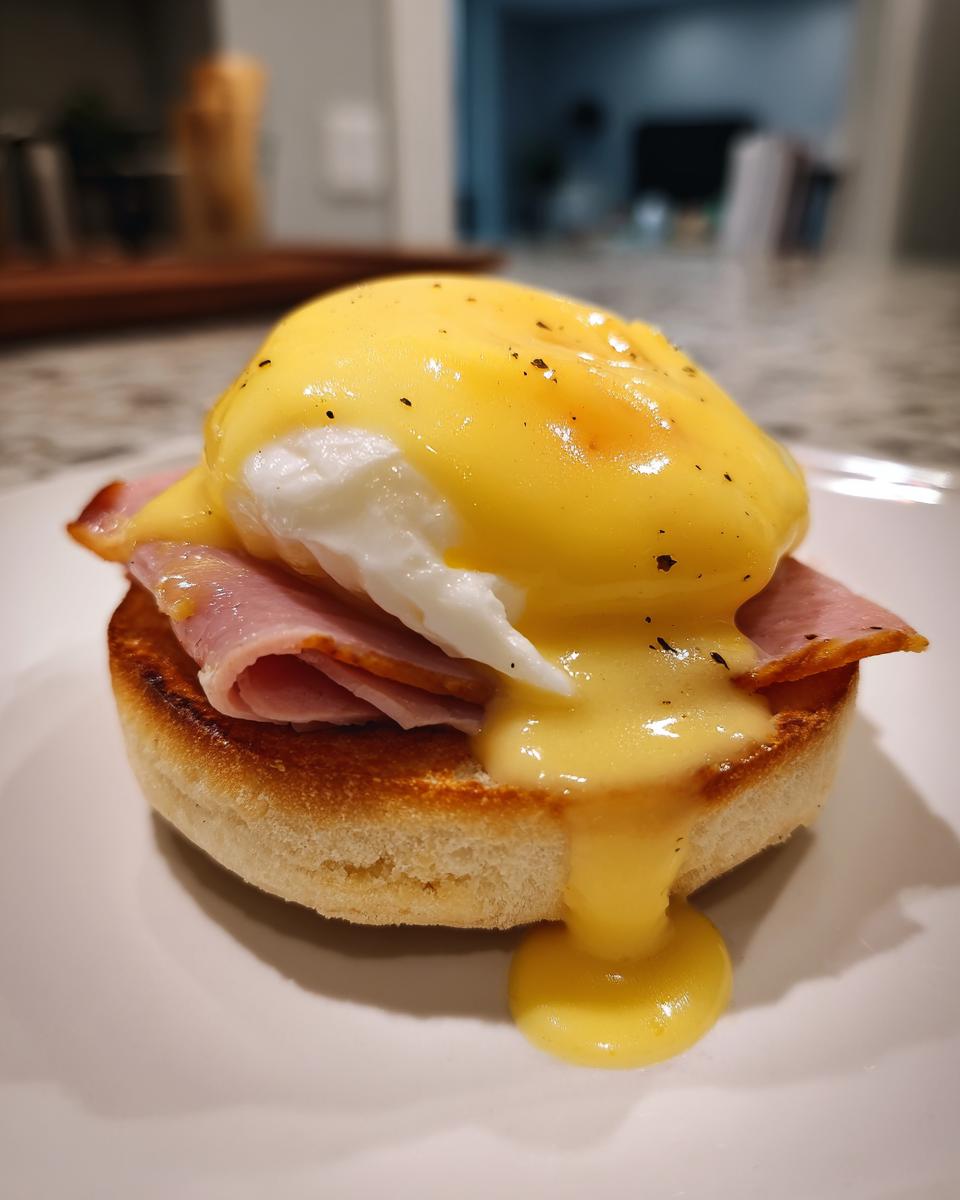
Now, I need to know how it went! Did the blender Hollandaise flow like silk for you? Did those poached eggs float perfectly? Head down to the comments section below and give this recipe a rating—five stars if you think you’ll serve this again next weekend! If you ran into any snags or had a brilliant substitution, share that too. We are all learning together here at Delish Symphony.
Don’t forget to take a picture of your gorgeous stack—that perfect cut where the runny yolk meets the creamy sauce—and tag us on social media! Seeing your successful brunch plates really is the highlight of my week. Let’s keep sharing the harmony of great food!
PrintClassic Eggs Benedict with Foolproof Blender Hollandaise

Learn to make restaurant-quality Eggs Benedict at home using simple techniques for perfectly poached eggs and a creamy, five-ingredient Hollandaise sauce made quickly in a blender. This recipe delivers gourmet brunch flavor without the fuss.
- Prep Time: 15 min
- Cook Time: 15 min
- Total Time: 30 min
- Yield: 2 servings 1x
- Category: Brunch
- Method: Stovetop
- Cuisine: American
- Diet: Vegetarian
Ingredients
- 4 large eggs (for poaching)
- 4 English muffin halves
- 4 slices Canadian bacon or ham
- 2 tablespoons butter (for frying bacon)
- Water (for poaching)
- 1 teaspoon white vinegar (for poaching water)
- For the Blender Hollandaise:
- 3 large egg yolks
- 1 cup unsalted butter, melted and warm
- 1 tablespoon fresh lemon juice
- 1/4 teaspoon salt, or to taste
- Pinch of cayenne pepper
Instructions
- Prepare the English Muffins and Bacon: Lightly toast the English muffin halves. In a small skillet, melt 2 tablespoons of butter over medium heat. Cook the Canadian bacon or ham slices until lightly browned and warmed through, about 2 minutes per side. Set aside.
- Prepare the Poaching Water: Fill a wide, shallow pan with about 3 inches of water. Add 1 teaspoon of white vinegar. Bring the water to a gentle simmer; you want small, slow bubbles, not a rolling boil.
- Poach the Eggs: Crack each egg individually into a small bowl or ramekin. Create a gentle whirlpool in the simmering water using a spoon. Carefully slide one egg into the center of the whirlpool. Cook for 3 to 4 minutes for a runny yolk. Remove the egg with a slotted spoon and place it on a plate lined with a paper towel to drain excess water. Repeat with the remaining eggs.
- Make the Blender Hollandaise Sauce: Place the 3 egg yolks, lemon juice, salt, and cayenne pepper into the jar of a blender. Blend on medium speed for about 30 seconds until the mixture is pale yellow and slightly thickened.
- Slowly Drizzle Butter: With the blender running on low speed, slowly drizzle the warm, melted butter through the opening in the lid in a thin, steady stream. Stop pouring once all the butter is incorporated and the sauce is thick and creamy. If the sauce is too thick, add a few drops of warm water until it reaches a smooth, pourable consistency.
- Assemble the Eggs Benedict: Place one toasted English muffin half on each plate. Top with a slice of warmed Canadian bacon. Gently place one poached egg on top of the bacon. Spoon a generous amount of the fresh Hollandaise sauce over each egg. Serve immediately.
Notes
- For make-ahead ease, you can prepare the poached eggs and the Hollandaise sauce up to 2 days in advance. Store them separately in airtight containers in the refrigerator. Reheat the sauce gently over a double boiler (do not boil) or use the microwave briefly, stirring often.
- If you prefer a variation, substitute the Canadian bacon with smoked salmon for Eggs Royale or sautéed spinach for Eggs Florentine.
- To ensure your poached eggs hold their shape, use the freshest eggs available.
Nutrition
- Serving Size: 1 serving (2 eggs)
- Calories: 650
- Sugar: 2
- Sodium: 650
- Fat: 55
- Saturated Fat: 28
- Unsaturated Fat: 27
- Trans Fat: 1
- Carbohydrates: 15
- Fiber: 1
- Protein: 22
- Cholesterol: 450