

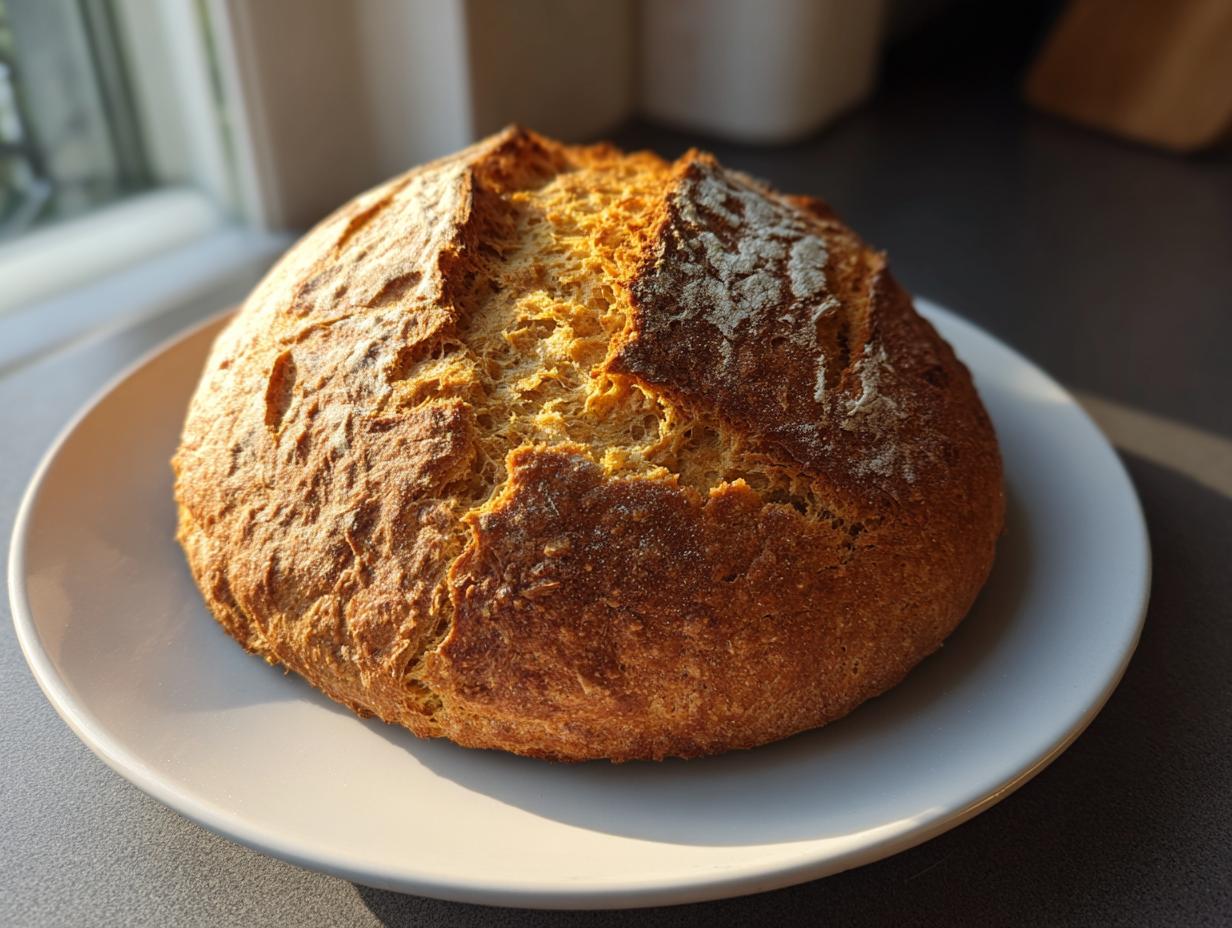
When I think about weeknight cooking, I need meals—or in this case, loaves—that move fast. I remember those years when I was juggling a demanding IT job and trying to bring something warm and comforting to the table. That’s where baking simplicity truly saved me. Nothing beats the magic of having a fresh, rustic loaf ready in under an hour, and that’s exactly what this Easy Authentic Irish Soda Bread Recipe delivers.
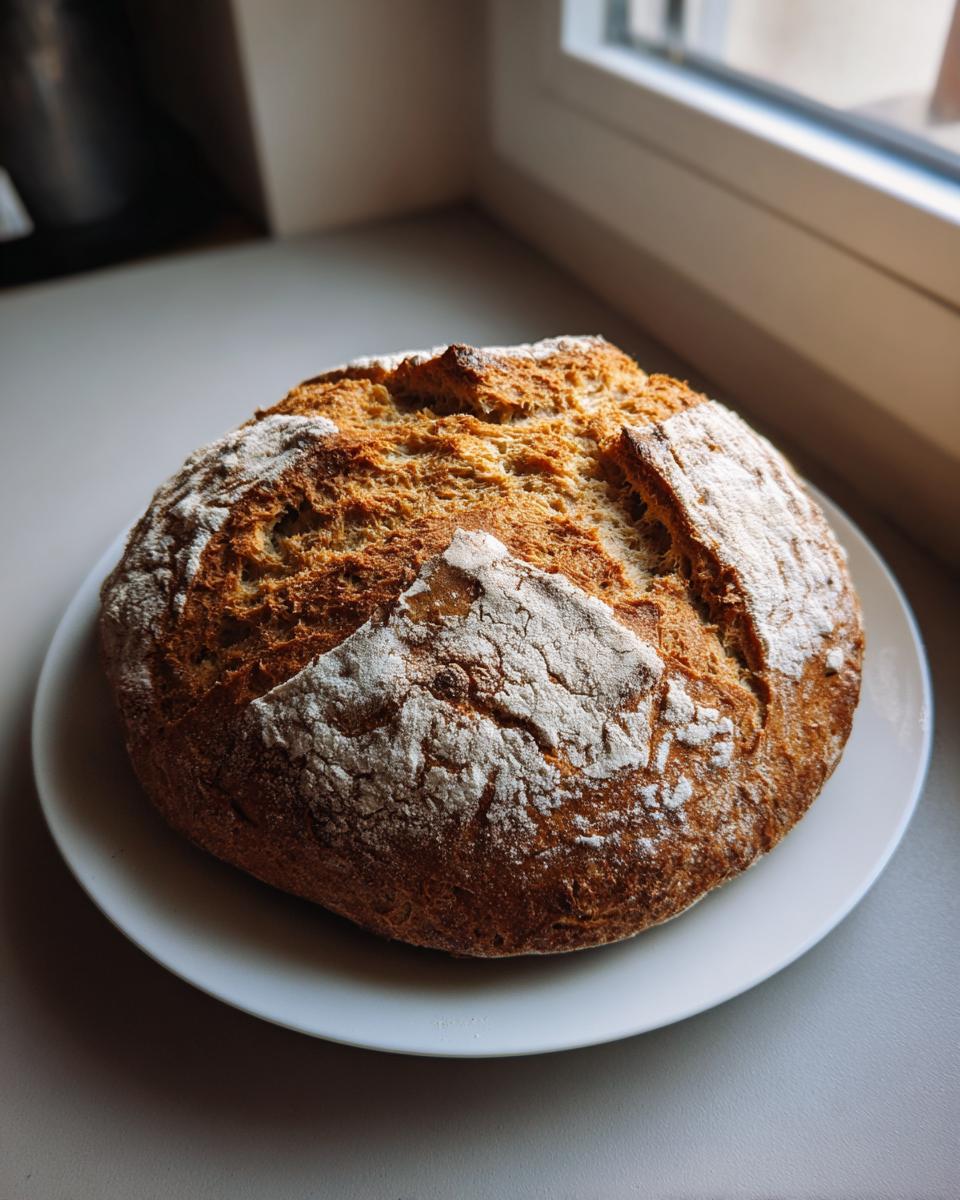
Forget all that waiting around for yeast to wake up! This is the ultimate No Yeast Bread solution—a beautiful, traditional loaf that proves you don’t need complicated techniques to achieve harmony in the kitchen. As I always say here at Delish Symphony, great flavor comes from finding the simple rhythm in essential ingredients.
This recipe, our favorite take on the classic Irish Soda Bread, comes together in minutes, giving you that perfect crust and satisfying crumb every time. Trust me, once you try this fast, simple baking project, it’ll become a staple for everything from soup nights to brunch.
- Why This Easy Soda Bread Recipe Works So Well
- Ingredients for Traditional Soda Bread
- How to Make Soda Bread: Step-by-Step Instructions
- Tips for the Perfect Homemade Loaf of Soda Bread
- Savory Variations: Cheddar Herb Soda Bread
- Serving Suggestions for Your Soda Bread
- Storage and Reheating Instructions for Soda Bread
- Frequently Asked Questions About Soda Bread
- Estimated Nutritional Data for This Soda Bread Recipe
Why This Easy Soda Bread Recipe Works So Well
When you’re looking for something truly rustic and satisfying, you can’t beat this soda bread. It fits perfectly with our philosophy here: simple ingredients, maximum flavor, and honestly, zero fuss. It’s the kind of bread baking that feels rewarding without demanding your entire evening.
It’s satisfying to know you made a real, crusty loaf without having to wait hours for yeast to prove anything! That’s the real magic here.
Fast Preparation: A True Quick Bread Recipe
Seriously, you can’t beat ten minutes of hands-on work. This is the perfect Quick Bread Recipe because it relies on a chemical reaction, not a biological one. That means you mix it up, give it a quick shape, and toss it in the oven. It’s the ultimate No Knead Bread hero for a Tuesday night.
The Secret to a Tender Crumb Bread
The key player in this whole operation is the buttermilk. You need that acid! When the acid in the buttermilk hits the baking soda, boom—instant lift. This reaction is what gives you that beautiful, open texture we all love in a Tender Crumb Bread without touching a packet of yeast.
When you get that balance right, the bread stays soft inside while getting that gorgeous, firm crust on the outside. It’s brilliant chemistry, really.
Ingredients for Traditional Soda Bread
Okay, let’s talk about what goes into this beautiful, simple loaf of soda bread. The best part? There are only four main players here, which really proves my point about accessible ingredients. We need strong flour, salt, baking soda, and of course, buttermilk. You’ll need four cups of all-purpose flour to start building our rustic shape.
Look for the freshest buttermilk you can find. That tang is essential because it’s what activates the baking soda and gives you that signature springy texture. If it’s not fresh, your Buttermilk Bread just won’t rise right, simple as that.
Buttermilk Bread Substitutions
Don’t panic if you open your fridge and realize you’re out of cultured buttermilk—I’ve definitely been there staring down an empty carton! You can easily whip up a substitute right at home, and it works perfectly in this recipe. It’s one of those handy tricks that keeps my Simple Baking Recipes list going strong.
Just take 1 and a half cups of regular whole milk and stir in 1 and a half tablespoons of white vinegar or fresh lemon juice. Let that little mixture sit on the counter for about five minutes. You’ll notice it starts to curdle—that’s exactly what you want! That slightly thickened, soured milk acts just like buttermilk when it hits that baking soda.
How to Make Soda Bread: Step-by-Step Instructions
Making this bread is what I love most because it’s so quick—preheat that oven to 400°F (200°C) right away, and line up your baking sheet! Remember, we aren’t building complex structures here; we are aiming for efficiency, which is why this recipe is a go-to in my collection of weeknight dinner recipes.
First, you whisk your dry stuff together—flour, baking soda, and salt—just to get everything buddies. Then, you pour that magic buttermilk right into the middle well. That’s where the adventure starts!
Mixing the Soda Bread Dough Quickly
This is the critical moment, so listen up: you mix fast! Use a wooden spoon or your hands, but keep it brief. You are looking for a dough that just barely comes together. I mean it—it should still look a little shaggy and definitely sticky. The moment you see the last streaks of flour disappear, STOP mixing immediately. If you start working that dough too much, you activate too much gluten, and instead of a soft, Rustic Loaf, you’ll end up with something tougher than shoe leather. Do not overmix!
Shaping and Scoring Your Rustic Loaf
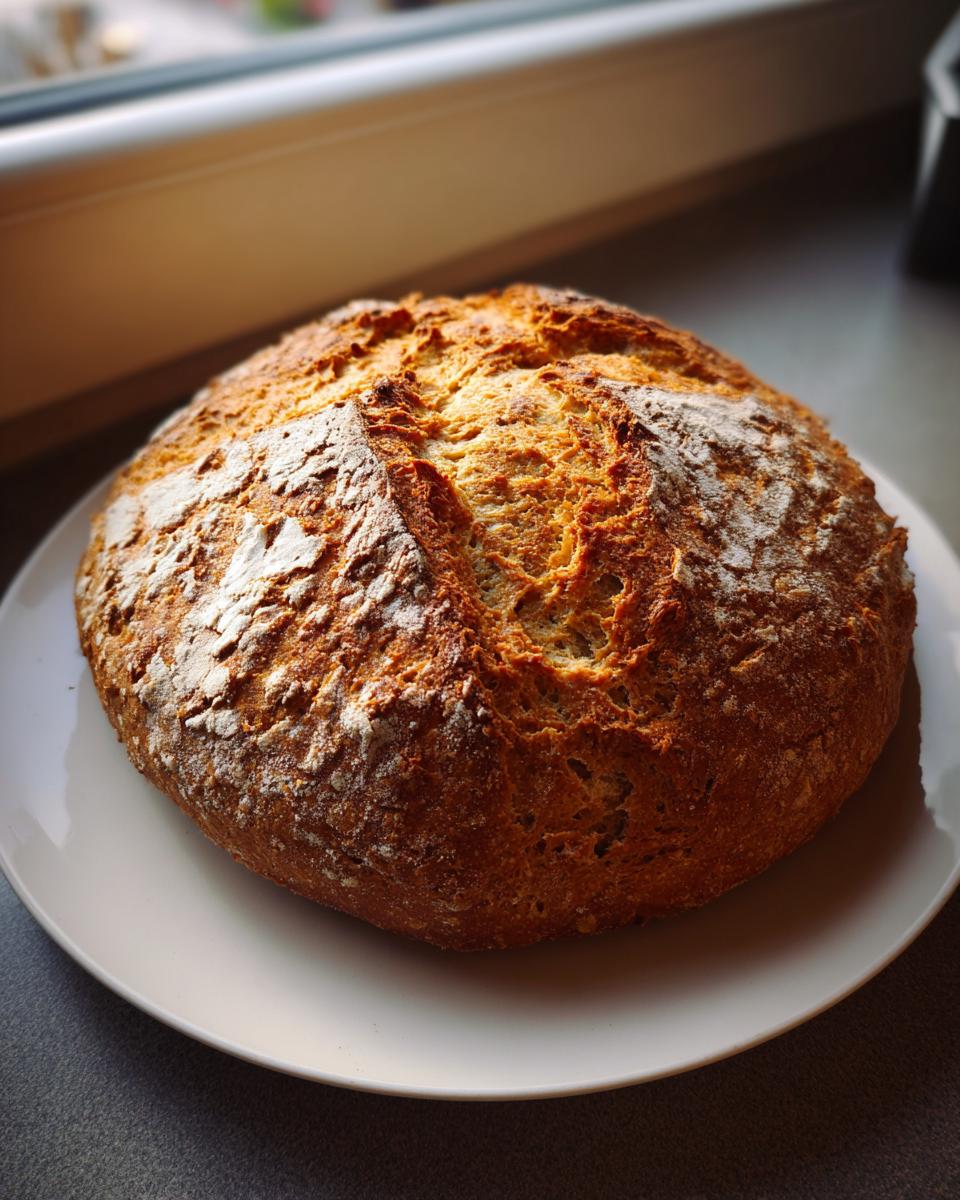
You’ll gently turn that sticky dough onto a floured counter. Don’t punch it or knead it like yeast bread; just nudge it gently into a round shape, maybe about six inches across. It should look sort of charmingly messy, just like real Traditional Soda Bread.
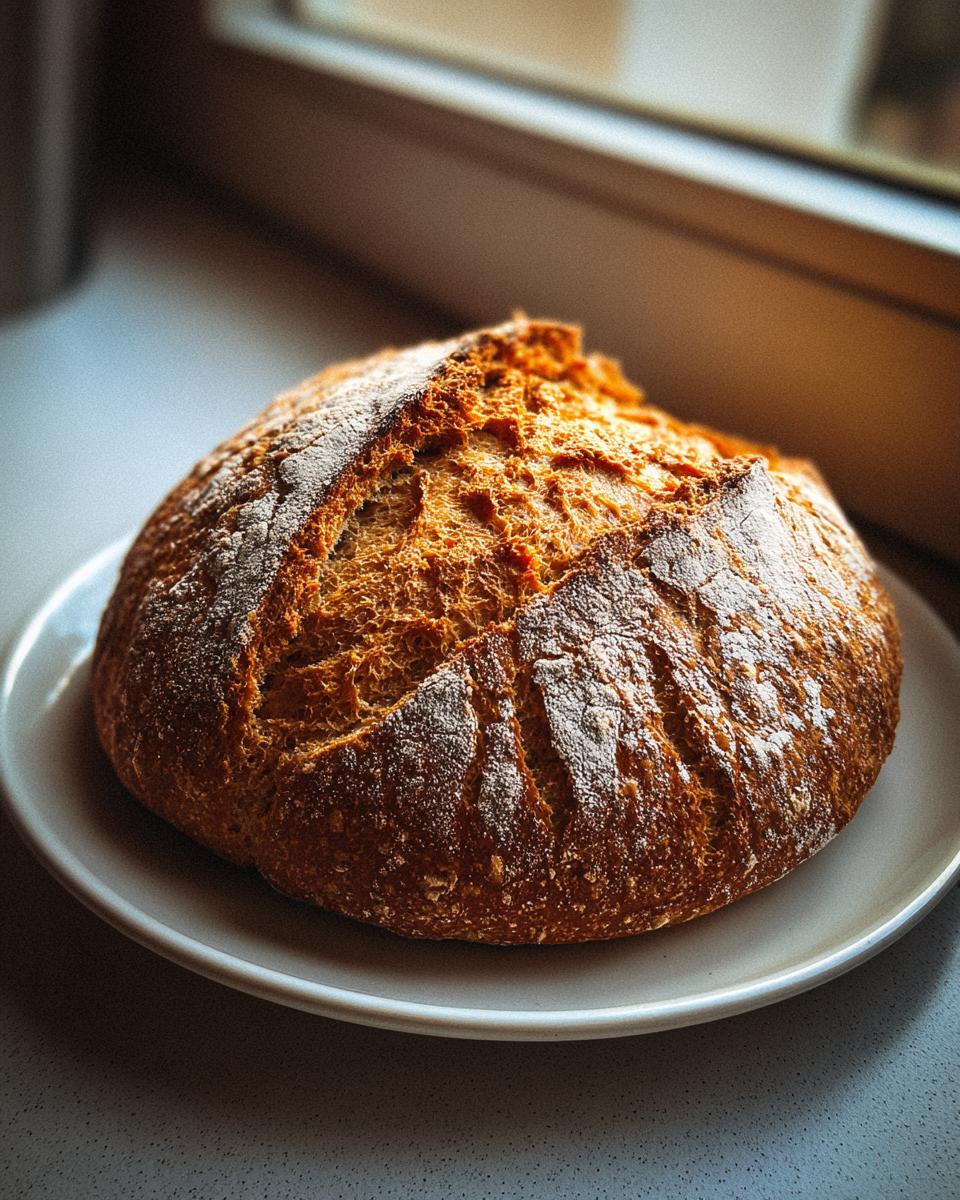
The most important visual step to finish is scoring it. Take a sharp knife and slash a deep cross right into the top. Back in the old days, folks swore this was to let the good spirits out or keep the bad ones from getting trapped. Practically speaking, it helps that thick, hearty dough bake evenly all the way to the center. Then, get it onto that prepared sheet and into the hot oven!
Tips for the Perfect Homemade Loaf of Soda Bread
Getting that ultimate crust and perfect internal softness takes just a tiny bit of attention near the end. The 400°F start temperature is key; that initial blast of heat helps the quick reaction between the baking soda and buttermilk do its finest work, setting that beautiful exterior structure immediately.
But for me, the real confirmation of success, the proof that I nailed the Traditional Soda Bread, isn’t the color—it’s the sound. After 30 minutes or so, carefully pull the loaf out (use good oven mitts!) and tap the bottom. If it sounds deeply hollow, like tapping on a sturdy wooden table, you’re done! If it sounds dull, pop it back in for another five minutes.
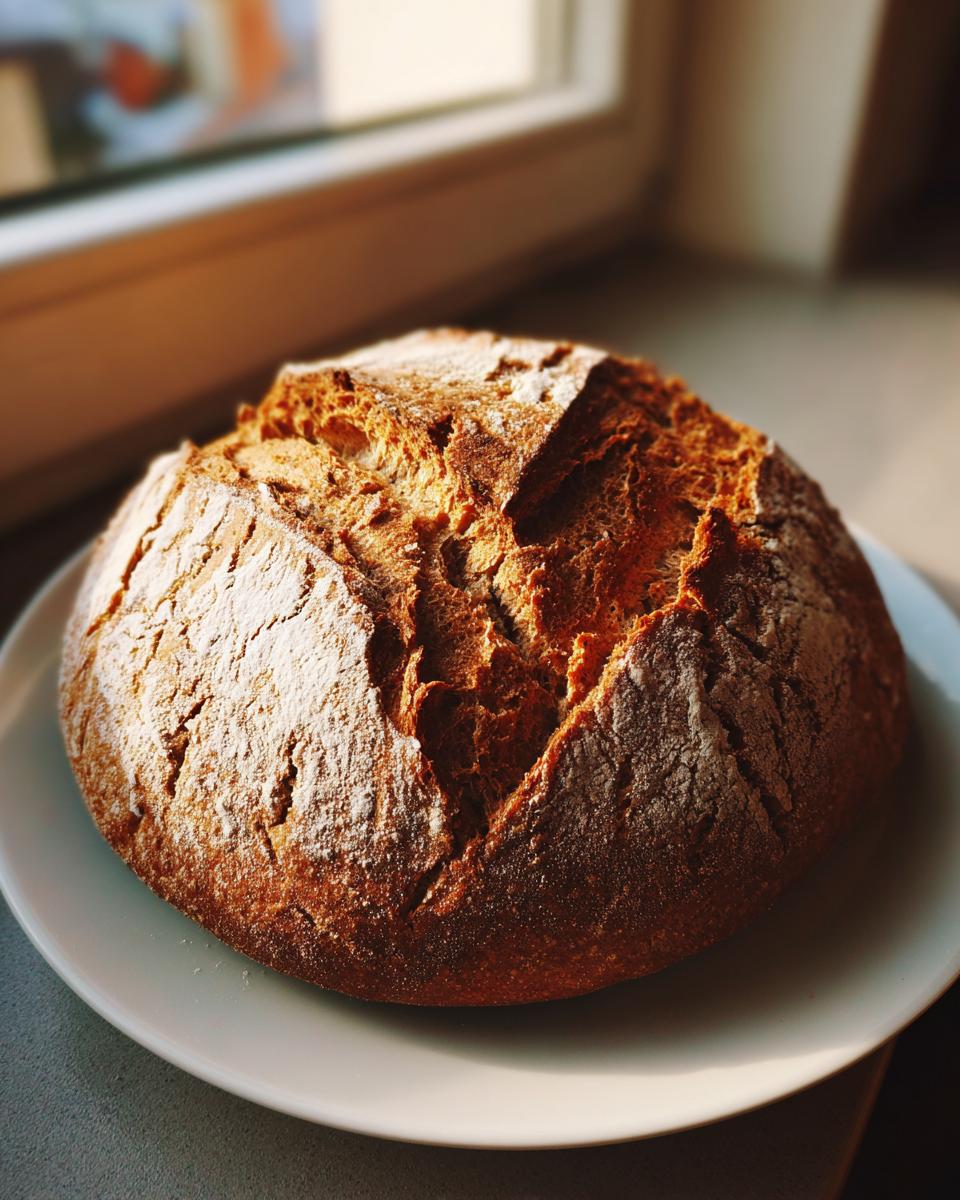
I still remember my very first attempt trying this recipe. I was so scared of overmixing that my loaf was too sloppy, and it spread everywhere. But the second time, I listened for that hollow thump, and wow—it was a revelation. It smelled just incredible, truly like comforting, honest food.
Savory Variations: Cheddar Herb Soda Bread
Now, while the traditional loaf is amazing for breakfast with jam, sometimes you just need something savory for dinner, right? If you are craving a Savory Quick Bread, turning this into a Cheddar Herb Soda Bread is unbelievably easy. It’s one of those flavor boosters that makes a simple stew feel like a feast.
Here’s the trick: once your dough is mixed but before you shape it, fold in about one cup of sharp cheddar—I love using aged white cheddar—and a couple of tablespoons of finely chopped fresh herbs. Rosemary and thyme work beautifully together, but chives are magnificent too!
Make sure you treat the dough gently so you don’t knock out the air we created with the buttermilk. If you want some inspiration for dipping, I often serve this cheesy version alongside my creamy garlic aioli or check out how my friends do a cheddar version over at Alright with Me. It’s addictive!
Serving Suggestions for Your Soda Bread
As much as I love eating this soda bread straight out of the oven with just a slather of good salted butter, it really shines when paired with something else. Since this is a wonderfully neutral, rustic loaf, it’s incredibly versatile. You can go sweet or savory, depending on what you’re having for dinner or even what time of day it is!
For a classic home-style meal, think hearty, warming companions. This bread is just perfect for sopping up every last bit of gravy or broth. It’s a must-have if you’re serving traditional Irish fare, but it works great for any comfort food baking you might be doing.
My absolute favorite way to enjoy this simple loaf, especially when I’ve made the savory version with cheese and herbs, is alongside a big bowl of soup. You have to try it with my own recipe for Irish Potato Leek Soup. The slight tanginess of the buttermilk bread cuts right through the richness of the creamy soup, and it makes the whole meal feel complete. It’s pure Homestyle Baking comfort.
And don’t overlook brunch! Warm slices are fantastic with smoked salmon and cream cheese, or even just toasted and served alongside scrambled eggs. Honestly, if you’ve got a warm slice of this Homemade Loaf, you’ve got half the meal sorted already!
Storage and Reheating Instructions for Soda Bread
Even though this soda bread disappears fast—and trust me, it usually does in my house—sometimes you accidentally bake one too big, or maybe you just need to save some for lunch the next day. Since this is a No Yeast Bread, it tends to firm up or dry out faster than yeasted loaves if stored incorrectly, but we have a few tricks up our sleeve to keep your Homemade Loaf tasting fresh.
The absolute best way to store leftover soda bread is to let it cool completely first. Once it’s totally cool, wrap it tightly in plastic wrap, and then tuck that into an airtight container or a zip-top bag. This keeps the air out and helps maintain that internal moisture we worked so hard to achieve.
Stored this way on the counter, it’s usually good for two or maybe three days. Don’t bother putting it in the fridge; it actually makes the bread go stale faster in there!
Waking Up the Crust: Reheating Your Loaf
What’s the point of making a rustic crust if you can’t enjoy it again? Reheating is essential to bring back that wonderful crispness. Don’t even bother with the microwave unless you want chewy bread—we are aiming for perfection here!
Throw your slice directly onto a baking sheet. Pop it into a 350°F (175°C) oven for about 5 to 8 minutes. You’ll start smelling that comforting, slightly wheaty aroma again. This low and slow heat works wonders to evaporate just enough surface moisture to bring back the crunch without drying out the inside. It comes out tasting like it just came out of the oven moments ago. Trust me, it’s worth those few extra minutes!
Frequently Asked Questions About Soda Bread
I know baking can sometimes lead to confusing results, especially with quick breads. Don’t worry, though! If you’ve followed the steps for this soda bread, you should be golden. It’s one of the most straightforward Simple Baking Recipes out there, but I get asked the same few things all the time. Here’s a quick rundown to make sure your loaf is perfect!
If you ever have other questions, feel free to check out some quick fixes over on my simple snack recipes page!
Is soda bread supposed to be sweet or savory?
That’s the million-dollar question! Traditionally, authentic Irish Soda Bread is supposed to be quite neutral leaning slightly savory. It’s meant to be a hearty vehicle for butter, jam, or whatever is simmering on the stovetop. Our easy recipe leans that way, but the good news is you can easily transition it to a slightly sweeter loaf if you wish! If you looked back at the ingredient notes, I mentioned you can easily toss in about one tablespoon of regular sugar during the dry mixing stage if you prefer a touch of sweetness to your No Yeast Bread.
Can I use baking powder instead of baking soda in soda bread?
Nope, stick to the baking soda for this one! It’s tempting to swap if your baking supplies are low, but you really need the baking soda here because it relies entirely on the acid found in the buttermilk to create that lift. Baking powder is different; it’s already mixed with its own acid. If you used baking powder instead of soda, you wouldn’t get the strong chemical reaction needed to properly rise this dense loaf, and your beautiful Homemade Loaf would end up flat and heavy.
Why is my soda bread so dense and heavy?
Nine times out of ten, if your soda bread turns out dense, it means you mixed it too much. Remember what I said about stopping right as the ingredients come together? Overworking the dough develops the gluten too much, and that’s what turns your potentially tender crumb into a brick. You want to handle it as little as possible. A slightly sticky, shaggy dough is a happy dough!
Why did I need to cut a cross in the top of the loaf?
This is a wonderful tradition, whether you believe in the folklore or not! In old Irish homes, they believed cutting that deep cross into the top of the loaf ensured the bread was properly baked all the way through and chased away any lingering spirits. From a practical side, since this Buttermilk Bread bakes so quickly and forms a hard crust fast, that deep score allows the heat to penetrate the center evenly, guaranteeing you don’t end up with a raw core inside your wonderfully crisp crust.
Estimated Nutritional Data for This Soda Bread Recipe
Okay, let’s talk numbers for a moment. I’m not big on obsessing over every little macro, because the joy of bread is eating it warm with butter, frankly! But since this is a wholesome, rustic bake, I ran the numbers based on the standard recipe above. It’s good to know what you’re working with, right?
Here is the estimated breakdown for one slice of this soda bread. Remember, these numbers are just guidelines based on standard ingredient amounts, so yours might vary a hair depending on the brand of flour or buttermilk you use. This is just meant to give you a helpful starting point for your own personal tracking if that’s your thing!
- Serving Size: 1 slice
- Calories: 220
- Total Fat: 1 gram
- Saturated Fat: 0.5 grams
- Trans Fat: 0 grams
- Cholesterol: 5 mg
- Sodium: 350 mg
- Carbohydrates: 47 grams
- Fiber: 2 grams
- Sugar: 1 gram (unless you added extra sugar during prep!)
- Protein: 7 grams
See? It’s a simple, satisfying bake without overloading on the bad stuff. It’s honest, Homestyle Baking at its best—plenty of satisfying carbs to keep you going, and honestly, zero guilt when you slab on that butter. A good, honest slice of No Knead Bread should make you feel nourished, and this recipe certainly does the trick!
PrintEasy Authentic Irish Soda Bread Recipe

Make a traditional, rustic Irish soda bread loaf quickly without yeast. This no-knead bread uses simple ingredients for a tender crumb and crisp crust, perfect for any meal.
- Prep Time: 10 min
- Cook Time: 35 min
- Total Time: 45 min
- Yield: 1 loaf (8 servings) 1x
- Category: Baking
- Method: Baking
- Cuisine: Irish
- Diet: Vegetarian
Ingredients
- 4 cups all-purpose flour
- 1 teaspoon baking soda
- 1 teaspoon salt
- 1 1/2 cups buttermilk
Instructions
- Preheat your oven to 400°F (200°C). Line a baking sheet with parchment paper or lightly dust it with flour.
- In a large bowl, whisk together the flour, baking soda, and salt.
- Make a well in the center of the dry ingredients and pour in the buttermilk.
- Mix the ingredients quickly with a wooden spoon or your hands until a soft, slightly sticky dough forms. Do not overmix.
- Turn the dough out onto a lightly floured surface. Gently shape it into a round loaf, about 6 inches in diameter.
- Place the loaf on the prepared baking sheet. Cut a deep cross into the top of the loaf, about 1 inch deep.
- Bake for 30 to 40 minutes, or until the crust is deep golden brown and the loaf sounds hollow when tapped on the bottom.
- Transfer the soda bread to a wire rack to cool slightly before slicing and serving warm.
Notes
- For a slightly sweeter loaf, add 1 tablespoon of sugar to the dry ingredients.
- If you do not have buttermilk, mix 1 1/2 cups of whole milk with 1 1/2 tablespoons of white vinegar or lemon juice and let it sit for 5 minutes before using.
- This bread pairs well with butter, jam, or alongside hearty soups and stews.
Nutrition
- Serving Size: 1 slice
- Calories: 220
- Sugar: 1
- Sodium: 350
- Fat: 1
- Saturated Fat: 0.5
- Unsaturated Fat: 0.5
- Trans Fat: 0
- Carbohydrates: 47
- Fiber: 2
- Protein: 7
- Cholesterol: 5