

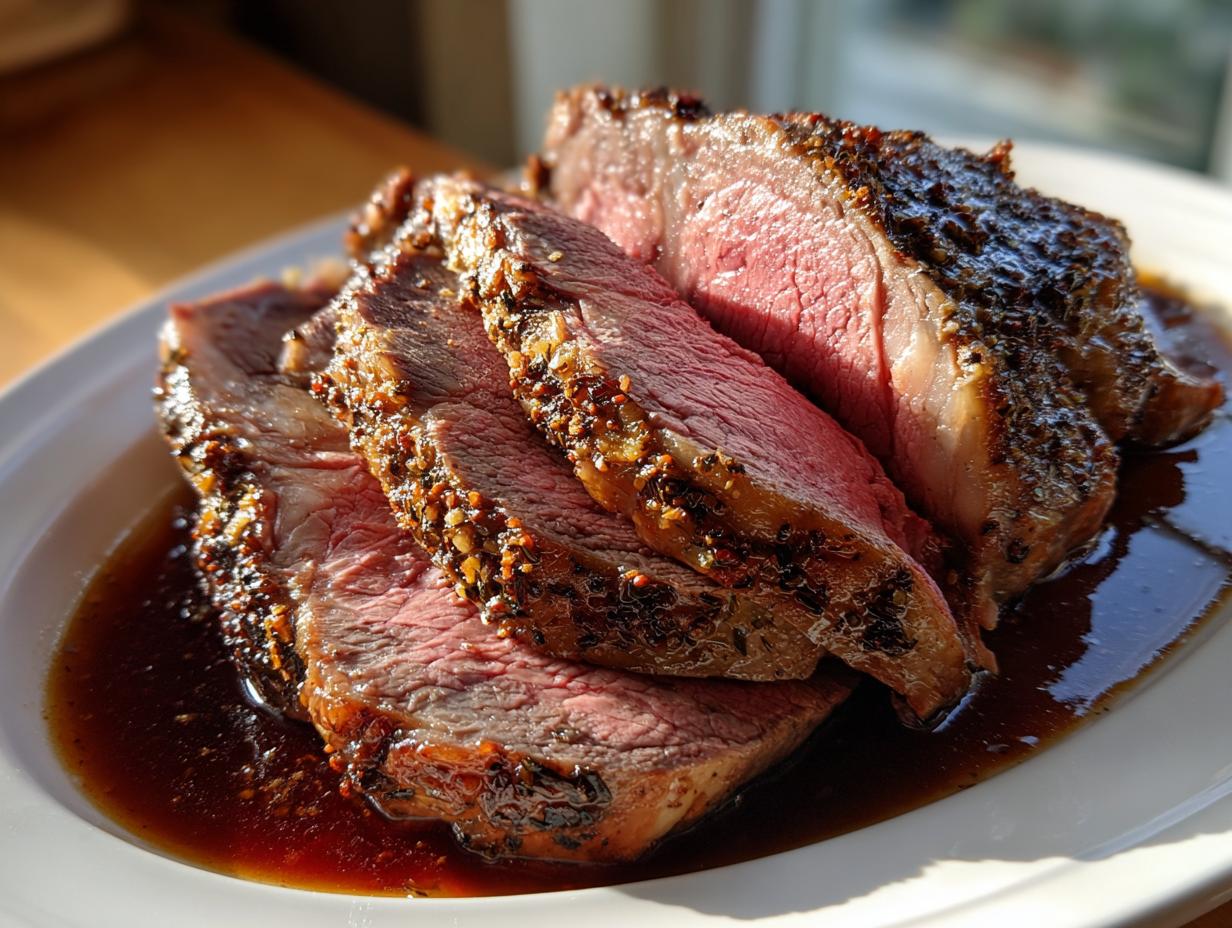
When the holidays roll around and you need a showstopper that actually *works*, nothing beats that first magnificent slice of roast beef. I know that feeling—the slight panic as you look at that huge, expensive cut of meat. Trust me, I’ve been there. For years, while I was deep in the world of IT, the kitchen was my escape, and I obsessed over making the perfect centerpiece Roast without the drama. That’s why I developed this ultimate easy oven-roasted prime rib recipe. We’re skipping the complicated steps and focusing only on the practical techniques needed to guarantee you a juicy, perfectly medium-rare result every single time. This isn’t about fancy culinary school tricks; it’s about making great food accessible for your big feast. If you want to read more about how I approached making cooking simple, check out my story here.
- Why This Garlic Herb Prime Rib Recipe is Your New Holiday Centerpiece Roast
- Ingredients for the Ultimate Prime Rib Roast
- The Foolproof Method: How to Cook Prime Rib in the Oven
- Making the Flavorful Prime Rib Au Jus Sauce
- Tips for Success with Your Oven Roasted Prime Rib
- Serving Suggestions for Your Holiday Centerpiece Roast
- Storage and Reheating Instructions for Leftover Prime Rib
- Frequently Asked Questions About Cooking Prime Rib
- Estimated Nutritional Data for This Juicy Roast Beef Recipe
- Share Your Perfect Prime Rib Experience
Why This Garlic Herb Prime Rib Recipe is Your New Holiday Centerpiece Roast
When it comes to a big feast, you need a recipe you can truly trust. This isn’t just another roast; it’s built to deliver maximum impact with minimum stress. I developed this version specifically because I wanted a Holiday Centerpiece Roast that didn’t require me watching the oven every second.
- It’s incredibly easy. We use a tried-and-true high-heat sear followed by a gentle roast—nothing complicated!
- You get that incredible savory flavor from the Garlic Herb Crust, which seals in all the beefy goodness.
- This method is your ticket to that melt-in-your-mouth, non-negotiable medium-rare center.
If you want to see how we approach simplifying great meals during the busy week, take a peek at my other weeknight dinner recipes.
Achieving the Perfect Medium Rare Prime Rib Temperature
Look, this is the most important part of the whole process, hands down. You absolutely, positively need a good digital meat thermometer. Guessing with a roast this size is inviting disaster, and we are cooking for results here!
For that perfect Medium Rare Prime Rib, you need to pull the roast out of the oven when your thermometer reads 125°F. Don’t panic that it seems too low! That roast is going to keep cooking while it rests—we call that carryover cooking. It will easily climb another 5 to 10 degrees just sitting under that foil blanket. That little bit of temperature rise is what keeps your roast beef recipe unbelievably juicy instead of overdone!
Ingredients for the Ultimate Prime Rib Roast
Okay, let’s talk about what you need to gather. I made sure every single item here is easy to find at your local market because a showstopper shouldn’t require a special trip across town. Having everything measured and ready *before* the roast comes out of the fridge makes the process so much smoother. Remember, we are aiming for efficiency here!
For the Savory Herb Crusted Prime Rib
The flavor starts right here with our garlic herb rub. Don’t skimp on the herbs; fresh rosemary and thyme make a massive difference in the final aroma and that beautiful crust. You’ll need:
- One gorgeous (5-7 lb) bone-in prime rib roast—also called a standing rib roast. Make sure you ask your butcher for quality here!
- 3 tablespoons of good olive oil to help that crust stick.
- 6 cloves of garlic, minced finely. I mean really soft and mushy, trust me on this.
- 2 tablespoons of fresh rosemary, finely chopped. This is truly the star!
- 1 tablespoon of fresh thyme leaves.
- 1 tablespoon of coarse kosher salt—this helps draw out moisture for a better sear.
- 1 teaspoon of freshly cracked black pepper.
- 1 teaspoon of onion powder.
- 1 teaspoon of paprika, just for color.
For the Simple Prime Rib Au Jus Sauce
The secret weapons for our Prime Rib Au Jus Sauce are the drippings left behind after the roast finishes. Don’t you dare pour those precious juices down the drain! For the quick sauce, grab:
- 2 cups of beef broth.
- 1/4 cup of those pan drippings you saved—the good stuff!
- 1 tablespoon of cornstarch mixed together with 2 tablespoons of cold water. We call this a slurry, and it thickens everything up perfectly.
The Foolproof Method: How to Cook Prime Rib in the Oven
This is it—the method I swear by for getting that amazing restaurant-quality result right in your own kitchen. We break this down into simple stages so you can manage the process without stress. This Oven Roasted Prime Rib method is designed to work, plain and simple.
Preparation and Applying the Garlic Herb Crust
First things first: take that beautiful roast out of the fridge at least two to three hours before you plan to cook it. Letting that big piece of meat warm up slightly helps it cook evenly. While it’s sitting out, preheat your oven way up high to 450°F. You want that initial blast of heat to set everything nicely.
Now, for the crust! Before you even think about touching the herbs, grab some paper towels and pat that entire roast down until it feels bone dry. Seriously, moisture is the enemy of a good crust. Once it’s dry, rub it down with olive oil, and then press that garlic herb mixture onto every surface. Get it in there tight!
High-Heat Sear and Slow Roasting for Medium Rare Prime Rib
Put your roast on a rack inside your roasting pan—fat side up, please! We hit it with that 450°F heat for exactly 15 minutes. That’s just to form that fantastic browned exterior. Then, immediately drop the oven temperature down to 325°F. This is where the magic happens slowly. If you’re planning a big gathering like dinner described by one site for a Christmas feast, this two-step process is key.
From here on out, you need your meat thermometer. Pull that prime rib when the thickest part hits 125°F. That’s your marker for Medium Rare Prime Rib perfection. Don’t panic that it seems too low! That roast is going to keep cooking while it rests—we call that carryover cooking. It will easily climb another 5 to 10 degrees just sitting under that foil blanket. If you ever need a quick side sauce or aioli recipe, I’ve got some great simple flavor pairings you can check out here: Garlic Aioli.
The Non-Negotiable Rest Period for Your Prime Rib
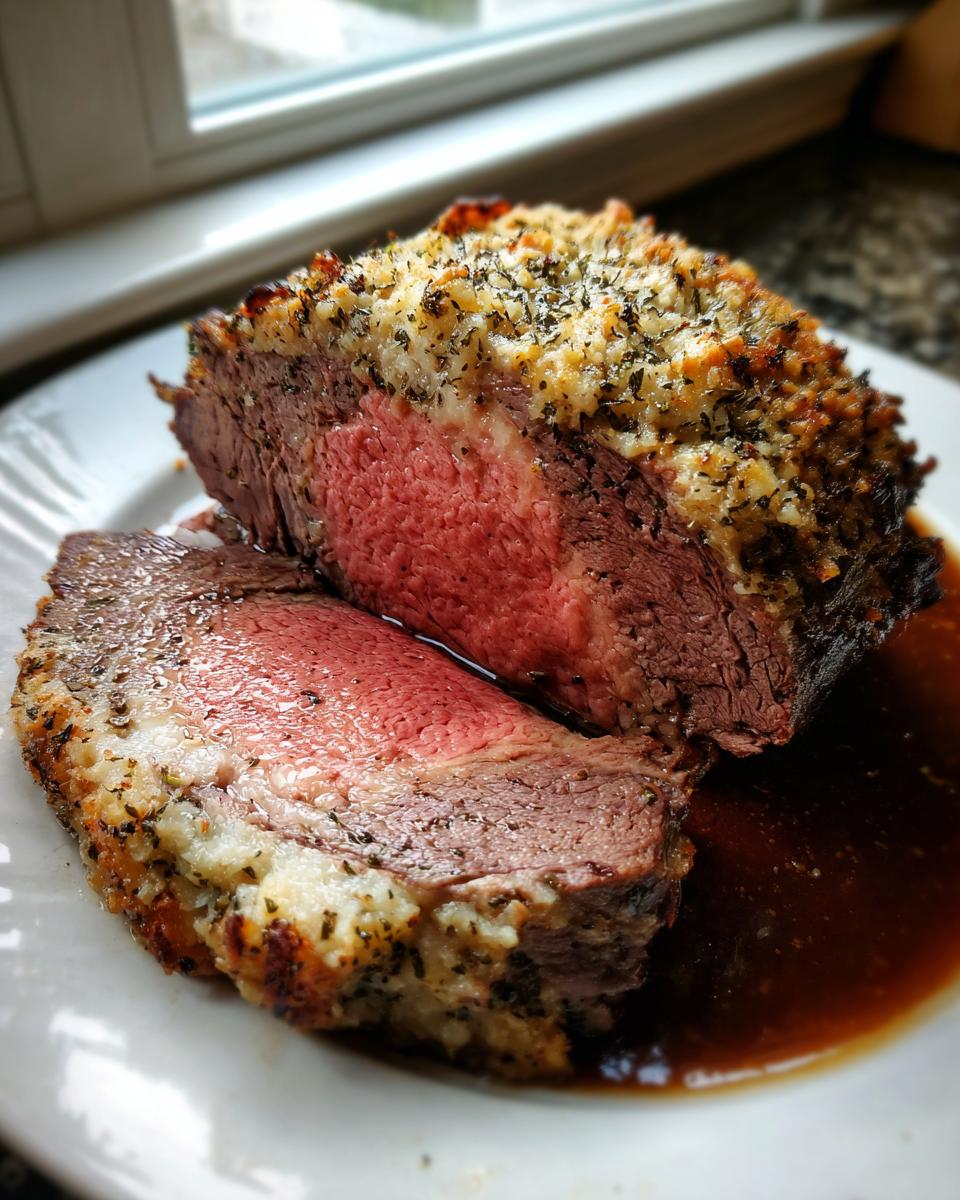
Once you pull that roast out at 125°F, you must, must, must tent it loosely with foil and let it relax for at least 20 to 30 minutes. I know it’s tempting to carve right away while everyone is staring, but resist! If you cut too early, all those gorgeous juices you worked so hard to keep inside will just run out onto the cutting board. Resting allows those juices to be reabsorbed deep into the fibers, guaranteeing that incredibly tender, melt-in-your-mouth experience. It’s the easiest way to ensure juiciness!
Making the Flavorful Prime Rib Au Jus Sauce
While that amazing prime rib is resting—and remember, don’t touch it!—it’s the perfect time to whip up the simplest, most flavorful sauce you’ll ever make. Seriously, store-bought gravy can pack its bags now, because this Prime Rib Au Jus Sauce uses the concentrated flavor left right in your roasting pan. It’s pure gold, my friends.
First, find your roasting pan with all those delicious brown bits stuck to the bottom. Those bits are flavor bombs waiting to happen! Carefully pour those pan drippings into a small saucepan. If you didn’t manage to save much, just add a tablespoon of butter to the pan over medium heat and scrape all those browned bits up with a wooden spoon. Don’t be shy; that’s called fond, and it’s the base of everything good here.
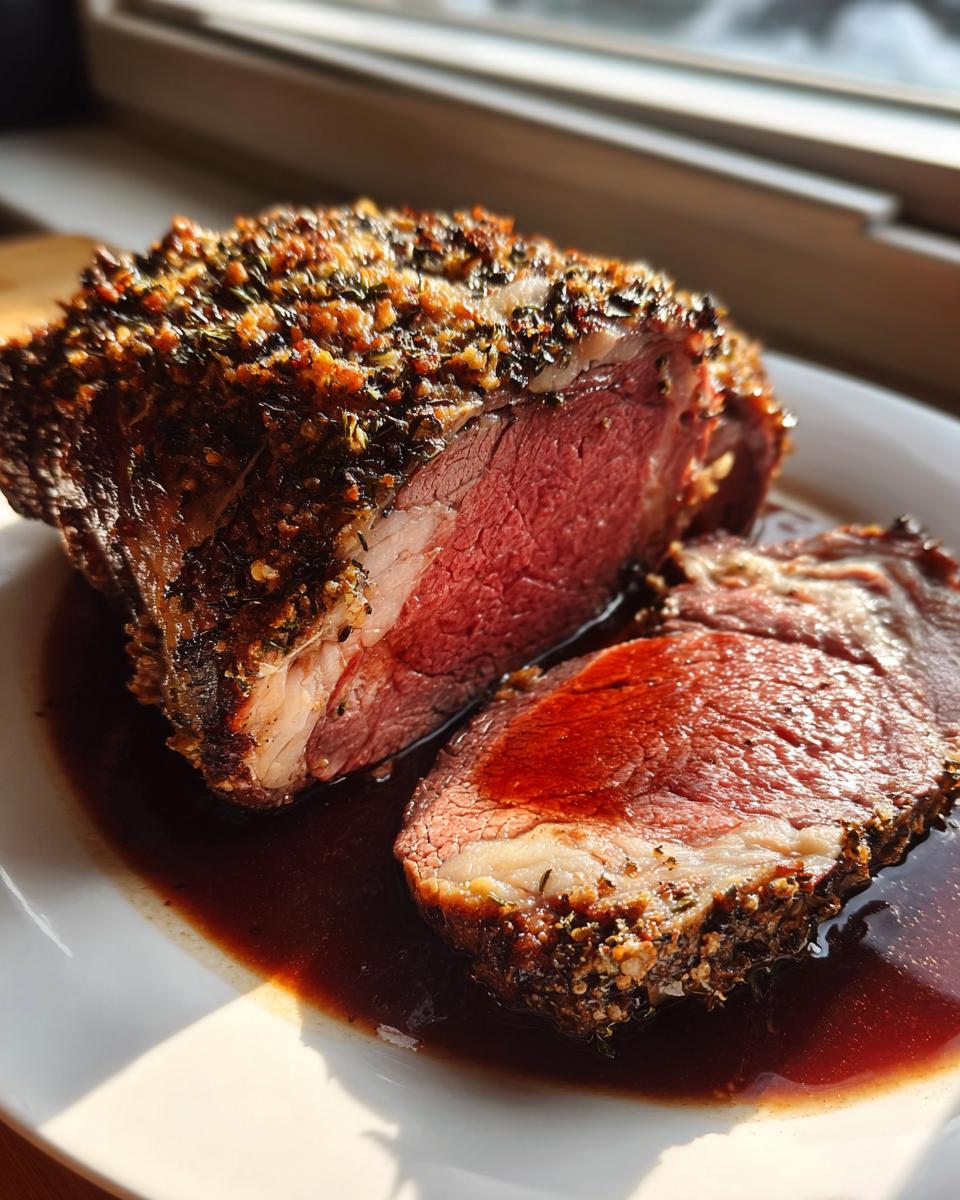
Next, add your 2 cups of beef broth right into that saucepan with the drippings. Bring that mixture up to a happy little simmer over medium heat. Let it bubble gently for a few minutes to marry those flavors. While it’s warming, take that slurry you mixed earlier—the cornstarch and cold water—and give it one last good stir so the cornstarch hasn’t settled.
Slowly whisk that slurry into your simmering broth mixture. You don’t want to dump it all in at once, or you’ll get lumps, and we hate lumps! Keep whisking until the sauce starts thickening up. It should coat the back of a spoon nicely. You’re looking for a nice, vibrant sauce that complements the beef, not smothers it. Taste it! If it needs a tiny bit more salt or pepper, now is the time to adjust. If you are looking for a fantastic resource that keeps things super simple on the sauce front, be sure to check out this great guide on making au jus.
Serve this shimmering, savory Au Jus hot right alongside your freshly sliced tender standing rib roast. It takes the whole meal up about ten notches without adding any real work to your busy dinner schedule!
Tips for Success with Your Oven Roasted Prime Rib
We’ve nailed the cooking technique, but baking a showstopper like this prime rib sometimes comes down to the little things you do before and after the oven time. I’ve learned a lot over the years—especially trying to perfect that crust—so here are my biggest pointers to make this the Best Prime Rib Cooking Guide you ever follow.
First up, let’s talk about the bone. We used a bone-in roast because those bones actually insulate the meat from the high heat, helping you achieve that wonderfully even, medium rare prime rib center we love. If you are using a boneless roast, just be aware that it cooks faster. You absolutely need to rely on that thermometer, maybe even start checking it 15 minutes earlier than my guide suggests, because there’s no bone insulation working in your favor.
Now, everyone wants that gorgeous, crackly herb crust, right? If you pull your roast out and feel like the crust could still use a little more color, here is a handy trick: Once the roast is resting (and only while it’s resting!), you can carefully stick it under a broiler for just 1 to 2 minutes. Watch it like a hawk, though! Broilers get intense fast, and we want golden brown, not charcoal. This quick blast really seals the deal on that savory exterior.
And finally, I have to remind you again about resting. Seriously, if you skip this step, you might as well have cooked a lesser roast because the texture will suffer. Resting allows the muscle fibers that tightened up in the heat to relax and reabsorb the juices. It is non-negotiable for a truly tender roast beef recipe. If you want a great side to go with this, I often make crispy skillet potatoes while the meat is resting.
For more on setting up your cooking process perfectly, check out this great resource detailing another foolproof prime rib method, which confirms why temperature is king: Perfect Roast. Trust the process, trust your thermometer, and you will have the greatest success!
Serving Suggestions for Your Holiday Centerpiece Roast
You’ve nailed the prime rib; it’s rested, perfectly pink, and sitting on your counter waiting for glory. Now comes the fun part—what do we put next to this king of roasts? Since this is such a rich, savory dish, the perfect side dishes should complement that flavor without fighting it or becoming too heavy. We aren’t trying to make a casserole competition here; we want harmony on the plate!
Because this is often the main attraction for a big event like a Christmas Dinner Main Course, I like to keep the sides relatively straightforward but incredibly flavorful. You need texture contrast, something green to cut through the richness, and, of course, something potato-related because what is a roast without potatoes, really?
For balancing that richness, you absolutely cannot beat a great root vegetable. I love roasting things like carrots, parsnips, and maybe some sweet potatoes together. The natural sweetness really plays off the salt and herbs on the roast. My favorite way to do that is using my recipe for roasted sweet potato rounds; they get slightly caramelized but stay tender.
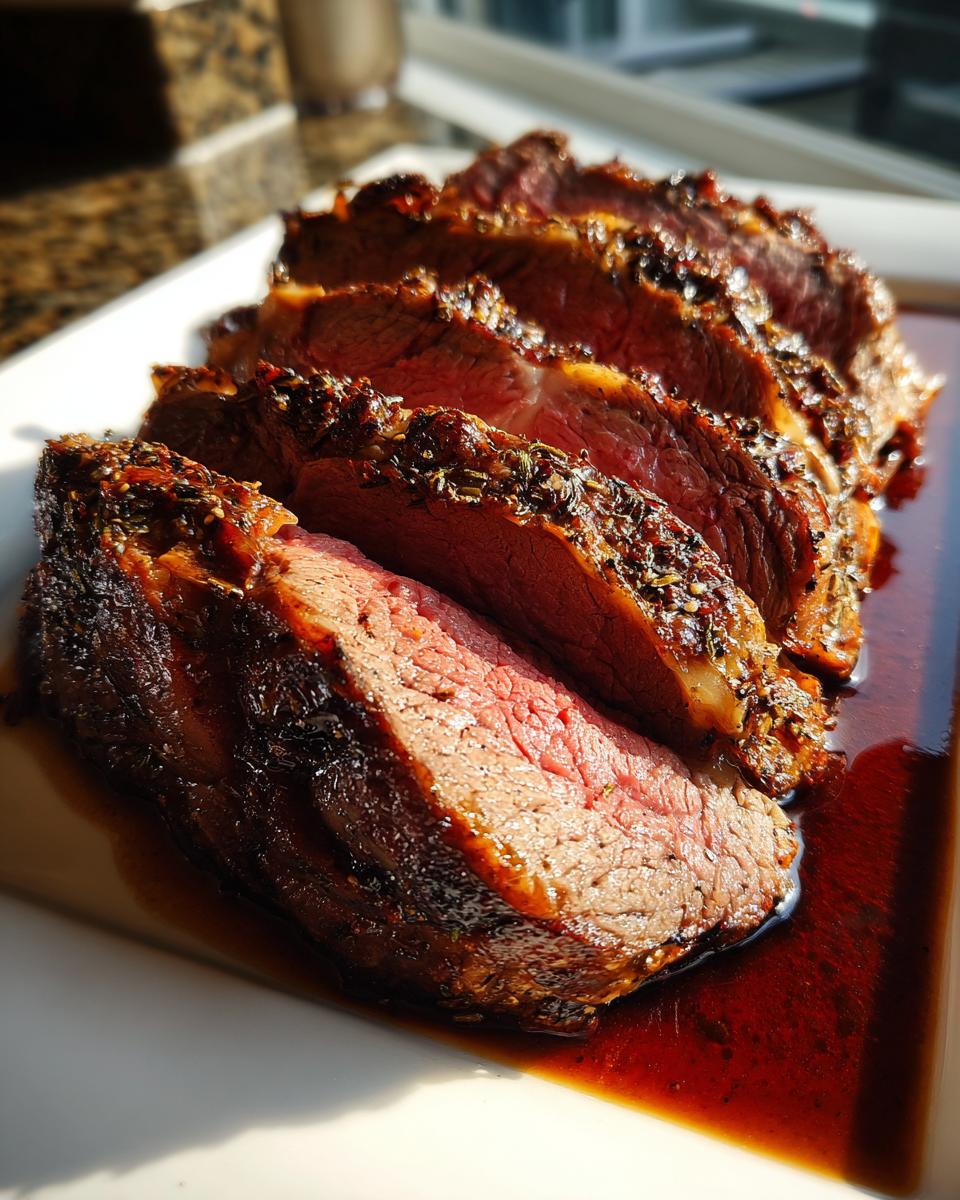
And speaking of potatoes—you can go high-end sophisticated or pure comfort, and both work beautifully here. If you want something totally decadent that screams special occasion, you have to try my creamy garlic parmesan mashed potatoes. They just happen to pair perfectly when you spoon a little of that Au Jus over them, too. They are pure cloud-like magic!
For a lighter touch, keep it green! Simple blanched green beans tossed with toasted almonds or maybe some asparagus roasted quickly with just salt and a squeeze of lemon juice will keep your plate looking vibrant and tasting fresh. Remember, the roast is the star, so the sides are the amazing supporting cast making sure everyone leaves the table happy.
Storage and Reheating Instructions for Leftover Prime Rib
So, you did it! You cooked the perfect prime rib and managed to have some leftovers—which is honestly a win in itself, because usually there isn’t any! Now, the real trick is making sure those leftovers taste just as amazing the next day. We want to keep that beautiful texture, not dry it out to shoe leather!
The absolute best way to store your leftover roast is to slice it first. Keep the slices relatively thin—about a quarter-inch thick, maybe a little thicker if you’re nervous about warming it up later. Pop those slices into an airtight container. You can layer them with a piece of plastic wrap or parchment paper between each layer if you’re using a smaller container. Keep this container in the fridge; it should be good for about three, maybe four days max. I wouldn’t push it beyond that, especially with beef.
The Key to Reheating: Moisture is Your Best Friend
If you try to microwave a slice of leftover roast beef, you’re probably going to end up with something tough. We need to treat it gently, almost like we’re poaching it slightly in flavor while warming it up. This is where that wonderful Prime Rib Au Jus Sauce we made comes in handy!
Grab a skillet—I prefer the stovetop method over the microwave for better control. Add just a tablespoon or two of that Au Jus or even some plain beef broth to the bottom of the pan over medium-low heat. You just need enough liquid to create steam and prevent anything from sticking.
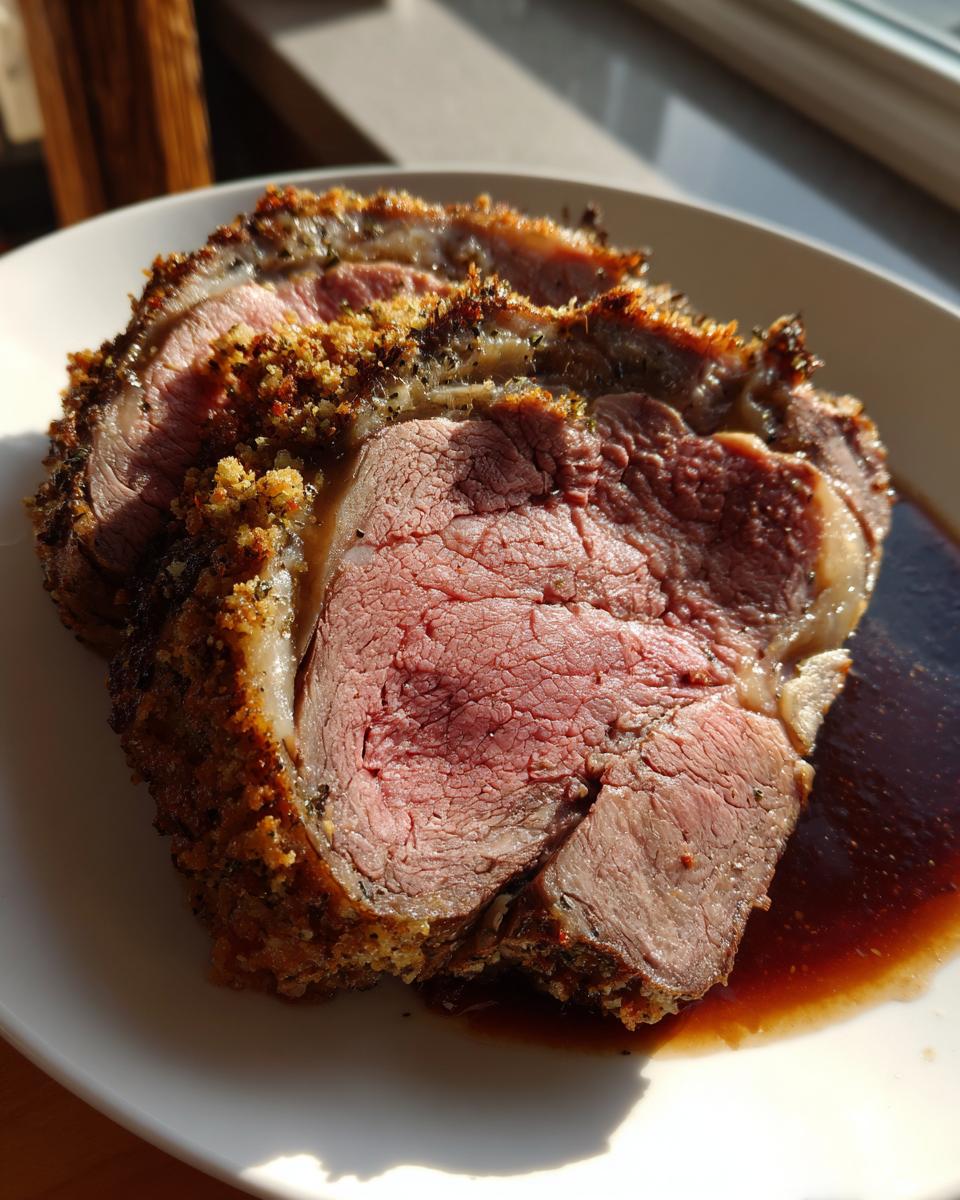
Lay your slices in a single layer across the pan. Cover the skillet immediately with a tight-fitting lid. Let that steak warm up slowly for just a few minutes on each side. The steam trapped under the lid is going to gently bring the temperature up while moisturizing the meat, keeping it tender and flavorful. Resist the urge to crank the heat up; low and slow wins this race.
Freezing Leftover Prime Rib
If you know you won’t get to the leftovers within four days, freezing is the way to go. You still want to slice it first. Wrap each individual serving or small stack tightly in plastic wrap first, then slide that package into a heavy-duty freezer bag. This double-wrapping helps prevent freezer burn from getting its greedy little hands on your delicious meat.
When you’re ready to eat it months later, thaw it overnight in the fridge first. Then, follow the exact same reheating method we talked about above, but give it an extra minute or two on low heat, making sure you replenish the broth or Au Jus as needed to maintain that beautiful moisture level. You worked too hard on this roast to let leftovers go to waste!
Frequently Asked Questions About Cooking Prime Rib
It’s totally normal to have a few jitters before tackling a big roast like this. It’s a spectacular piece of meat, and we want to make sure you feel confident from start to finish. I’ve compiled the things folks ask me most often when they are figuring out How to Cook Prime Rib, so you can move straight to enjoying your meal!
Can I use a boneless roast instead of a bone-in roast?
You absolutely can use a Boneless Prime Rib Roast! It’s often easier to handle and carve, which is a plus if you’re new to this. However, keep this in mind: the bones in a standing rib roast actually act like little insulators, protecting the meat closest to them from the direct heat of the oven. Because the boneless version doesn’t have that protection, it tends to cook a little quicker.
My advice for a Juicy Roast Beef Recipe using a boneless cut? Start checking the temperature about 15 minutes sooner than you would for a bone-in cut. You still want to pull it around 125°F for that ideal medium-rare, but that reduced cooking time means keeping your thermometer nearby is even more important!
What if I don’t have a rack for my roasting pan?
Oh, the missing rack panic! Don’t worry about it—we’ve all been there. The rack’s job is simple: to keep the meat slightly elevated so air can circulate evenly around the bottom and sides, which prevents that bottom layer from steaming and becoming dark or mushy. It also helps keep the roast elevated above the drippings, which we need for that perfect Prime Rib Au Jus Sauce later!
If you don’t have a rack, you can easily create one! Grab two or three heavy, oven-safe vegetable stalks, like thick carrots, onions, or even beef bones if you have some, and lay them parallel across the bottom of your roasting pan. Place the roast right on top of your vegetable foundation. Not only does this lift the meat, but those veggies soak up some amazing flavor while they cook! Honestly, sometimes I use onions because I plan on tossing them into the Au Jus later for added depth.
How long does it take to cook a 7lb roast?
This is the million-dollar question, and the answer always makes me sigh a little, because it relies completely on your oven and the exact shape of your roast! However, I can give you a solid baseline for planning your Christmas Dinner Main Course.
For a 7-pound Oven Roasted Prime Rib following my 325°F roasting temperature (after the initial sear), you are generally looking at about 13 to 15 minutes per pound. So, for your 7-pounder, that puts you right around 90 to 105 minutes of total roasting time *after* you drop the heat. But hear me loud and clear: use the thermometer! Aim to pull it off the heat when the internal temperature hits 125°F. If you’re focused on timing alone, you risk missing out on that perfect tender standing rib roast.
If you’re looking for some easy recipes to whip up while that roast is doing its thing in the oven, I’ve got simple ideas like my easy breakfast recipes if you happen to be doing a marathon cooking day!
Can I tie my roast myself if it’s uneven?
If you bought a roast that isn’t perfectly uniform in shape—maybe it’s thicker on one end than the other—tying it up is a fantastic idea to help it cook evenly. This helps you achieve a more uniform shape, which directly translates to even cooking and a better final presentation for your Savory Herb Crusted Roast.
Use kitchen twine, and make sure you loop it around the roast at about one-inch intervals, creating neat little ‘logs’ of meat across the perimeter. Don’t tie it too tight; remember, the meat needs room to breathe and swell as it cooks. Once tied, you can proceed with the oil and herb rub exactly as directed. This small step really brings that professional touch to your Melt in Your Mouth Roast!
Estimated Nutritional Data for This Juicy Roast Beef Recipe
Now, I want to be super clear about this part. Since everyone’s cut of prime rib is a little different—some people trim more fat than others, and the exact weight can vary—these numbers are just my best estimate based on the recipe breakdown for a standard 6-ounce cooked serving. Think of this as a general guideline, not a strict nutritional breakdown for every single slice you cut.
When I developed this Juicy Roast Beef Recipe, I focused on flavor and texture, of course, but I know some of you track macros! These estimates assume you’re working off the middle of that 5-to-7-pound roast range we discussed. You should always adjust based on how much fat you trim off before serving.
Here is what the general nutritional profile looks like per serving:
- Serving Size: 6 oz cooked
- Calories: 450
- Protein: 40g (That’s why this is such a satisfying centerpiece!)
- Fat: 30g (This includes the good fats, but remember, you can trim excess fat off the roast before serving to lower this!)
- Saturated Fat: 12g
- Carbohydrates: 2g
- Fiber: 0g
- Sugar: 1g (Mostly natural sugars from the garlic and herbs, barely any!)
- Cholesterol: 140mg
- Sodium: 450mg (This will change quite a bit based on how much salt you use in your specific herb crust!)
I always say, if you’re making a showstopper like prime rib for a special occasion, don’t sweat the small stuff too much! Enjoy the holiday, enjoy the amazing flavor, and we can worry about calorie counting tomorrow. This is holiday food, made perfectly, the *Delish Symphony* way.
Share Your Perfect Prime Rib Experience
Wow, we made it! You’ve gone from staring down an intimidating slab of beef to mastering the Oven Roasted Prime Rib. That’s huge! Now that you’ve enjoyed that incredible, juicy roast with that savory, herby crust, I really want to hear all about it.
Here at Delish Symphony, this isn’t just a one-sided conversation; it’s a real kitchen community. Knowing that this recipe helped you pull off a stress-free Holiday Centerpiece Roast means the world to me. That’s why I put so much time into testing every step to make sure it works in *your* home kitchen.
So, if you tried this recipe—whether you took it medium-rare, medium, or even well-done (hey, I won’t judge!)—please take a quick second to leave a rating right down below in the comments section. A simple 5-star review helps other cooks feel confident tackling this spectacular beef roast next time.
And if you have any pictures of your gorgeous slices, or maybe you tweaked the herb crust just a little bit? Drop those photos there too! I absolutely love seeing your culinary successes. Seriously, seeing your finished product genuinely makes my day. If you have any questions that popped up during the process, feel free to shout them out there as well. I check the comments often and I’m always happy to jump in and help out.
If you need to get in touch directly for anything that isn’t a comment, you can always reach out through my contact page. Now go enjoy those leftovers!
PrintThe Ultimate Easy Oven-Roasted Prime Rib with Garlic Herb Crust and Simple Au Jus
Follow this simple, foolproof method to create a juicy, tender, medium-rare prime rib roast with a savory garlic herb crust, perfect for your holiday centerpiece.
- Prep Time: 20 min
- Cook Time: 90 min
- Total Time: 140 min
- Yield: 6-8 servings 1x
- Category: Main Course
- Method: Oven Roasting
- Cuisine: American
- Diet: Low Calorie
Ingredients
- 1 (5-7 lb) bone-in prime rib roast (standing rib roast)
- 3 tablespoons olive oil
- 6 cloves garlic, minced
- 2 tablespoons fresh rosemary, chopped
- 1 tablespoon fresh thyme leaves
- 1 tablespoon kosher salt
- 1 teaspoon black pepper
- 1 teaspoon onion powder
- 1 teaspoon paprika
- For the Au Jus:
- 2 cups beef broth
- 1/4 cup pan drippings (reserved after roasting)
- 1 tablespoon cornstarch mixed with 2 tablespoons cold water (slurry)
Instructions
- Remove the prime rib roast from the refrigerator 2 to 3 hours before cooking to allow it to come close to room temperature. Preheat your oven to 450°F (232°C).
- Prepare the herb crust: In a small bowl, combine the minced garlic, rosemary, thyme, kosher salt, black pepper, onion powder, and paprika. Mix well.
- Pat the entire surface of the roast dry with paper towels. Rub the olive oil over the entire roast.
- Press the garlic herb mixture firmly onto all sides of the roast, creating an even crust.
- Place the roast, fat side up, in a roasting pan fitted with a rack.
- Roast at 450°F (232°C) for 15 minutes. This high heat sets the crust.
- Reduce the oven temperature to 325°F (163°C). Continue roasting until the internal temperature reaches your desired doneness. Use a meat thermometer inserted into the thickest part of the roast, avoiding bone.
- For medium-rare (highly recommended), remove the roast when the internal temperature reads 125°F (52°C).
- Remove the roast from the oven. Tent it loosely with foil and let it rest for at least 20 to 30 minutes before slicing. The temperature will rise during resting.
- While the roast rests, prepare the Au Jus: Pour the pan drippings into a small saucepan, scraping up any browned bits from the bottom of the roasting pan. Add the beef broth. Bring to a simmer over medium heat.
- Whisk the cornstarch slurry into the simmering liquid until slightly thickened. Cook for 1 minute. Taste and add salt or pepper if needed.
- Slice the prime rib against the grain and serve immediately with the warm Au Jus sauce.
Notes
- For a bone-in roast, the bones act as insulation, which can affect cooking time. Use the temperature reading, not just the clock, for accuracy.
- If you prefer a crispier crust, you can briefly place the roast under the broiler for 1-2 minutes after resting, watching carefully to prevent burning.
- Resting is crucial; do not skip this step to keep your roast juicy.
Nutrition
- Serving Size: 6 oz cooked
- Calories: 450
- Sugar: 1
- Sodium: 450
- Fat: 30
- Saturated Fat: 12
- Unsaturated Fat: 15
- Trans Fat: 0
- Carbohydrates: 2
- Fiber: 0
- Protein: 40
- Cholesterol: 140