

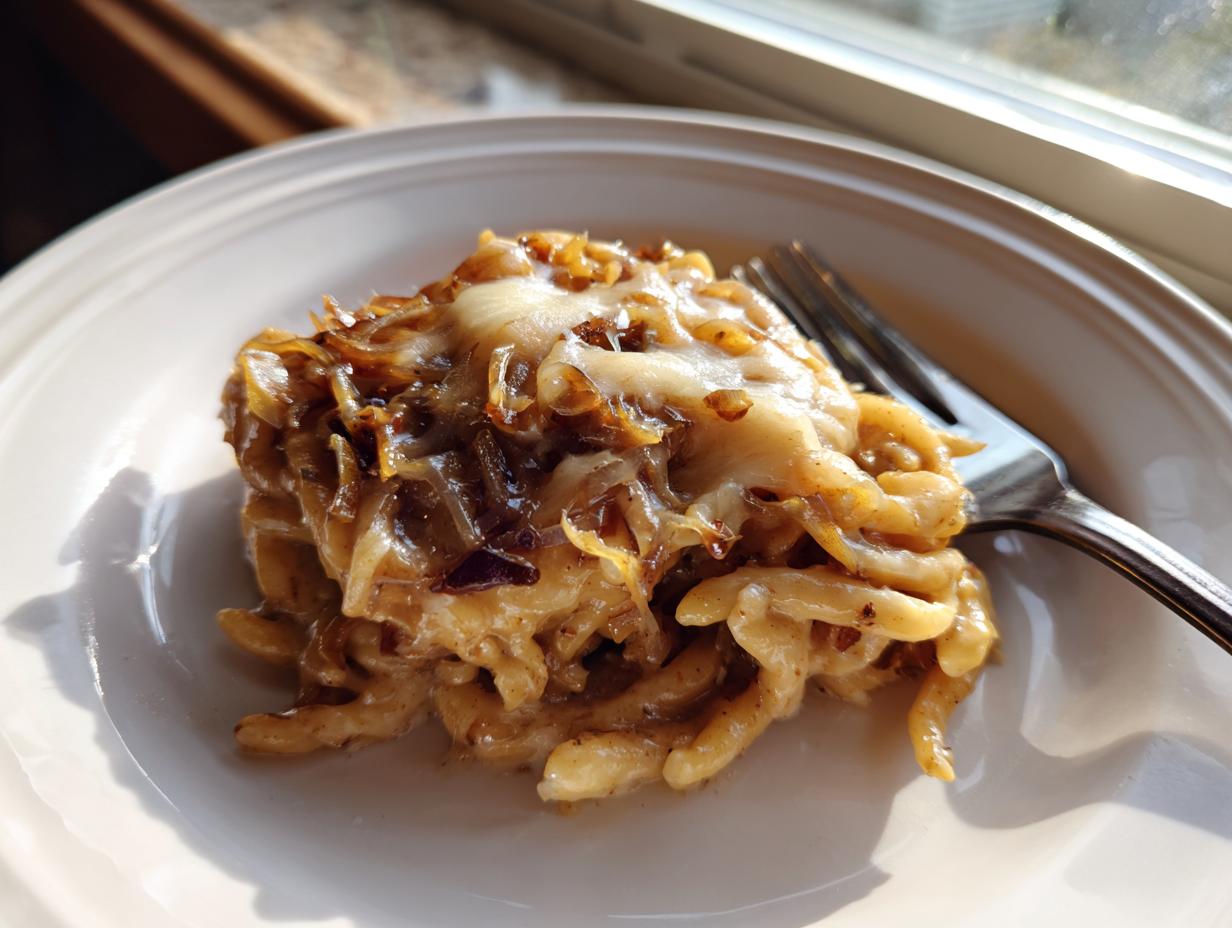
When the craving hits for something truly rich and soul-soothing, nothing beats the deep, savory flavor of French Onion Soup. But who has the time to dip crusty bread into a steaming bowl when it’s a busy Tuesday night? That’s where my amazing weeknight dinner recipes philosophy kicks in! I took that classic, slow-cooked onion magic and rolled it right into a pasta dish. We’re talking about the ultimate comfort food: one-pot French onion pasta that delivers incredible, creamy goodness without needing hours over the stove.
This recipe is one of my absolute favorites because it proves you don’t need a complicated, intimidating approach to get gourmet flavor. I developed this version in my own kitchen—the same kitchen where I used to escape the stress of IT work—to bring you something that is both intensely savory and surprisingly practical. Trust me, once you try this easy one-pot meals version, with its deeply caramelized onions and melted Gruyère coating every noodle, you’ll wonder why you hadn’t tried turning soup into pasta sooner!
- Why This Creamy French Onion Pasta Is a Weeknight Pasta Dinner Essential
- Ingredients for Rich Cheesy Pasta: The French Onion Pasta List
- How to Make One Pot French Onion Pasta Step-by-Step
- Tips for Success with Your Easy French Onion Pasta Recipe
- Variations on French Onion Pasta: Making It Your Own
- Serving Suggestions for This Savory Pasta Dish
- Storing and Reheating Your Leftover French Onion Pasta
- Frequently Asked Questions About Creamy French Onion Pasta
- Estimated Nutritional Data for French Onion Pasta
Why This Creamy French Onion Pasta Is a Weeknight Pasta Dinner Essential
If you ask me what makes a perfect meal after a long Tuesday, it’s something that tastes like it simmered all day but actually came together in under an hour. That’s exactly what this one-pot french onion pasta does! It hits all those crucial comfort notes. We’re talking rich, savory broth, a sauce that clings perfectly to every noodle, and that wonderful cheesy pull that defines the best comfort food pasta recipes.
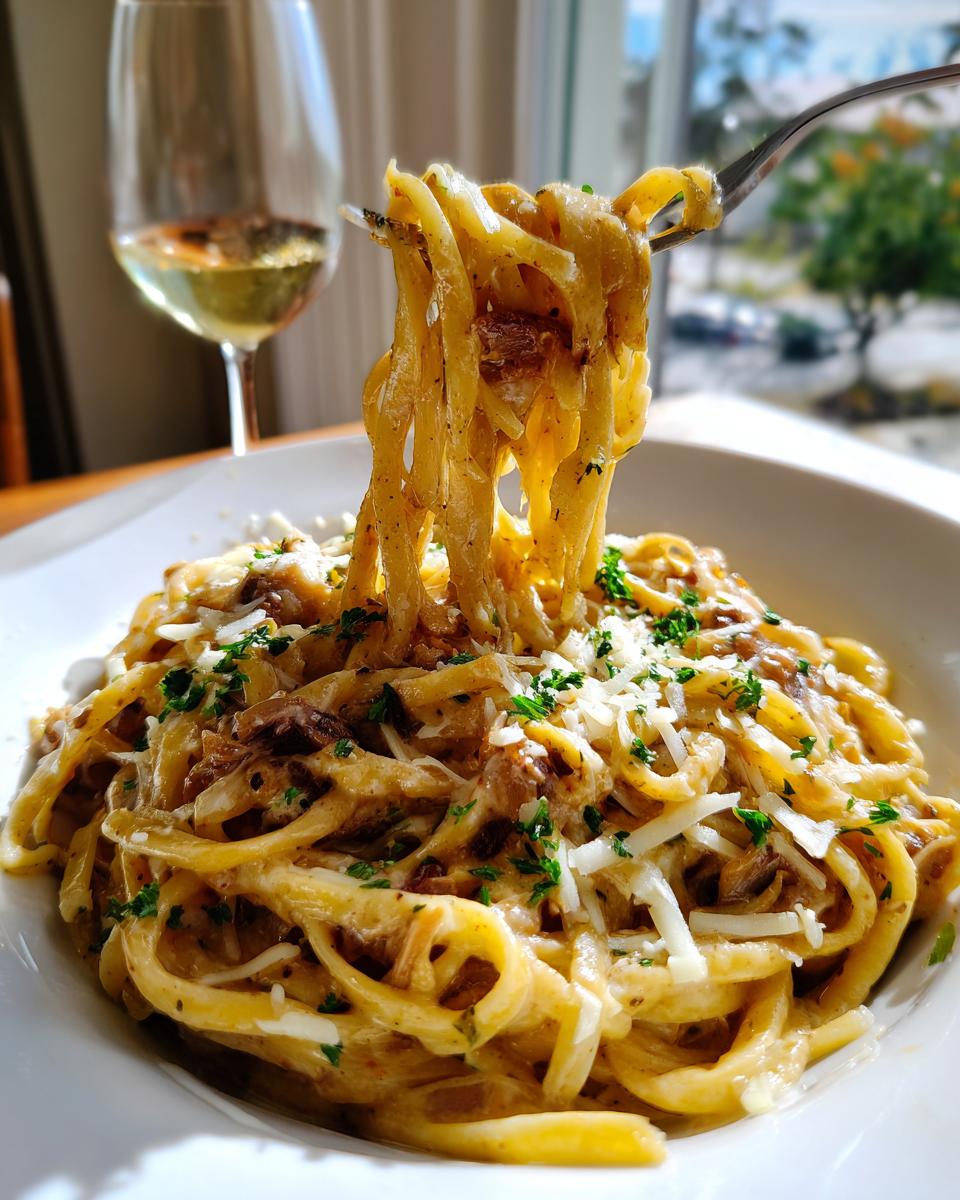
When you use just one pot, cleanup goes from a nightmare to practically nothing. That’s the magic! It simplifies the entire process, letting you focus on enjoying that deeply satisfying, creamy french onion pasta experience. It’s indulgent, but because the pasta cooks right in the sauce, it’s genius for busy cooks like us.
Achieving Maximum Flavor with Caramelized Onion Pasta
Look, you can’t rush flavor, especially with this dish. The secret weapon here isn’t some fancy spice; it’s patience with the onions. When you take the time to properly caramelize those onions until they turn deep, mahogany brown, you are unlocking the entire essence of French onion soup! Those sweet, nearly burnt edges translate into a complex, savory base that makes this french onion pasta taste aged and incredible, even though it’s lightning fast.
Ingredients for Rich Cheesy Pasta: The French Onion Pasta List
When we talk about making something this savory and rich, you can’t just throw things in a pot and hope for the best! To get that gorgeous, authentic flavor we’re after in this french onion pasta, the ingredients need to be spot on. I laid out everything you need below. Remember, this is a simple list, but every single component plays a huge role in turning broth into sauce!
- 1 pound pasta (I always grab penne or rotini—the shape holds that creamy sauce wonderfully!)
- 2 tablespoons olive oil
- 3 large yellow onions, thinly sliced (make sure they are paper-thin, this helps them melt down!)
- 1 teaspoon salt, plus more for seasoning later
- 1/2 teaspoon black pepper
- 2 cloves garlic, minced (don’t use the jarred stuff if you can help it!)
- 1/4 cup dry white wine (This is optional, but wow, does it add depth!)
- 4 cups beef broth (This is the heart of the soup flavor, so use the best quality you can find.)
- 1 teaspoon dried thyme
- 1/2 cup heavy cream
- 1 cup grated Gruyère cheese (This is non-negotiable for that authentic taste!)
- 1/2 cup grated Parmesan cheese
- 2 tablespoons fresh parsley, chopped (just for a pop of green at the end)
Ingredient Notes and Substitutions for Your French Onion Pasta
Okay, let’s talk options, because I know sometimes you don’t have exactly what’s listed. For the cheese, Gruyère is truly the star. It melts beautifully and gives you that nutty, slightly funky flavor that screams French Onion Soup. If you absolutely must substitute, use Swiss, but know it won’t be quite as gooey or savory. Please, please avoid Provolone here; it gets too rubbery!
Now, the broth situation. Since this is really french onion soup pasta, the beef broth is crucial for that deep, meaty undercurrent. However, if you need a vegetarian version, feel free to swap it for a high-quality vegetable broth. Just make sure your vegetable broth is intensely savory—maybe even add a teaspoon of Marmite or some mushrooms to boost that umami factor since you’re missing the beef base. Quality broth is the easiest way to ensure maximum flavor in this quick dish.
How to Make One Pot French Onion Pasta Step-by-Step
Alright, let’s get cooking! Because this is a one-pot wonder, we’re building layers of flavor right inside that single skillet or Dutch oven. Don’t worry; even though there are a lot of steps, they all happen in the same vessel, which is just amazing for cleanup later! The process is really about managing your time between slow cooking the onions and fast cooking the pasta.
We start slow, build the base with broth, and then let the pasta absorb all of that savory goodness. Since we aren’t draining anything, all those starches stay in the pot, which is our secret weapon for that ridiculously creamy finish!
Mastering the Caramelization for the Best French Onion Pasta
Listen to me: do not try to do this step in 10 minutes! If you rush the onions, your gorgeous french onion pasta will taste like sweet sautéed onions, not deep, complex soup. I need you to let those 3 cups of onions sit over medium heat for a good 20 to 30 minutes minimum. Stir them every few minutes, scrape the bottom, and watch them transform from white to golden, and finally, to that deep, dark brown color.
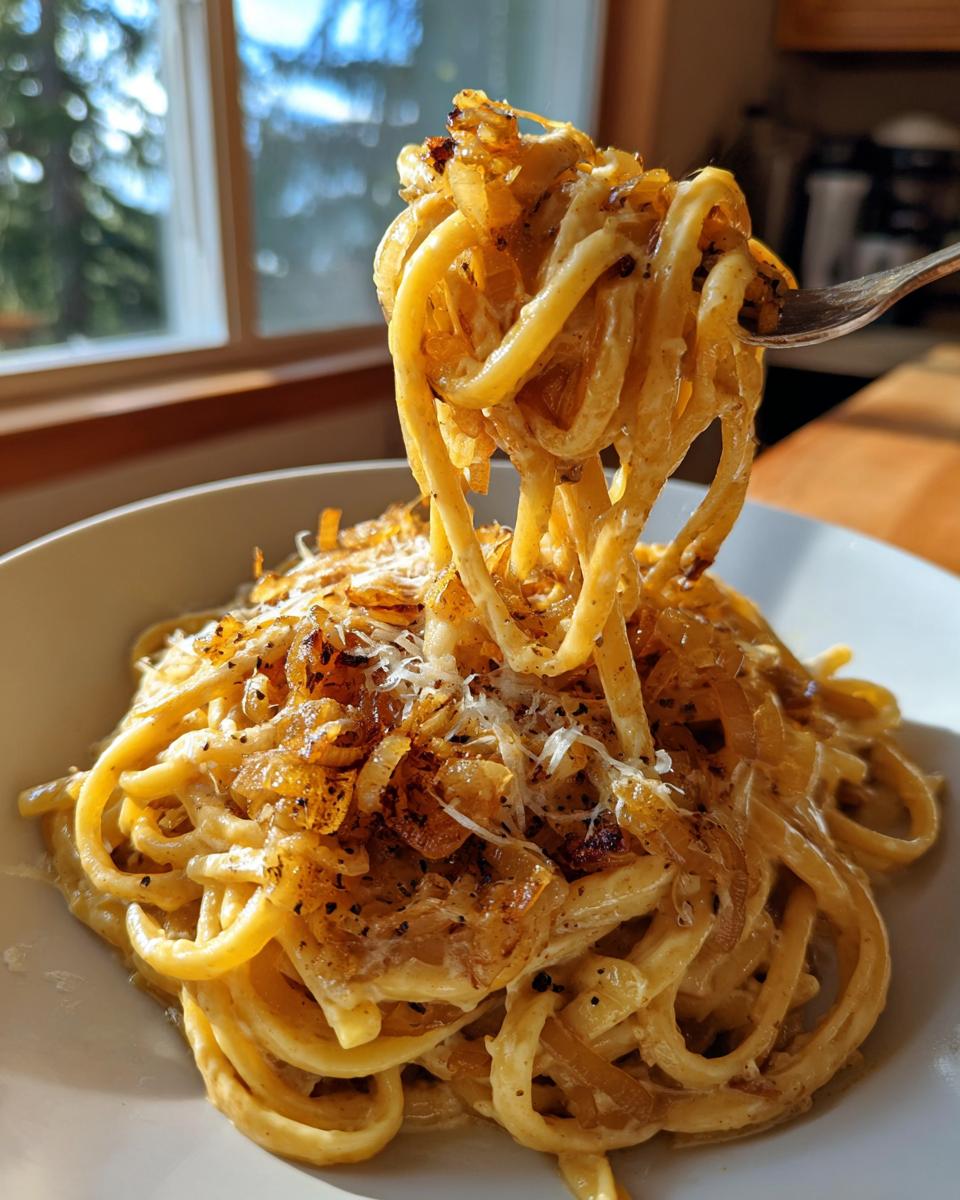
Once they look like that, you know you’ve done the hard work right. That color means rich flavor has been developed, and only then do we move on to the garlic and the optional splash of wine to deglaze the pan. Keep that heat low to prevent burning!
Creating the Creamy French Onion Pasta Sauce Finish
When the pasta is fully tender and the broth is mostly gone—this usually takes about 12 to 15 minutes uncovered after you add it—it’s time for the magic. Pull that pot off the direct heat immediately! This is super important, or your cheese will clump up instead of melting smoothly.
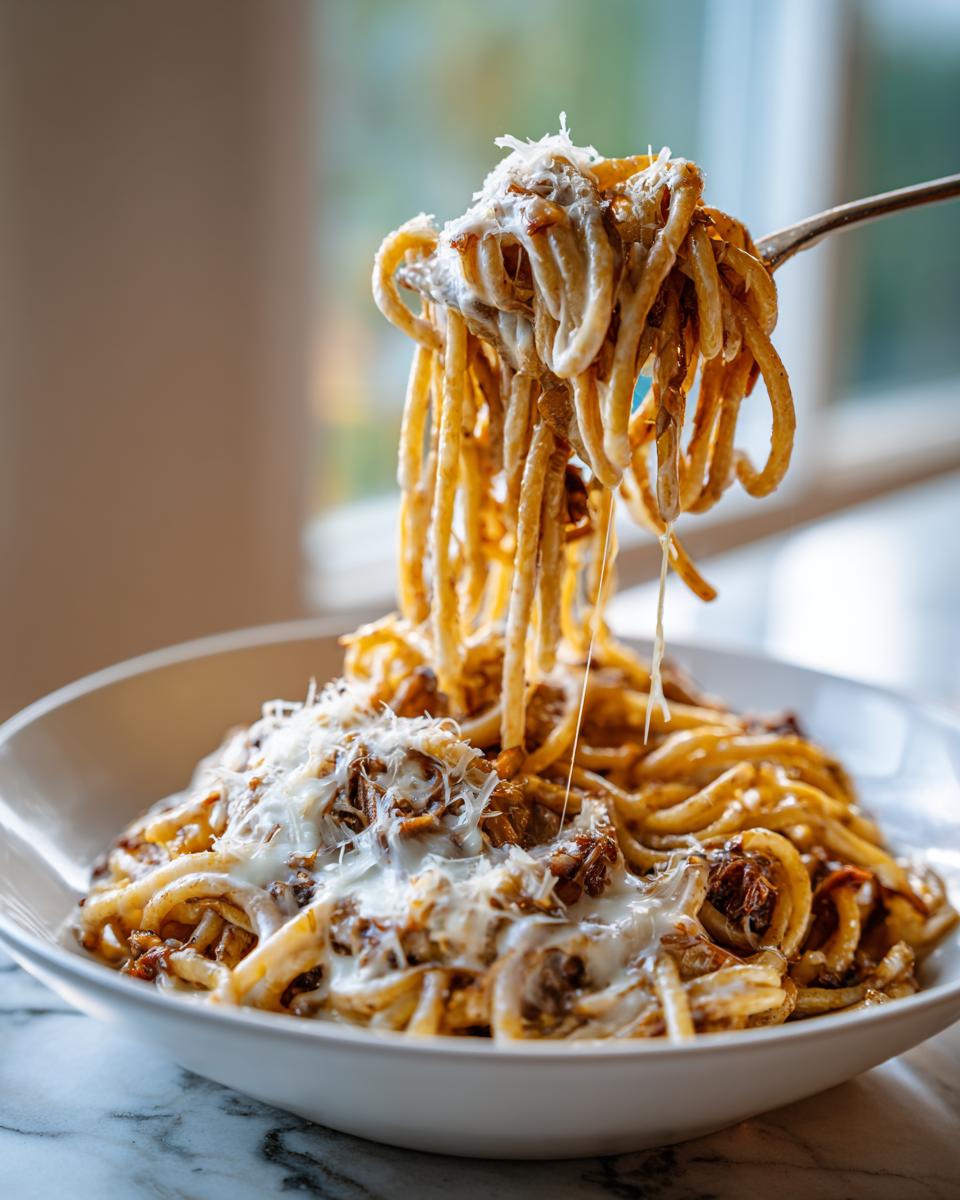
Stir in the heavy cream first until everything looks uniform. Then, fold in that grated Gruyère and Parmesan. Because the starches from the pasta thickened the broth while cooking, the cheese melts right into a luxurious, thick sauce. It’s naturally creamy! You don’t need a separate roux. Just keep stirring until every bit of cheese dissolves, and you have your perfect one pot french onion pasta.
Tips for Success with Your Easy French Onion Pasta Recipe
Even with a straightforward one-pot french onion pasta recipe, sometimes things go a little sideways, right? Don’t panic! I’ve faced every common hiccup in the kitchen that you can imagine, so here are my top tricks to ensure you get that glorious, quick creamy pasta every single time.
First up: If your sauce looks a little too thin when the pasta is done, don’t immediately panic and add cornstarch! Instead, put the lid back on, take the pot completely off the burner, and let it sit for five minutes. The residual heat will encourage the starches that are already in the pot to thicken everything up beautifully. If it’s *still* too thin after that, then stir in a tablespoon of extra grated Parmesan—that cheese is a powerhouse thickener!
Second, always have extra broth handy, even though this is a one-pot meal. Sometimes, depending on your stove’s heat or the exact brand of pasta, the liquid evaporates faster than the recipe anticipates. If the pasta looks completely dry but is still hard in the middle, just add half a cup of extra beef broth and keep stirring. Better a little soupy at the end than crunchy! You need that extra moisture to cook the noodles fully.
Finally, remember the cheese rule! Never, ever try to melt the Gruyère while the heat is still roaring hot. Heat breaks cheese down badly, turning that gorgeous creamy sauce grainy and oily. You must take the large pot completely off the burner before you add the heavy cream and the cheeses. Stir them in gently; that low, gentle friction is what creates that smooth, luxurious melt. It’s the difference between restaurant-quality sauce and a rubbery mess!
Variations on French Onion Pasta: Making It Your Own
Look, while this recipe for french onion pasta is absolutely perfect as is, I know how home cooks get—we love to tinker! That’s the fun part of creating your own favorites. You can take this savory base and twist it into something completely new depending on what you have in the fridge or what mood you’re in. It’s flexible, which is why I love it for weeknights!
If you want to add a bit more earthiness to that deep onion flavor, you should absolutely toss in some sautéed mushrooms. I often slice shiitake or cremini mushrooms thinly and cook them right along with the onions in the first stages. They soak up all the savory broth and add a fantastic meaty texture without needing actual meat. You can check out my tips for cooking mushrooms in general because they behave a little differently than onions.
Another easy win is swapping out the thyme for a different herb. Thyme is classic, but a little bit of fresh rosemary—maybe just a teensy bit, because rosemary is strong!—adds a wonderful piney note that pairs surprisingly well with the Gruyère. Or maybe you want a hint of smokiness? Adding a tiny pinch of smoked paprika along with the pepper during the garlic stage can do wonders.
Now, for the ultimate upgrade when you have an extra 15 minutes: making it a french onion pasta bake! If you want to turn this into something special for Sunday dinner instead of a Tuesday quick fix, here’s how I do it. Once the pasta is cooked and the cheese is melted in the pot (Step 8), transfer the whole saucy noodle mixture into a small casserole dish. Top the whole thing with panko breadcrumbs mixed with a little melted butter and maybe a sprinkle more Parmesan. Pop it under the broiler for about 5 to 7 minutes until that topping is golden brown and crunchy. It gives you that crispy, comforting top layer that makes a baked pasta dish so irresistible!
Serving Suggestions for This Savory Pasta Dish
Oh, this french onion pasta is undeniably rich. We overloaded it with deep, caramelized onion flavor and then blanketed everything in heavy cream and melted Gruyère. It’s pure comfort, but because it’s so heavy and savory, you absolutely need something bright and fresh on the side to keep the whole meal balanced. You don’t want to feel weighed down!
The goal here is acidity and crispness—a palate cleanser to stand up to all that cheese. When I serve this at home, I always pair it with something green that has a good, sharp vinaigrette. A simple mixed green salad tossed with lemon juice, Dijon mustard, and maybe a drizzle of olive oil works miracles. It cuts right through the density of the creamy sauce.
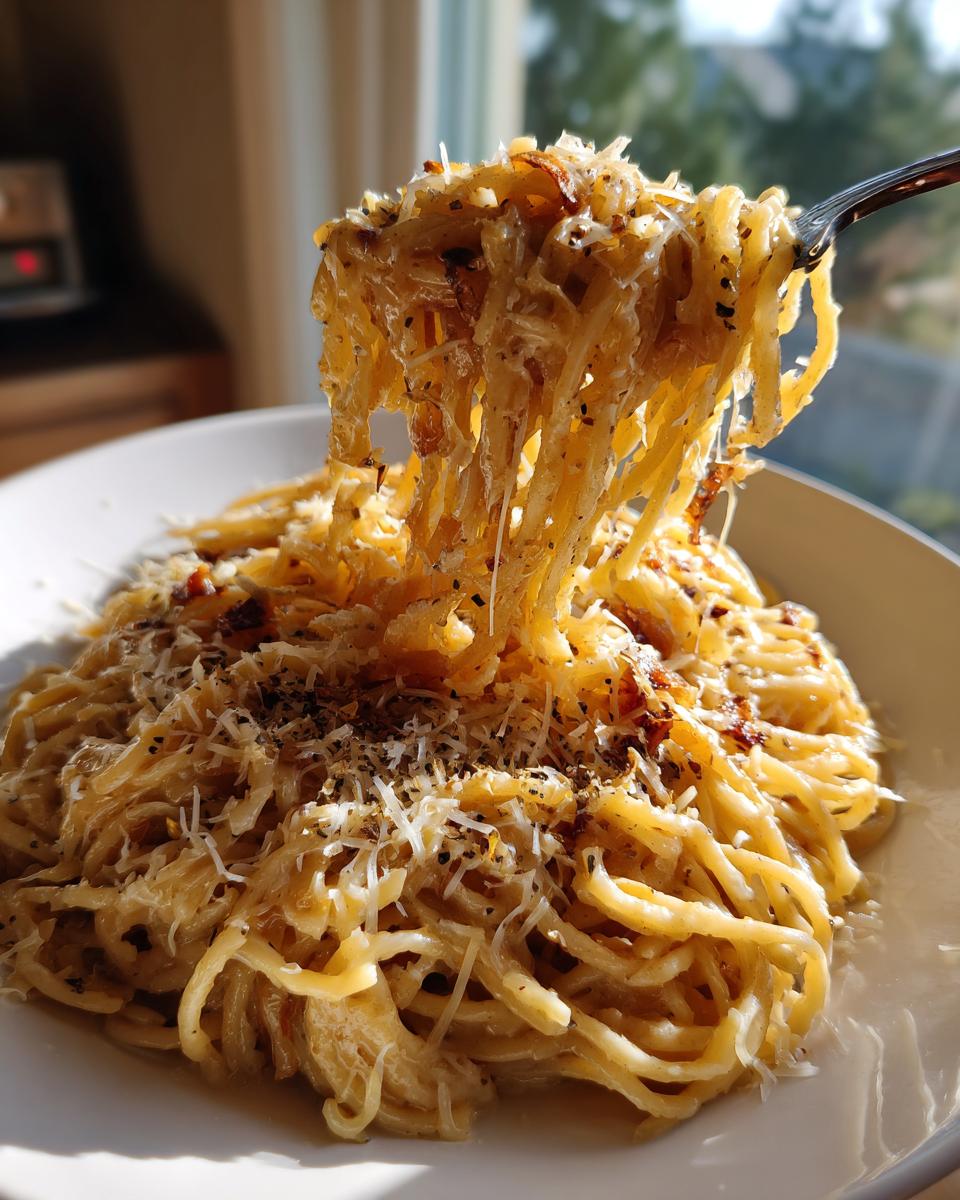
If you need a vegetable side that feels a bit more substantial, roasted asparagus is my go-to. You can toss those spears with just salt, pepper, and a little garlic powder, then roast them until they are tender-crisp. The slight bitterness of the asparagus pairs wonderfully with the sweet onions. Skip the butter on those veggies, though—we’ve got enough richness covered right here in the pasta!
Another slightly unexpected but delicious pairing I love, especially when I’m feeling ambitious (and this one uses some of the roasting principles you see in my sweet potato recipe), is a side of quickly roasted broccoli florets with a spritz of red wine vinegar right after they come out of the oven. That vinegar hits the savory pasta perfectly. Remember, when the main dish is this indulgent, the sides should serve as your fresh counterpoint!
Storing and Reheating Your Leftover French Onion Pasta
This rich and cheesy french onion pasta is just as good the next day, but you have to treat the leftovers right! Because we used heavy cream and a lot of cheese to create that luxurious sauce—remember, we didn’t use extra thickeners—the sauce tends to seize up and get really tight in the fridge. That’s totally normal; it’s just the butterfat and starches settling down overnight.
For storage, never leave leftovers sitting out. Get it into an airtight container and pop it in the fridge within two hours. It should keep beautifully for about three to four days. Make sure to keep the container well-sealed because that onion scent is strong, and you don’t want it taking over your fridge!
Now, the reheating part is key to bringing back the creamy texture we worked so hard to achieve in the Dutch oven. If you just microwave it straight from the fridge, yes, it will be food, but it won’t be *good*. It’ll be stiff and claggy.
Restoring the Creaminess When Reheating
The magic trick here is adding liquid back in. You need to loosen up those starches that got locked up when it cooled down. When you scoop your desired portion into a microwave-safe bowl or back into a small saucepan, add just a splash of liquid for moisture. I recommend using a bit of extra beef broth—since that’s the flavor base—or even a tablespoon or two of milk if you don’t have broth handy.
Heat it gently on the stovetop over low heat, stirring constantly until it loosens up. If you use the microwave, heat it in 30-second bursts, stirring really well between each burst. As soon as it’s hot, that little bit of added liquid will combine with the cheese and cream, and bam! You have that silky, perfect consistency again. You won’t even believe it’s a leftover!
Tips for the Best Flavor Reheat
When it comes to reheating, avoid trying to scorch it back to life on really high heat. High heat, like I mentioned when finishing the fresh batch, is the enemy of a smooth cheese sauce. Keep the temperature low and slow. If you are reheating a bigger batch on the stovetop, cover the pan partially to trap some steam; that steam helps reintroduce moisture into the noodles without drying them out.
Also, don’t forget the garnish! Even if you eat the leftovers standing over the sink (we’ve all been there), sprinkle a little fresh parsley on top before you dig in. That little bit of fresh green brightens up the whole savory, cheesy flavor profile and makes your reheated rich cheesy pasta feel slightly more intentional. It’s my favorite two-second upgrade!
Frequently Asked Questions About Creamy French Onion Pasta
I get so many questions about this recipe—and honestly, that just proves how much everyone loves the idea of turning soup into a main course! When I share my french onion pasta secrets, people always ask if they can cut corners or change things up. Here are the answers to the most common things folks ask me about making this dish a success!
Can I make this a vegetarian French Onion Pasta?
Yes, you absolutely can, and it’s surprisingly easy to do! The main component we lose is the deep savory note from the beef broth. My advice is to swap the beef broth for a really high-quality, richly flavored vegetable broth. Since you’re missing that meaty depth, I highly recommend adding one of two things when you sauté the onions: EITHER a teaspoon of vegan Worcestershire sauce (or Marmite if you have it) for that umami kick, or about a cup of finely chopped cremini mushrooms cooked until they release all their moisture. This ensures your vegetarian french onion pasta still has that complex, simmered flavor we’re looking for!
How can I speed up the onion caramelization process?
Oh, I wish I could tell you a secret hack that makes them caramely in 10 minutes! But honestly, the slow cooking is what develops the flavor for this entire dish. If you try to rush it with high heat, you just end up with burnt, bitter onions instead of sweet, complex ones. That said, if you are truly desperate for a 30 minute pasta recipe, you can use an instant pot—but honestly, the flavor payoff isn’t the same, and it’s definitely not one-pot anymore! If you must speed it up on the stovetop, use slightly higher heat than recommended, but you have to stir almost constantly, watching every second to prevent burning.
What is the best cheese to use besides Gruyère?
Gruyère is my gold standard because it melts like a dream and has that perfect nutty salinity that captures the soup’s essence. If you can’t find it, don’t worry! The next best option for a rich cheesy pasta is Emmental or Swiss cheese. As a substitute for some of the sharp bite, I often mix Gruyère and Parmesan 50/50. If you use standard Swiss, consider adding just a tiny dash of dry mustard powder to the cream before adding the cheese—it helps mimic the complexity the Gruyère already brings.
Why does my one-pot situation sometimes end up too thin or watery?
This usually happens for two reasons. Either you added too much liquid to start (always measure your broth!) or you didn’t let the pasta cook down enough before adding the cream. When you add the heavy cream, the residual liquid should barely cover the pasta. Remember, the starches released by the pasta are what thicken the broth into a sauce. If it *is* thin, take the pot off the heat and stir in an extra half-cup of pre-grated Parmesan cheese; that dairy protein really helps bind the sauce quickly!
Can I make this ahead of time for a weeknight pasta dinner?
You can definitely prep ahead, which helps cut down on active cooking time when you get home! You can thinly slice all your onions and store them in the fridge for up to three days. You can even caramelize them completely on a quieter weekend day—just make sure they are totally cool, store them airtight, and they’ll be ready to go for Step 2 of the main recipe. However, I don’t suggest assembling the whole thing until you are ready to eat, because the pasta gets gummy fast once the cheese is in there. For the very best weeknight pasta dinner experience, aim to cook it fresh!
Estimated Nutritional Data for French Onion Pasta
Now, I always like to give you a heads-up on what’s in your bowl, but you have to remember that this is my home kitchen estimate! I’m not a nutritionist, of course, and the specific brands I use or the size of my onions can change these numbers just a little bit. So, take these figures as a fantastic guideline for enjoying your rich and savory pasta dishes, but they aren’t meant for strict tracking.
This french onion pasta is definitely designed to be indulgent, featuring plenty of fat from the cheese and cream to make it that amazing creamy texture, so keep that in mind. Here is the breakdown based on the recipe for one serving:
- Serving Size: 1 serving
- Calories: About 650
- Fat: Around 30 grams (Remember, that’s mostly from the cheese and cream!)
- Saturated Fat: About 15 grams
- Carbohydrates: Roughly 75 grams
- Protein: A solid 25 grams, thanks to the pasta and cheese!
- Sugar: Near 10 grams (mostly natural sugars from the deeply caramelized onions)
- Sodium: About 750 milligrams (This can vary widely based on how salty your beef broth is, so watch that step!)
- Fiber: About 4 grams
See? It’s a substantial meal! It’s definitely one of those comfort food pasta recipes you save for when you really need a satisfying dinner but it certainly packs a flavorful punch. Enjoy every creamy, cheesy bite!
PrintCreamy One-Pot French Onion Pasta
Make this rich and savory French Onion Pasta in one pot for an easy weeknight dinner. It captures the deep flavor of French onion soup with caramelized onions and melted Gruyère cheese.
- Prep Time: 15 min
- Cook Time: 45 min
- Total Time: 60 min
- Yield: 4 servings 1x
- Category: Dinner
- Method: Stovetop
- Cuisine: French Inspired
- Diet: Vegetarian
Ingredients
- 1 pound pasta (like penne or rotini)
- 2 tablespoons olive oil
- 3 large yellow onions, thinly sliced
- 1 teaspoon salt, plus more for seasoning
- 1/2 teaspoon black pepper
- 2 cloves garlic, minced
- 1/4 cup dry white wine (optional)
- 4 cups beef broth
- 1 teaspoon dried thyme
- 1/2 cup heavy cream
- 1 cup grated Gruyère cheese
- 1/2 cup grated Parmesan cheese
- 2 tablespoons fresh parsley, chopped (for garnish)
Instructions
- Heat the olive oil in a large, deep skillet or Dutch oven over medium heat. Add the sliced onions and cook slowly, stirring occasionally, for 20 to 30 minutes until they are deeply caramelized and brown. This step builds the main flavor.
- Stir in the minced garlic, salt, and pepper. Cook for 1 minute until fragrant.
- If using, pour in the white wine and scrape up any browned bits from the bottom of the pot. Let it cook until the wine mostly evaporates, about 2 minutes.
- Add the beef broth and dried thyme to the pot. Bring the mixture to a simmer.
- Add the dry pasta to the simmering broth. Stir well to prevent sticking.
- Reduce the heat to medium-low, cover the pot, and cook for 12 to 15 minutes, or until the pasta is tender and most of the liquid is absorbed. Stir every few minutes.
- Remove the pot from the heat. Stir in the heavy cream until the sauce is smooth.
- Stir in the Gruyère cheese and Parmesan cheese until the cheese melts completely into a creamy sauce.
- Taste and adjust salt and pepper as needed.
- Serve immediately, garnished with fresh parsley.
Notes
- For the best flavor, take your time caramelizing the onions; do not rush this step.
- If you do not have beef broth, you can substitute with vegetable broth, but the flavor will be less traditional.
- If you prefer a thicker sauce, remove the lid for the last 5 minutes of cooking the pasta.
Nutrition
- Serving Size: 1 serving
- Calories: 650
- Sugar: 10
- Sodium: 750
- Fat: 30
- Saturated Fat: 15
- Unsaturated Fat: 10
- Trans Fat: 1
- Carbohydrates: 75
- Fiber: 4
- Protein: 25
- Cholesterol: 55