

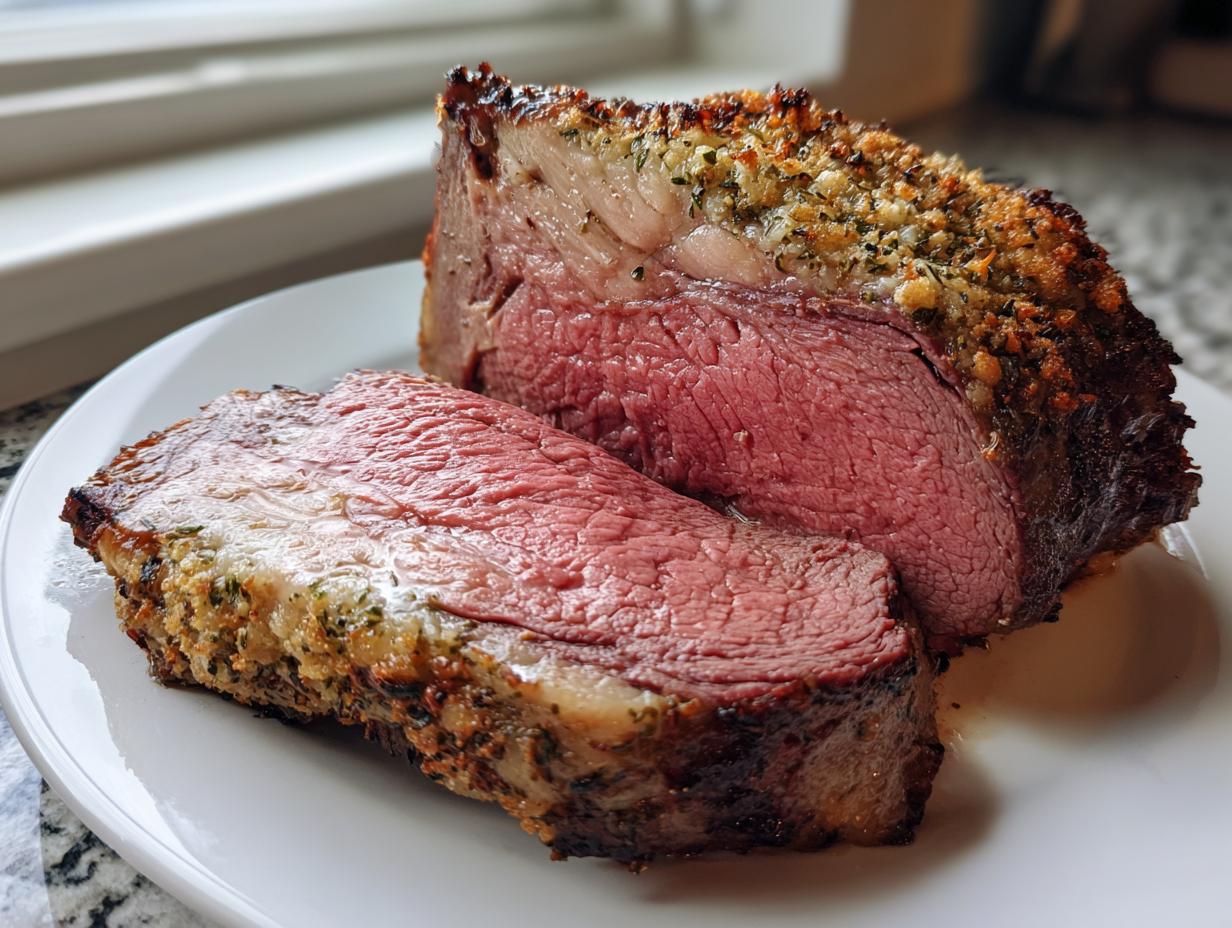
When you’re planning a big celebration—Christmas, Easter, or just a Sunday when you want everyone talking—you need a main dish that truly sings. For me, that’s always that stunning, rosy-centered piece of beef: the prime rib. I know what you’re thinking: it looks scary hard! But trust me, after years spent in my kitchen designing recipes that actually work for real life, I’ve found the simplest, most reliable way to nail this showstopper every single time using just your **prime rib roast oven**.
This method is all about guaranteeing that perfect slice of medium-rare beef, just like the best steakhouses do it, without any guesswork. My name is Michael Carter, and creating these foolproof results is exactly why I started Delish Symphony. If you want to know more about our philosophy of simple, flavorful cooking, check out our About Page. We’re focusing on practical techniques here to bring out incredible flavor. If you follow these exact steps, I promise you’ll achieve that beautiful, juicy interior with a savory, browned crust that makes this roast legendary.
- Why This Is the Foolproof Prime Rib Roast Oven Method
- Gathering Ingredients for Your Oven Roasted Prime Rib Recipe
- How to Cook Prime Rib in Oven: Step-by-Step Instructions
- Tips for a Juicy Prime Rib Roast Guide Every Time
- Serving Suggestions for Your Herb Crusted Prime Rib Centerpiece
- Storage and Reheating Your Leftover Prime Rib Roast Oven Creation
- Frequently Asked Questions About the Standing Rib Roast Oven Method
- Estimated Nutritional Data for Your Perfect Medium Rare Prime Rib
- Share Your Prime Rib Roast Oven Success
Why This Is the Foolproof Prime Rib Roast Oven Method
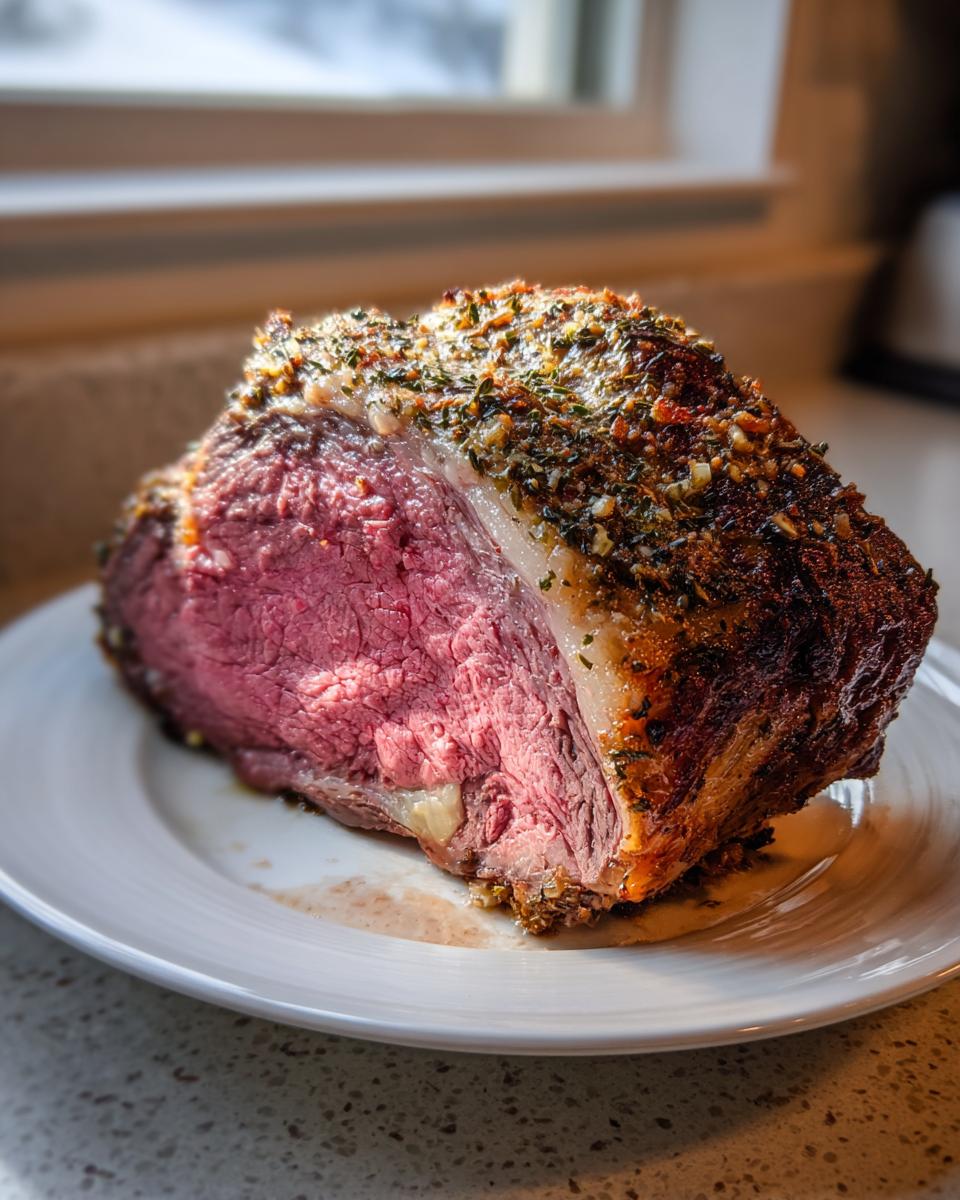
Most recipes tell you to pick one temperature and stick with it, which usually results in a dull gray band around the outside of your beautiful roast. Not ours! We use the high-heat blast method. Starting the **prime rib roast oven** at a shocking 500 degrees for just 15 minutes immediately sets that outside layer. This caramelizes the seasoning paste we make, giving you that gorgeous mahogany crust you crave.
Then, we drop it straight down to 325 degrees. This two-step temperature dance is the magic trick! It seals in all the juices while letting the center cook gently toward that **Perfect Medium Rare Prime Rib** goal. If you want guaranteed results, you absolutely must use a reliable meat thermometer. It’s the only way to take the guesswork out of big meals, which is why I always recommend checking out these other quick dinner recipes for when you don’t have hours to spare!
Bone-In vs. Boneless Prime Rib Roast Oven Considerations
Now, let’s talk about what you bought from the butcher. If you’ve got a bone-in standing rib roast, those bones are actually doing you a favor! They act like little insulators and keep the meat nearest to them cooking a little slower and staying juicier. This means your bone-in cut will usually take about 15 to 25 minutes longer to hit the right temperature compared to an equally sized boneless roast. Either way, the two-temp **prime rib roast oven** technique works perfectly, just adjust your timing!
Gathering Ingredients for Your Oven Roasted Prime Rib Recipe
Okay, let’s talk about what you need to make this absolute masterpiece. Remember, with high-quality beef like prime rib, the better the ingredients you start with, the more spectacular the end result is—that’s just how it works! We aren’t using a billion things here; simplicity is key to flavor harmony. You’ll need that beautiful roast, of course, but the real star is our seasoning paste that creates that gorgeous crust.
Make sure your garlic is truly minced; we need that little burst of flavor everywhere, not big chunks that might burn when we blast it at 500 degrees. We’re using kosher salt because that coarse texture helps scrub the rub onto the meat beautifully. Gather everything up, get your roasting pan ready, and if you want a perfect creamy side for dipping later, I highly suggest whipping up a batch of my garlic aioli. It’s amazing with this beef!
How to Cook Prime Rib in Oven: Step-by-Step Instructions
Alright, this is where the symphony comes together! We’re going to move methodically because precision prevents panic when you’re dealing with a roast this special. First things first: take that beautiful hunk of beef out of the fridge. Yes, you read that right! You need at least 2 to 3 hours for it to temper—get close to room temperature. If you skip this, the center chills and you end up with uneven cooking. Trust me, impatience here burns you later.
Once tempered, crank that oven up to a blazing 500 degrees Fahrenheit. We aren’t messing around; we need serious heat to kick things off. While that’s loading up, get your paste mixed up—that heavenly combo of garlic, herbs, oil, and mustard. Then, and this is non-negotiable, pat the roast completely dry with paper towels. A dry surface is essential for that crust to form properly. Now, slather that paste all over every inch of the meat. It needs to feel snug in there!
Put the roast fat-side up in your pan, and slide it into that 500-degree inferno. You let it roast for exactly 15 minutes. That’s it! Don’t peek! After those 15 minutes, you immediately drop the temperature down to 325 degrees. Don’t open the door while you’re adjusting the dial; just set it and forget it for a while.
Creating the **Best Prime Rib Seasoning** Herb Crust
When you’re rubbing that herb mixture on, you really need to put your back into it! Don’t just dust it on—press that paste firmly into the meat. I use my hands and really work it in so it adheres during the high-heat blast. Imagine you are trying to massage those herbs deep into the muscle. This ensures that when the heat hits, you get a deeply flavorful, brown, savory crust covering the whole roast, not just a few flakes.
Mastering **Prime Rib Cooking Temperatures** for Medium-Rare
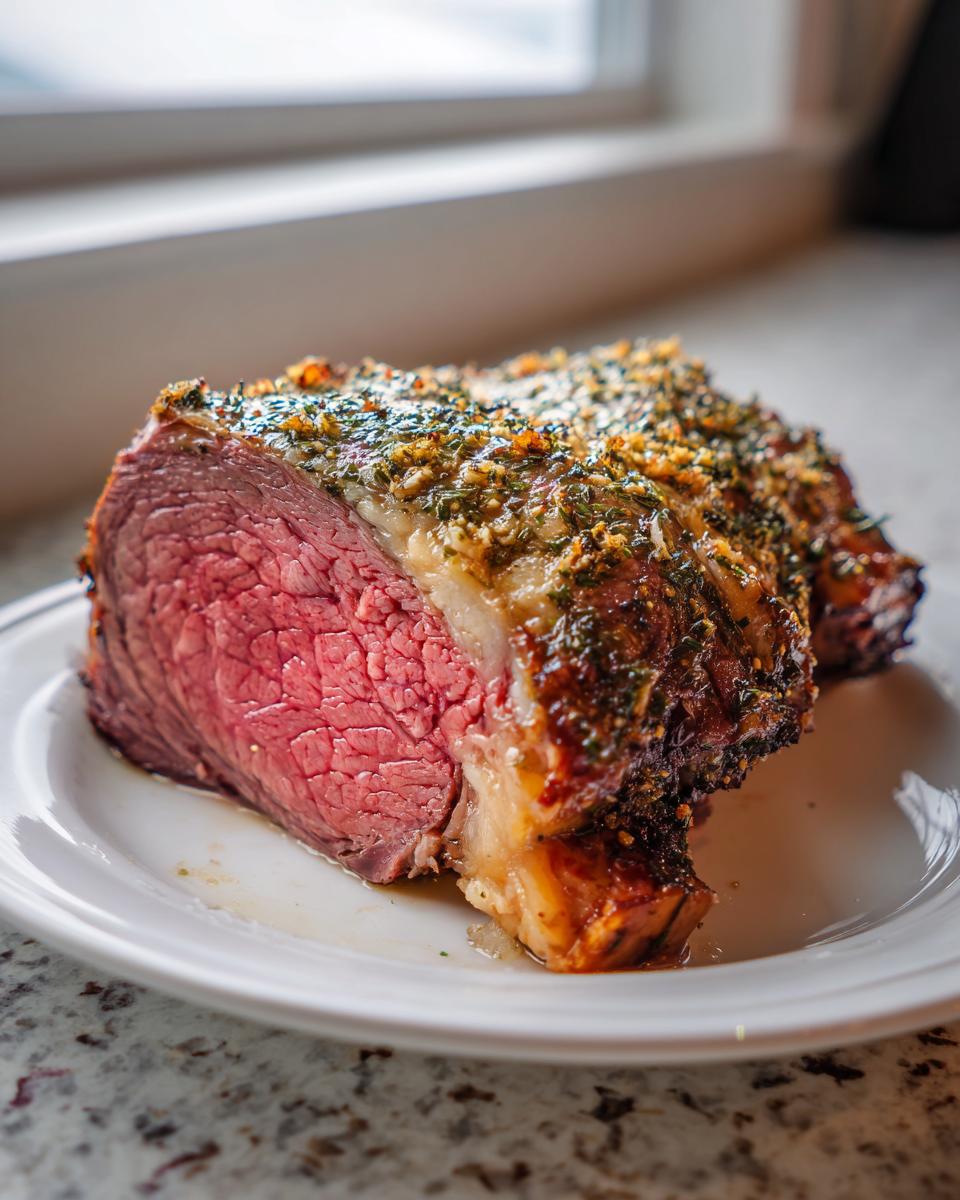
This is the moment of truth for your **prime rib roast oven** experience. You’re aiming for an internal temperature of 125 degrees Fahrenheit when you pull it out for medium-rare. I generally start checking around the one-hour-and-twenty-minute mark on a 5-pound roast, but your thermometer is the boss here, not the clock. Pulling it at 125°F means you trust the resting process!
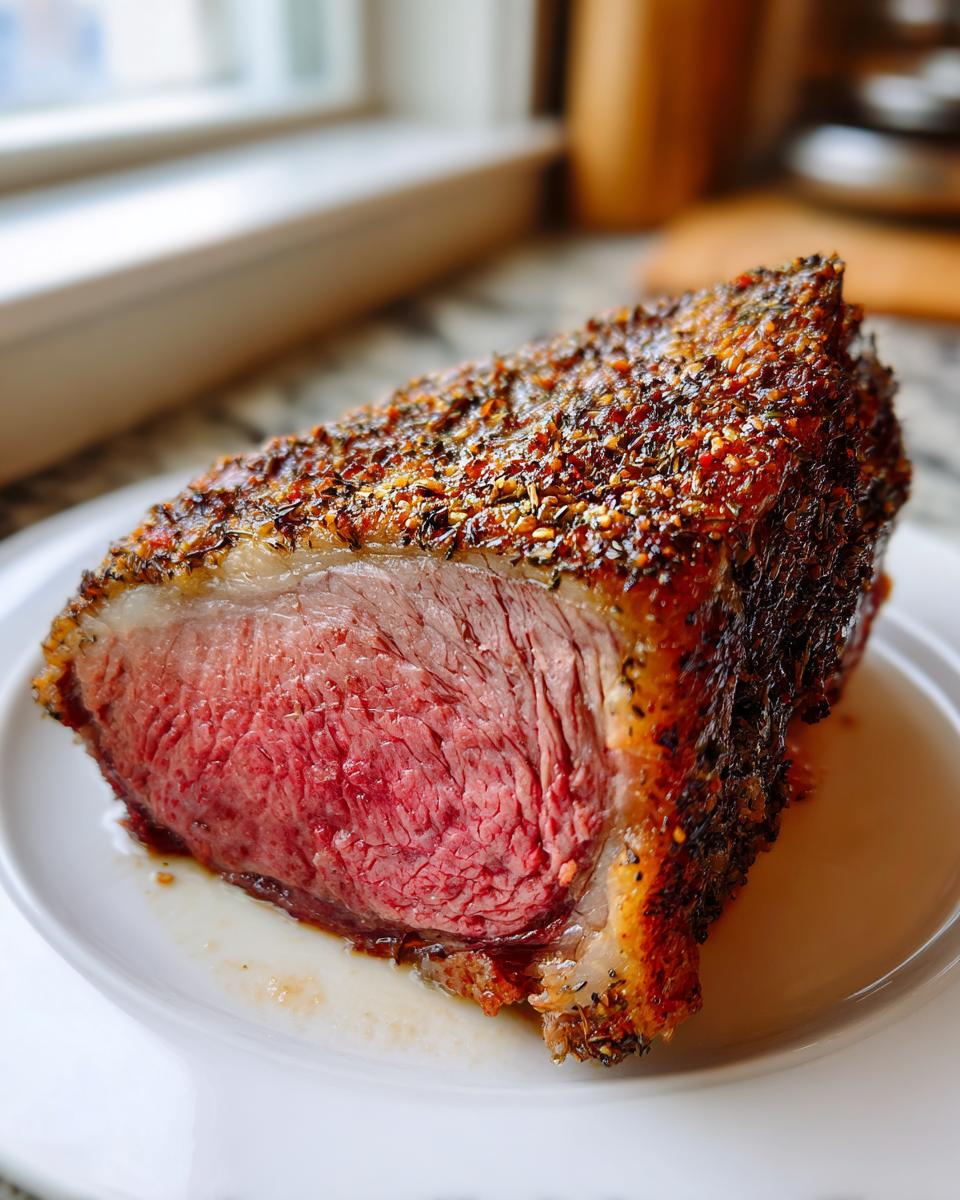
That resting period—15 to 20 minutes tented under foil—is crucial. The residual heat keeps cooking the meat (carryover cooking), pushing that center temperature up another 5 degrees, easily landing you in that 130°F sweet spot. If you slice it immediately, all those wonderful juices you worked so hard to keep inside will run out onto the board. We want them *in* the meat!
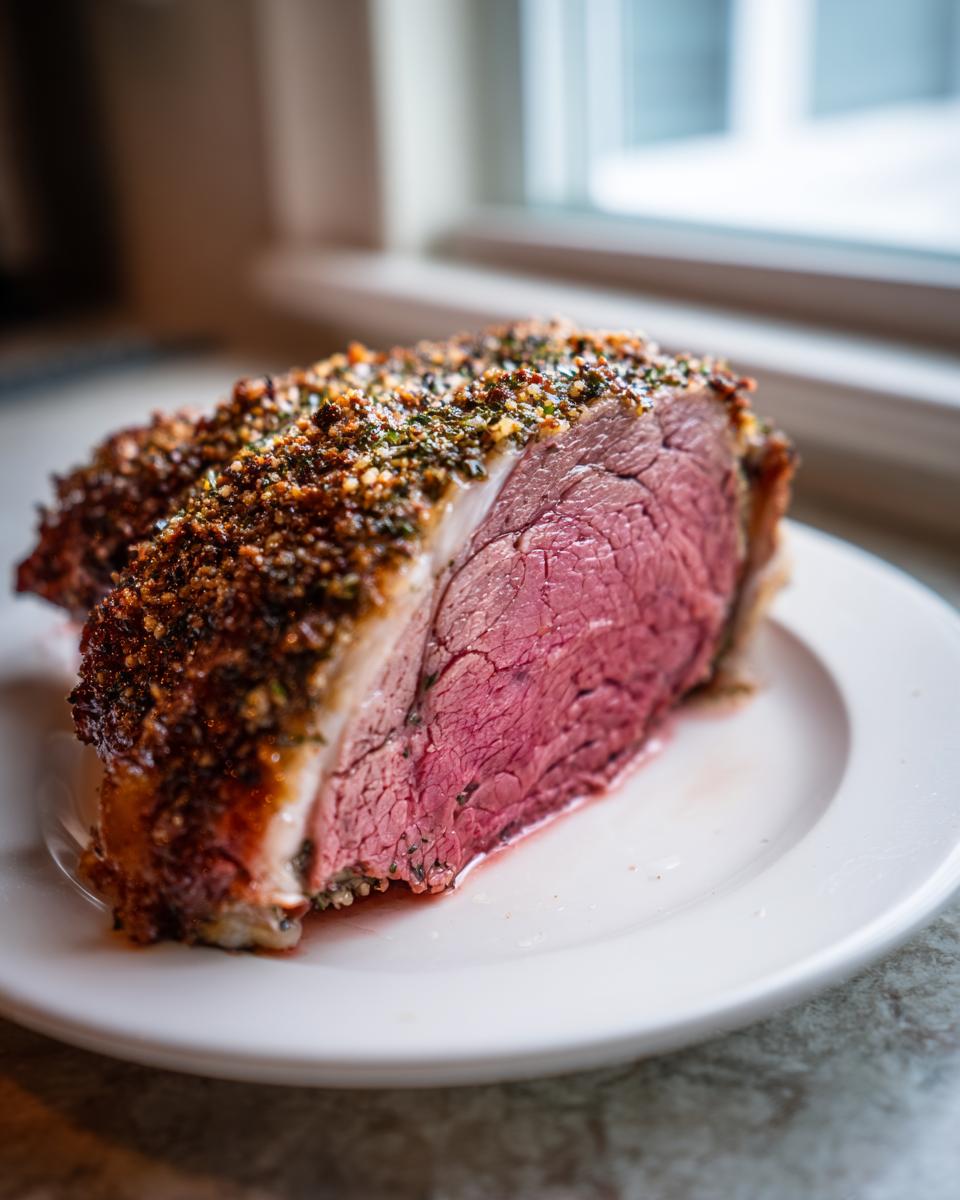
Once it’s rested, slice against the grain, and you can use those delicious pan drippings, or if you want to make a quick au jus, swing over and see how I do that! If you’re looking for perfect potato pairings, my recipe for crispy garlic skillet potatoes is the absolute best partner for this beef.
Tips for a Juicy Prime Rib Roast Guide Every Time
Achieving that legendary, perfectly rosy interior in your **prime rib roast oven** journey isn’t just luck—it’s about respecting the meat before it even sees the oven! My biggest early mistake was tossing a cold, wet roast in there. Now, I insist on that long tempering time *and* making sure the surface is bone-dry with paper towels. Blot, blot, blot! That moisture is the enemy of a good crust.
If you have a roasting rack, use it! Getting that beef up off the bottom of the pan allows air to circulate all around it, giving you a more even cook. When I finally mastered this two-temperature method and pulled out a roast that was perfectly 125°F edge-to-edge, I swear I nearly cried; it was the first time I finally felt like I wasn’t just guessing! If you want more ideas for sides that can handle this star, you have to try my garlic butter steak bites and potatoes. They’re phenomenal!
Serving Suggestions for Your Herb Crusted Prime Rib Centerpiece
You’ve done the hard work. You’ve managed the high heat, you’ve nailed the temperature, and now your **herb crusted prime rib** is resting, perfuming your whole house. It deserves side dishes that can stand up to its richness without upstaging it! For me, a spectacular roast like this needs balance. Skip anything too heavy or overly sweet.
I always lean toward something creamy to catch those amazing juices. My absolute favorite pairing is a big mound of garlic parmesan mashed potatoes; they are velvety smooth and the salty cheese is just divine with the savory herb crust. If you need something green, keep it simple—maybe some lightly roasted asparagus with just salt and lemon. The goal here is a show-stopping meal, so the sides should enhance, not compete!
Making Simple Prime Rib Au Jus Recipe from Pan Drippings
You simply cannot serve this prime rib without its natural partner, the au jus! Don’t fuss with a complicated gravy. Once you move the roast out of the pan, you’ll see those glorious browned bits stuck to the bottom. That’s pure flavor gold!
Just place the roasting pan right onto your stovetop over medium heat. Pour in about a cup of beef broth or water—whatever you have on hand! Use a wooden spoon to scrape up every last bit stuck to the bottom. Keep it simmering for a few minutes, strain it through a fine-mesh sieve, and that’s it! You’ve got the easiest, most potent **prime rib au jus recipe** possible to drizzle over every slice. Easy, right?
Storage and Reheating Your Leftover Prime Rib Roast Oven Creation
First off, congratulations! If you have leftovers from your **prime rib roast oven** adventure, you’ve scored big time. Those slices are genuinely better the next day, but we have to treat them right so they don’t turn into sad, dry little bits of shoe leather. The key to keeping this amazing beef happy is moisture management.
For storage, you want to slice off what you plan to eat over the next day or two. Don’t slice the whole roast! Store the unsliced portion tightly wrapped in the fridge—it’ll easily last 3 to 4 days. Once you have your slices ready to go, put them in an airtight container. They should be fine in the fridge for about three days. If you need longer, freezing is your friend, but let’s tackle reheating first, because that’s tricky business.
Never, ever microwave slices of prime rib. That heat is too harsh, and you’ll lose all that lovely medium-rare rosy color instantly. Instead, we’re going to use a very gentle oven trick. Set your oven temperature really low, maybe 250 degrees Fahrenheit. Arrange the slices in a shallow baking dish. Then, take some of that leftover au jus you made (or just use beef broth), and pour just enough into the bottom of the dish to barely cover the bottom layer of meat.
Cover that dish TIGHTLY with foil. Foil traps the steam, and the broth keeps the meat from drying out on you while it warms up. It takes a little patience, maybe 10 to 15 minutes, but you’re just warming it through, not cooking it further. It’s heavenly! If you’re looking for a great way to use up some of those leftovers in a completely new dish later in the week, you have to check out my recipe for French Onion Beef over Rice—it completely transforms leftover roast beef!
Frequently Asked Questions About the Standing Rib Roast Oven Method
I know when you’re tackling a show-stopping centerpiece like this, you’re going to have questions! That’s totally normal. When I first started trying to master the **standing rib roast oven** technique, I worried about everything from the shape of the pan to the exact humidity in my kitchen. Don’t stress! Most concerns come down to trusting your equipment and knowing that temperature is king.
Here are a few things I hear all the time that I want to clear up for you so you can serve that **juicy prime rib roast guide** masterpiece without a worry.
What if my prime rib roast oven takes longer than expected?
This is the single most common panic moment people have! Look, your oven is never exactly the temperature it says it is—trust me on this one, I’ve tested mine. Maybe your starting beef was colder than you thought, or maybe your oven runs low. Who cares! The clock is just a guide; the meat thermometer is the law.
If you pull the roast out at the time I suggested in the instructions, and the thermometer still reads 118 degrees when you wanted 125 degrees to start carrying over, you just stick it back in at 325 degrees. Just check it every 7 to 10 minutes after that point. Never rush it, and never pull it based on time alone. If you’re following this **prime rib roast oven** method correctly, you will hit that perfect medium-rare window eventually; just let the temperature be your pilot!
Can I use this Oven Roasted Prime Rib Recipe for a smaller roast?
Absolutely, yes! You don’t need a massive crowd to enjoy an amazing prime rib. If you have a smaller cut, maybe only 3 or 4 pounds, you can totally use this exact method. The high-heat blast is what creates that initial crust, so we don’t want to mess with that too much, but we can adjust the time slightly.
For a smaller roast, I’d still start it at 500 degrees, but I’d drop that time down to about 10 to 12 minutes instead of the full 15. Then reduce the heat to 325 degrees and proceed as normal. Because it’s smaller, it will cook faster overall, so start checking your temperatures sooner than the recipe suggests for a 5-pound cut. It’s the same **Oven Roasted Prime Rib Recipe**, just with slightly quicker timing!
If you end up with leftovers that you don’t feel like eating with mashed potatoes (though why wouldn’t you?), you can find some other great uses for beef in my banana bread recipe—just kidding! But seriously, leftovers are great!
Estimated Nutritional Data for Your Perfect Medium Rare Prime Rib
Now, I know that staring down a massive, beautiful roast like this, we aren’t exactly thinking about macros, but for those of you who track things, I always like to provide a baseline. Remember, this gorgeous beef centerpiece is the star of the show, and the nutrition can change wildly depending on how marbled your specific piece of meat is, so take these numbers with a grain of salt!
These estimates are based on serving 6 people from the recipe as written, assuming a standard 6-ounce cooked serving size before any wonderful au jus is added. This is what my testing showed for the primary flavor profile.
- Serving Size: 6 oz cooked meat
- Calories: 450
- Total Fat: 30g
- Protein: 42g
- Carbohydrates: 0g
- Sodium: 550mg
I listed zero carbs because this is pure, amazing beef and herbs—no flour, no sugar in the meat rub itself! Keep in mind that this is a rich meal. The fat content comes directly from the gorgeous marbling in the prime rib itself; that’s where a lot of the unmatched, melt-in-your-mouth flavor comes from. If you’re using a leaner cut or trimming more fat before seasoning, your numbers will shift down considerably. You do you, but when it comes to prime rib, sometimes you just have to embrace the decadence!
Share Your Prime Rib Roast Oven Success
Listen, taking the plunge on a big roast like this is a commitment, and I really want to know how it went for you! Did you nail that perfect medium-rare rosy center? Did your kitchen smell like the best steakhouse in the world? I honestly wait all year for feedback on this specific **prime rib roast oven** recipe because results matter, not just pretty words on a screen.
Please, if this masterpiece made your holiday gathering or special Sunday dinner a total success, take a moment to drop a star rating below. It helps other home cooks like you trust this method. If you snapped a picture of that glorious slice—and I bet you did—I’d love to see it! Don’t be shy about sending photos my way through the contact page; sharing those victories is what this whole operation is about.
Creating flavor harmony doesn’t have to be complicated, and I hope this guide proved it to you. We kept it simple, focused on technique, and delivered a show-stopping result without needing a culinary degree. If you loved how easy this was, stick around! There’s always a new, flavorful symphony waiting to be composed in your kitchen, and I can’t wait to cook with you again soon!
PrintFoolproof Oven Roasted Prime Rib with Garlic Herb Crust for Perfect Medium-Rare Results
Follow this simple, step-by-step guide to roast a show-stopping prime rib in your oven. This method guarantees a juicy interior and a flavorful, savory crust, making it the perfect centerpiece for your holiday feast.
- Prep Time: 20 min
- Cook Time: 1 hr 45 min
- Total Time: 2 hr 5 min
- Yield: 6 servings 1x
- Category: Main Course
- Method: Roasting
- Cuisine: American
- Diet: Low Calorie
Ingredients
- 1 (4 to 6 pound) bone-in or boneless prime rib roast (standing rib roast)
- 3 tablespoons kosher salt
- 2 tablespoons coarse black pepper
- 1 tablespoon dried thyme
- 1 tablespoon dried rosemary
- 6 cloves garlic, minced
- 1/4 cup olive oil
- 1 tablespoon Dijon mustard
- 1 teaspoon onion powder
- 1 teaspoon garlic powder
Instructions
- Remove the prime rib roast from the refrigerator 2 to 3 hours before cooking to allow it to come closer to room temperature. This helps the roast cook evenly.
- Preheat your oven to 500 degrees Fahrenheit.
- Prepare the herb rub: In a small bowl, combine the minced garlic, olive oil, Dijon mustard, kosher salt, black pepper, dried thyme, dried rosemary, onion powder, and garlic powder. Mix until a thick paste forms.
- Pat the entire surface of the prime rib roast dry with paper towels.
- Rub the garlic herb paste evenly over the entire roast, pressing it firmly onto the meat. If using a bone-in roast, try to get some rub between the bones and the meat.
- Place the roast, fat-side up, in a shallow roasting pan. If you have a roasting rack, place the roast on the rack.
- Place the roast in the preheated 500 degrees Fahrenheit oven and cook for exactly 15 minutes. This high heat starts the crust formation.
- After 15 minutes, reduce the oven temperature to 325 degrees Fahrenheit. Do not open the oven door during this temperature change.
- Continue roasting at 325 degrees Fahrenheit until the internal temperature reaches your desired doneness when checked with a meat thermometer inserted into the thickest part of the meat, avoiding bone.
- Use the following target temperatures for medium-rare: Remove the roast when the thermometer reads 125 degrees Fahrenheit for medium-rare. (130-135 degrees F for medium).
- Once the target temperature is reached, immediately remove the roast from the oven.
- Transfer the roast to a cutting board and tent it loosely with aluminum foil. Let the prime rib rest for 15 to 20 minutes before slicing. This resting period is crucial for a juicy result.
- Slice against the grain and serve immediately with pan drippings or au jus.
Notes
- For bone-in roasts, the bones act as insulation, meaning the roast will take slightly longer to cook than a boneless cut of the same weight.
- Use a reliable meat thermometer; this is the key to achieving perfect medium-rare results every time.
- If you desire a crispier crust, you can briefly place the roast under the broiler for 2-3 minutes after resting, watching carefully to prevent burning.
Nutrition
- Serving Size: 6 oz cooked meat
- Calories: 450
- Sugar: 0
- Sodium: 550
- Fat: 30
- Saturated Fat: 12
- Unsaturated Fat: 18
- Trans Fat: 0
- Carbohydrates: 0
- Fiber: 0
- Protein: 42
- Cholesterol: 150