

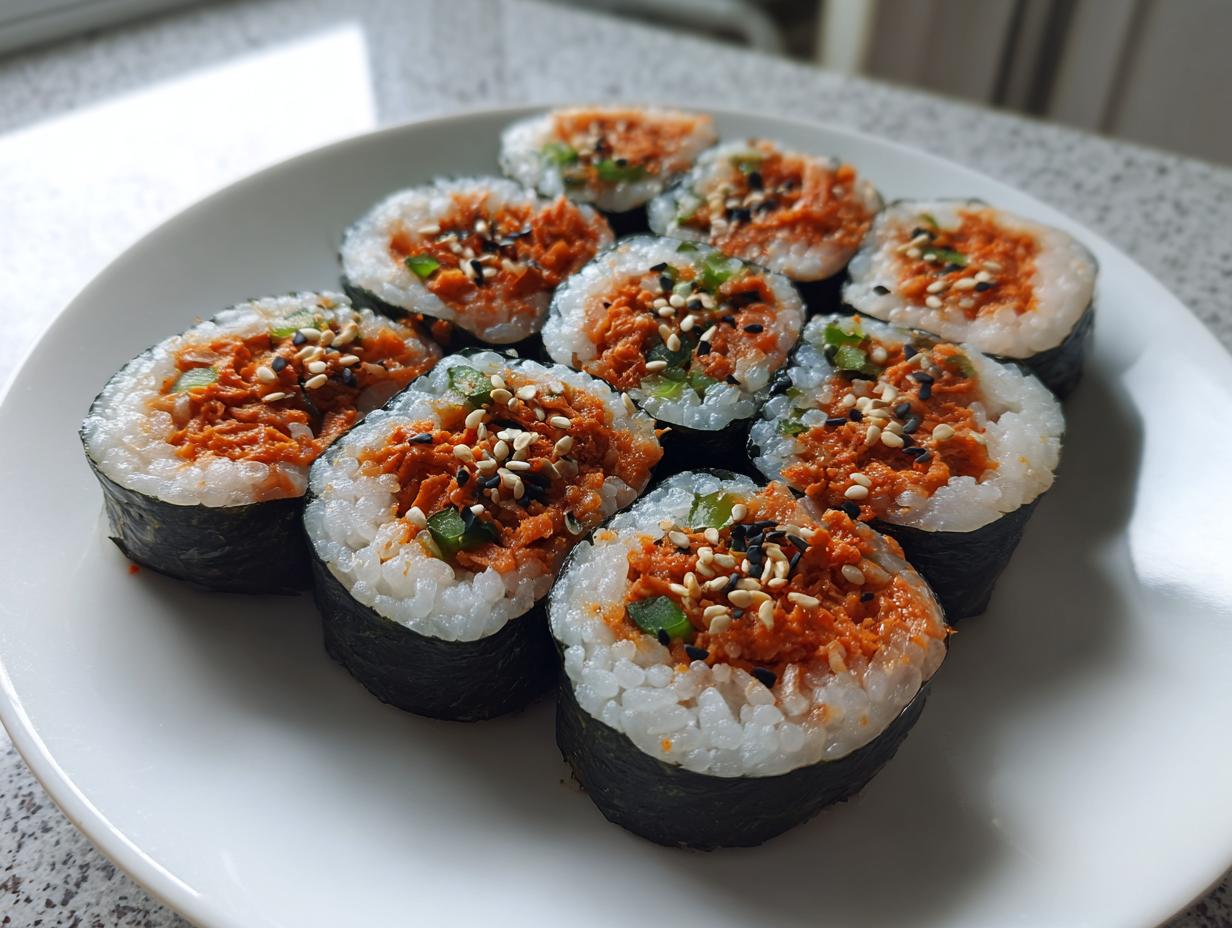
Sometimes you just crave that fantastic combination of salty, savory, and a little bit spicy that only Korean food delivers, and you definitely don’t have an hour to spare! That’s why I developed this super-quick version of tuna kimbap for you. We’re focusing on the crowd-pleasing spicy variation, honestly, because why settle for plain when you can have fireworks in your mouth? As a home cook, Michael Carter, who built a career around making busy life delicious, I promise this recipe is efficient, flavorful, and everything you need for a fast dinner or snack.
Don’t stress about complicated prep; we’re keeping cleanup simple and the flavor huge. This is the perfect entry point if you’ve been eyeing those beautiful rolls but thought they were too much work. Trust me, with just a little seasoned rice and that addictive filling, you’ll be rolling these up like a pro in under 15 minutes. Feel free to check out all my other go-to weeknight dinner recipes right after!
- Why This Spicy Tuna Kimbap Recipe is Your New Favorite Korean Food Recipe
- Essential Components for Perfect Tuna Kimbap
- Step-by-Step Instructions for How to Roll Kimbap
- Tips for Success Making Homemade Sushi Rolls (Kimbap)
- Serving Suggestions for Your Tuna Kimbap
- Storage and Make Ahead Party Snacks with Tuna Kimbap
- Variations on Classic Tuna Kimbap Fillings
- Frequently Asked Questions About Making Tuna Kimbap
- Nutritional Snapshot of This Spicy Tuna Kimbap
Why This Spicy Tuna Kimbap Recipe is Your New Favorite Korean Food Recipe
I know you’re looking for something fast that doesn’t taste like a compromise, and that’s exactly what this recipe delivers. If you need authentic flavor without the fuss, this rolls straight to the top of your favorite Korean food recipes list.
- Incredibly quick assembly—we’re talking about a true quick 15 minute meal here.
- It’s the ultimate crowd-pleaser for any gathering or lunch box requirement.
- The spicy kick is totally manageable but unforgettable!
Speed and Simplicity: Ready in Under 15 Minutes
Honestly, the only reason this comes together so fast is rice. If you have cooked rice handy—even leftover rice—this becomes an incredibly Easy Kimbap tutorial. You aren’t cooking veggies or scrambling eggs; you’re just mixing and rolling. It proves that making stellar tuna kimbap doesn’t need to take all afternoon.
The Best Tuna Filling for Kimbap: Spicy Mayo Kick
Forget watery, bland canned tuna. The secret to making this the Best tuna filling for Kimbap is focusing on that beautiful spicy mayo combination. We’re making classic Spicy tuna mayo rolls right here. Pro tip from my kitchen: If you can grab Japanese mayonnaise (like Kewpie), use it! It has a richer, slightly tangier flavor that just marries perfectly with the sriracha—it’s worth hunting down for that E-E-A-T factor!
Essential Components for Perfect Tuna Kimbap
Look, putting together anything that tastes truly authentic always comes down to respecting the few ingredients you use. Since this tuna kimbap recipe is simple—it’s not loaded with seven different sautéed vegetables—the quality of what goes into the rice and that spicy filling really shines through. This is where we build our flavor foundation, and I want you to feel confident about what you’re grabbing at the store. You’ll find that aiming for quality here helps that E-E-A-T factor we always talk about!
Gathering Ingredients for Your Spicy Tuna Kimbap
You’ll notice we aren’t messing around with complicated additions here; we are keeping it straightforward so this stays a quick 15 minute meal. For the rice, make sure you’re ready to season it right away with sesame oil, sesame seeds, and simple salt—we want that nutty, savory base. Then for the star, the filling: you need that small can of tuna, make sure it’s drained well, even if it’s packed in oil, because we don’t want a soggy roll!
We mix that tuna with our secret weapon, the Japanese mayonnaise, along with your sriracha heat and some bright, finely chopped green onion. And for a little aromatic punch that traditional Korean food lovers adore, don’t skip those perilla leaves! They go right under the rice layer, adding a fresh, minty/anise note that just elevates the whole experience.
Step-by-Step Instructions for How to Roll Kimbap
Okay, here we go! This is the part where people sometimes feel nervous, but I promise, reading this Easy Kimbap tutorial will make you feel totally ready. Getting the technique down for How to roll Kimbap is easier than people think. It’s all about gentle pressure and working quickly before the nori sheet gets too damp. Let’s break down making this phenomenal tuna kimbap.
Preparing the Seasoned Rice for Your Tuna Kimbap
The first thing you need to do is get that rice seasoned up. Remember what I said about efficiency? Mix your cooked short-grain rice—and this is important—while it’s still a tiny bit warm. Not piping hot, or you’ll scald your hands, but warm enough that the salt and sesame oil sink right in. Stir in that teaspoon of sesame oil, sesame seeds, and salt using a cutting motion, almost like you’re folding it in gently so you don’t smash the grains. Set that aside to cool down just a little bit more while you mix the tuna.
Mixing the Flavorful Spicy Tuna Filling
Move onto step two, making that irresistible spicy center! Take your drained tuna, the bright green onions, the mayonnaise—don’t forget that good Japanese mayo if you have it—and the sriracha. Now, mix this up until it’s combined, but seriously, stop mixing once it looks incorporated. If you beat that tuna mixture for too long, it turns into paste, and we want a filling with just a little bit of texture for our Spicy tuna mayo rolls. Just stir until you see no dry spots of mayo left, and that’s it!
Assembling and Rolling Your Quick Seaweed Rice Rolls
Time for the real fun! Lay out your mat and place your nori sheet, shiny side down. I love tossing a perilla leaf on top for that extra layer of flavor—it protects the rice a bit too! Now, spread your seasoned rice over the sheet. Here’s the trick people miss: leave about an inch bare at the very top edge of the nori. That bare strip is what seals the deal! After spreading, lay your tuna mixture right across the middle.
Start rolling from the bottom edge, pulling the mat up and over the filling, tucking everything in tight as you go. You need a firm, consistent pressure so the roll doesn’t fall apart when you slice it later. When you meet that bare edge, just wet it slightly with a damp finger—that’s your glue! Seal it up, give the whole thing a gentle squeeze through the mat, brush it with a little more sesame oil, and you have a perfect Quick seaweed rice roll. Repeat, slice, and enjoy!
If you want a fantastic dipping sauce idea to go with these, check out my recipe for a creamy dill dip—though usually, these are perfect just as they are!
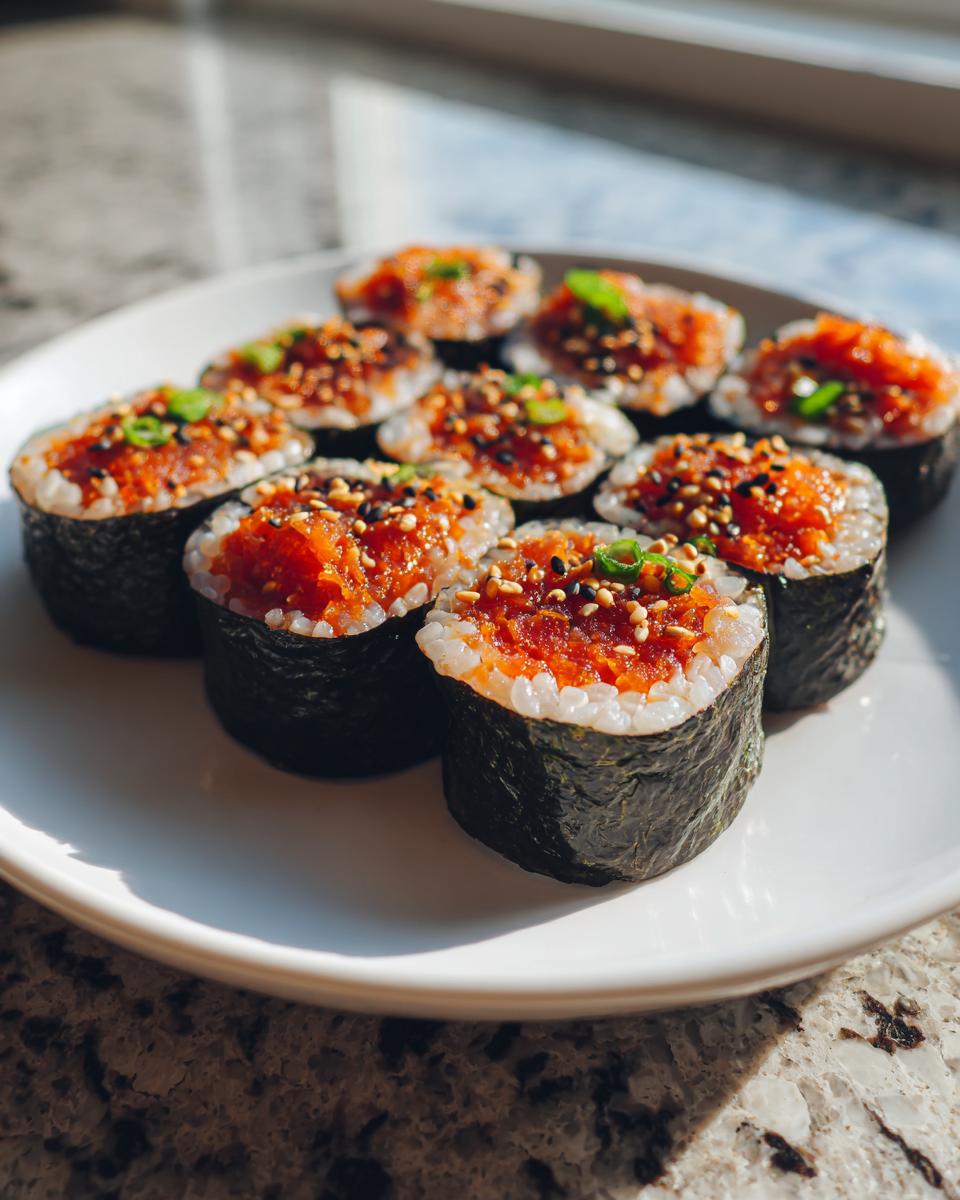
Tips for Success Making Homemade Sushi Rolls (Kimbap)
I’ve made so many rolls in my kitchen over the years—and let me tell you, they weren’t all TikTok-perfect right away! Getting the hang of making homemade sushi rolls, or kimbap as we know it here, is all about mastering a couple of simple things that restaurants do without thinking. Once you nail the rice and the knife work, everything else just falls into place. These little tips saved me a lot of frustration!
Achieving the Perfect Rice Texture
This is where a lot of people go wrong, especially when they try to switch up Asian recipes using standard long-grain rice. For kimbap, you absolutely need that short-grain sushi rice. Why? Because it gets slightly sticky when cooked properly, which helps the entire roll hold together once you slice it. We seasoned ours lightly with sesame oil and salt rather than vinegar like traditional sushi.
My preference is to have the rice just sticky enough that you can press a ball of it between your fingers and it holds shape without feeling gummy or overly wet. If your rice feels dry, you can toss it with an extra half-teaspoon of sesame oil while seasoning. That oil adds flavor but also helps the grains adhere just a bit better. It’s all about that perfect balance!
Slicing Kimbap Without Crushing the Roll
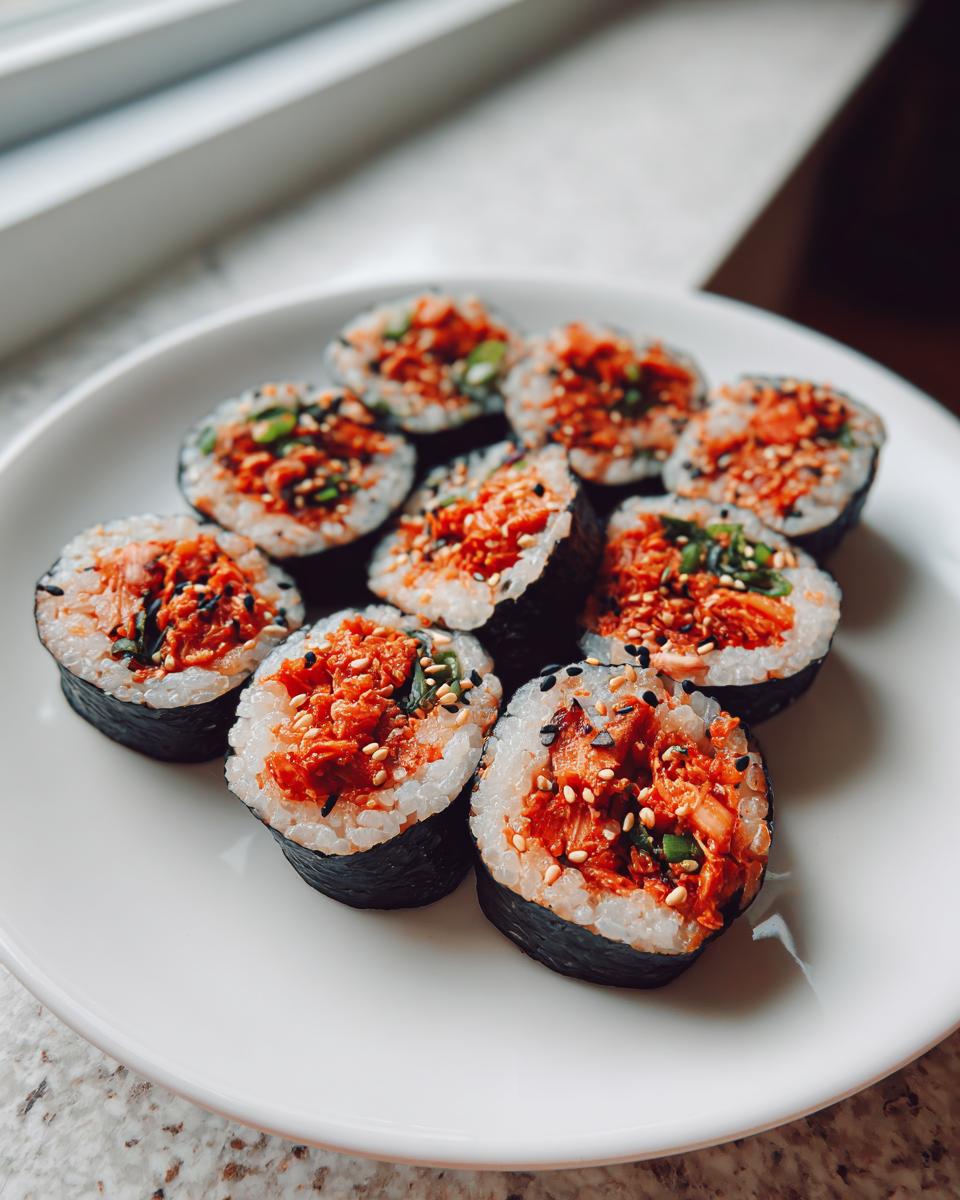
Oh, the dreaded smooshed roll! If you’ve ever cut your kimbap only to have all the beautiful filling squirt out the sides, I know your pain. The secret here, and please write this down, is the knife. You need a knife that is long, very sharp, and—this is the crucial part—slightly damp.
Before every single slice, dip the tip of your knife into a shallow bowl of water and shake off the excess. The moisture prevents the starchy rice from sticking immediately to the blade when you press down. You aren’t sawing it; you are making one firm, steady press all the way through. If you clean and wet the knife between every one or two slices, you will get those clean, professional-looking circles that are perfect for party platters. It’s a quick moment of maintenance that makes your final plating look incredible.
If you are looking for other easy meal prep ideas that use simple techniques, you should take a look at my guide to homemade granola bars—it follows the same philosophy of simple efficiency!
Serving Suggestions for Your Tuna Kimbap
You’ve done the hard work! You’ve rolled these beautiful, savory logs, and now you might be wondering, “When do I eat them?” Honestly, the beauty of this fast tuna kimbap is its sheer versatility. It transitions so smoothly from one meal type to the next without needing any extra fuss from you, which supports my goal of making your life easier!
Because the filling is cooked—just tuna mixed with mayo and spice—these rolls are fantastic served at room temperature, unlike traditional sushi rolls that need to be kept chilled for safety reasons because of the raw fish. This makes them excellent for portability.
If you’re packing these up for work or school, they are the star of any Korean lunch box ideas spreadsheet you might be keeping. Just slice them, pack them tightly in a container so they don’t shift around too much, and they are good to go. No reheating necessary, which is huge when you’re trying to stick to quick Asian meal prep.
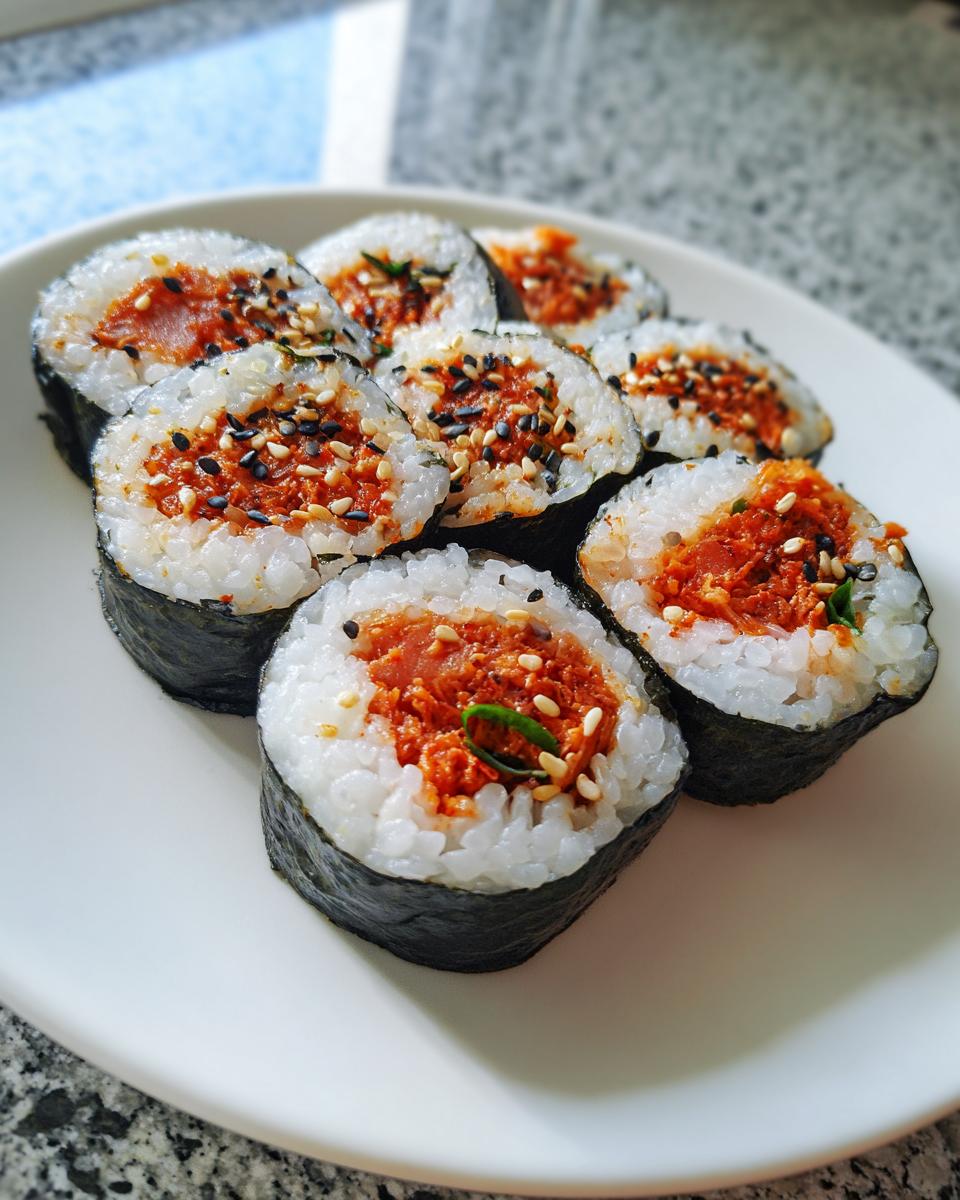
They also shine when you need something fresh and casual outside the house. Think of them as premium, easy finger food. They are fantastic for simple picnic food ideas because they are self-contained and neat. Just wrap them snugly in plastic wrap or a beeswax cloth to keep them fresh until you get to the park.
And for parties? They look so colorful and impressive on a platter! They work wonderfully as refreshing Korean appetizers. If you’re hosting a big group, I often make a mild batch (less sriracha) alongside the spicy ones so everyone, even the kids, can enjoy this amazing roll. They disappear fast!
Storage and Make Ahead Party Snacks with Tuna Kimbap
One of the biggest wins for this spicy tuna kimbap recipe is that it’s fantastic for planning ahead. Seriously, if you’re hosting or just trying to beat the morning rush, you can absolutely make these ahead of time. They solidify their spot as one of my absolute favorite make ahead party snacks because they taste just as good, sometimes even better, the next day!
The key here is that, unlike true sushi which uses raw fish, our filling relies on canned tuna and mayo, which holds up beautifully under refrigeration. You want to slice them *after* they’ve chilled for about an hour, just to ensure everything sets nice and firm for clean cutting. Don’t slice them right away, or they tend to squash a bit—that first hour of chilling is essential for beautiful presentation.
When storing, make sure they are wrapped tightly. I prefer wrapping the cut pieces snugly in plastic wrap, placed in an airtight container. This keeps the nori from getting too tough or, conversely, too soggy from fridge humidity. They’re excellent for up to 24 hours stored this way in the refrigerator. Just take them out about 15 minutes before you plan to serve them so they aren’t ice-cold.
If you are prepping these for a big feast or a potluck, wrapping the whole, uncut log tightly in plastic wrap works really well overnight, too. When you’re ready to serve, just slice, brush with that final touch of sesame oil and seeds, and put them out. It saves so much time on the day of the event! If you need another impressive, make-ahead dip to go alongside them on your serving platter, you have to try my easy pizza dip recipe!
Variations on Classic Tuna Kimbap Fillings
While this spicy tuna kimbap recipe is fantastic just as written—it’s quick, it’s punchy, and it works—I always encourage home cooks to look at recipes as springboards, not rigid laws. When you get comfortable with the rice seasoning and the rolling technique, you can start playing with the inside textures and flavors, exploring all the wonderful possibilities of Kimbap fillings and fillings.
The beauty of this roll is that the filling sets up nicely because it’s cooked tuna and mayo, meaning we can easily sneak in a few extra veggies for crunch and color without making the roll too wet or unstable. This keeps us firmly in that easy, practical cooking zone I aim for!
Spice Swap: Sriracha vs. Gochujang
Remember how I mentioned using Japanese mayonnaise? Let’s talk heat. If you’re looking for something that tastes a little deeper and offers that authentic, earthy Korean spice rather than the brighter heat of sriracha, try swapping it out! You can substitute the sriracha with a tablespoon of gochujang. Gochujang is that famous Korean chili paste, and it adds complexity and a beautiful reddish tint to the tuna mix. Just remember, gochujang can vary in saltiness, so stir it in slowly, taste, and only add more salt if you need it. It turns your classic spicy tuna mayo roll into something truly special.
Sneaking in Fresh Crunch
If you use my recipe as the base—rice, nori, perilla leaf, tuna mix—you have room for one or two extra items right alongside that tuna line. I often add thin strips of crisp cucumber for a cooling snap. It’s essential that you slice the cucumber thinly and maybe even pat it dry with a paper towel first; wet veggies are the enemy of a tight roll!
Another simple addition that boosts color is fine julienne strips of raw carrot, although you might want to blanch them for just 30 seconds if you have the time, just to soften them slightly. And for richness? A thin slice of creamy avocado tucked in there works like magic. When you do add more fillings, just make sure you don’t overstuff! Keep everything concentrated in the center so the roll still seals cleanly. That’s how you keep your creation looking professional and delicious!
Frequently Asked Questions About Making Tuna Kimbap
It’s so common to have questions pop up once you start making something new in the kitchen, especially when you are trying to nail down an authentic feel but keep it practical for your weeknight schedule. Kimbap, though simple in concept, has a few key details that really matter for the end result. I’ve gathered up the most common things people ask me about my quick tuna kimbap recipe right here. Don’t hesitate to reach out if you have more questions—you can always find my contact info if you need more detailed help with any of my recipes!
What is the difference between Kimbap vs Sushi roll differences?
This is the number one thing people new to Korean food ask! The biggest differences are in the preparation and the ingredients used for seasoning the rice. For true Japanese sushi, the rice is specifically seasoned with rice vinegar, salt, and sugar, and often highlights raw fish.
For our Korean rolls, we season the short-grain rice with sesame oil, salt, and sesame seeds instead—no vinegar! This gives it a nuttier, richer flavor profile. Also, Kimbap fillings are almost always cooked, pickled, or pre-seasoned, like our spicy tuna mix. It’s a subtle shift, but it makes a huge flavor difference between the two delicious rolls!
Can I use water-packed tuna instead of oil-packed for my tuna kimbap?
Absolutely, you can! I often use oil-packed because I think it adds a little extra richness to the filling, but water-packed tuna is perfectly fine, especially if you are focused on getting that healthy Asian meal prep vibe. If you do use water-packed, you just need to be extra careful when draining it. You want to squeeze out as much excess water as you possibly can—maybe even give it an extra press with a paper towel after draining. If the tuna is too wet, your spicy tuna mayo rolls might end up a little soggy inside, and no one wants that!
Is this spicy tuna mayo rolls recipe suitable for a family friendly Korean dinner?
It can be, but you’ll want to tailor the heat level down a bit for the kids, for sure! The formula for the spicy tuna mayo rolls is really flexible. If you are serving this for a family friendly Korean dinner, just leave out the sriracha entirely for that portion of the filling you set aside for the younger ones. Or, keep the sriracha in—but only use half the amount called for in the main recipe for their rolls.
You can also use that gochujang variation I mentioned earlier instead of sriracha, as it tends to offer a deeper warmth rather than sharp heat, which some kids handle better. The key is balance; they still get the delicious nutty rice and the canned tuna flavor without feeling overwhelmed by the spice!
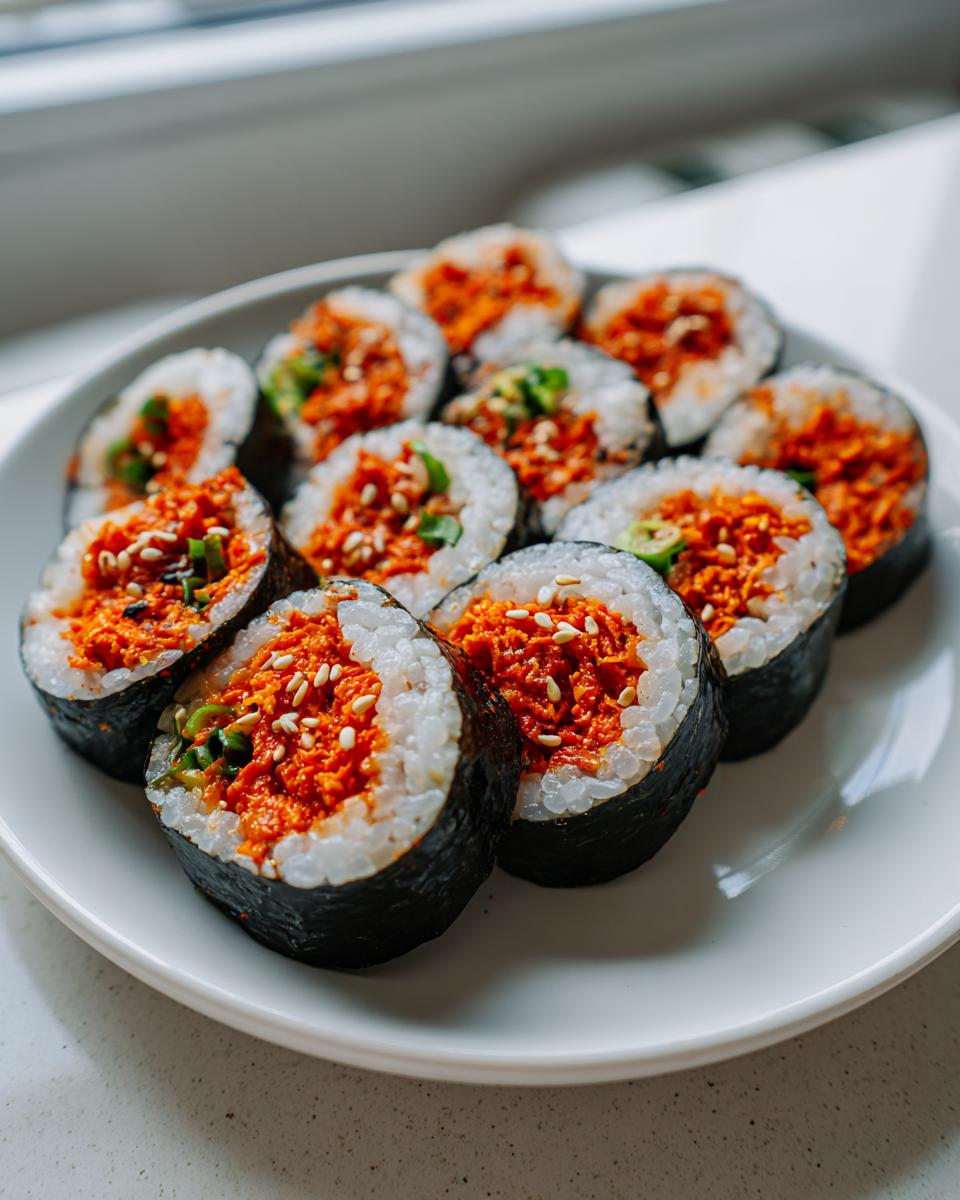
Nutritional Snapshot of This Spicy Tuna Kimbap
Now, I know as home cooks we focus way more on flavor harmony than counting every single calorie, but sometimes it’s just nice to have a general idea of what we’re enjoying, right? Since this tuna kimbap is such a fantastic option for meal prep or a quick lunch, I wanted to give you a quick look at what’s inside. This is perfect for when you’re planning out healthy lunch ideas for the week!
Keep in mind, these numbers are just my best estimates based on standard pantry items. If you use extra-rich Japanese mayo or a different kind of tuna, those values will certainly shift a bit. Think of this as a helpful guide rather than a strict rulebook!
Here is what we are generally looking at for one serving section:*
- Calories: About 250 per section. Not bad at all for a satisfying roll!
- Total Fat: Around 10g. Most of this is coming from the healthy fats in the tuna oil (if you use that kind) and the mayonnaise.
- Carbohydrates: About 30g, mostly from the sticky rice base.
- Protein: A solid 12g, which keeps you feeling full until dinner.
- Sodium: We’re right around 350mg. This is something to watch if you are salt-sensitive, so take care when seasoning that rice!
Because we aren’t deep-frying anything or adding tons of salty pickled vegetables, this recipe remains pretty balanced for a flavorful, quick meal. It proves you don’t need complex steps to get a dish that feels wholesome and complete. Enjoy knowing that you are fueling up with great flavor!
*Disclaimer: Nutrient values are estimated based on provided ingredient data and specific itemizations and may vary based on brand and preparation differences.
PrintQuick Spicy Tuna Kimbap (Chamchi Kimbap)
Make this popular Korean seaweed rice roll at home. This recipe focuses on a quick, flavorful spicy tuna filling perfect for lunch boxes or easy dinners.
- Prep Time: 15 min
- Cook Time: 0 min
- Total Time: 15 min
- Yield: 4 servings 1x
- Category: Lunch
- Method: Rolling
- Cuisine: Korean
- Diet: Vegetarian
Ingredients
- 2 cups cooked short grain rice
- 1 teaspoon sesame oil (for rice)
- 1 teaspoon sesame seeds (for rice)
- 1 teaspoon salt (for rice)
- 1 (5.3 oz) can tuna in oil, drained
- 2 tablespoons Japanese mayonnaise
- 1 tablespoon sriracha sauce
- 1 tablespoon finely chopped green onion
- 4 sheets nori (roasted seaweed)
- 4 perilla leaves, stems removed
- 1/2 teaspoon sesame oil (for coating rolls)
- 1/2 teaspoon sesame seeds (for sprinkling)
Instructions
- Prepare the rice seasoning: In a bowl, mix the cooked short grain rice with 1 teaspoon sesame oil, 1 teaspoon sesame seeds, and 1 teaspoon salt. Set aside to cool slightly.
- Make the spicy tuna filling: In a separate bowl, combine the drained tuna, Japanese mayonnaise, sriracha sauce, and chopped green onion. Mix well until fully combined.
- Prepare the rolling station: Lay one sheet of nori, shiny side down, on a bamboo rolling mat. Place one perilla leaf on top of the nori sheet.
- Layer the rice: Spread about one-quarter of the seasoned rice evenly over the nori and perilla leaf, leaving about a 1-inch border clear at the top edge of the nori.
- Add the filling: Place one-quarter of the spicy tuna mixture in a line across the center of the rice.
- Roll the kimbap: Starting from the bottom edge, tightly roll the nori over the filling, pressing gently to compact the ingredients. Moisten the top edge of the nori with a little water to seal the roll.
- Finish the roll: Brush the outside of the finished roll lightly with 1/2 teaspoon sesame oil and sprinkle with sesame seeds.
- Slice and serve: Repeat with the remaining ingredients. Slice each roll into bite-sized pieces. Serve immediately or pack for a quick 15 minute meal.
Notes
- You can substitute the sriracha with gochujang for a deeper Korean flavor in the tuna mix.
- For a healthier option, use water-packed tuna and reduce the mayonnaise slightly.
- This recipe works well for healthy Asian meal prep and can be made ahead for party snacks.
Nutrition
- Serving Size: 1 roll section
- Calories: 250
- Sugar: 2
- Sodium: 350
- Fat: 10
- Saturated Fat: 2
- Unsaturated Fat: 8
- Trans Fat: 0
- Carbohydrates: 30
- Fiber: 1
- Protein: 12
- Cholesterol: 25